

Life-threatening real human mummies are being sold online
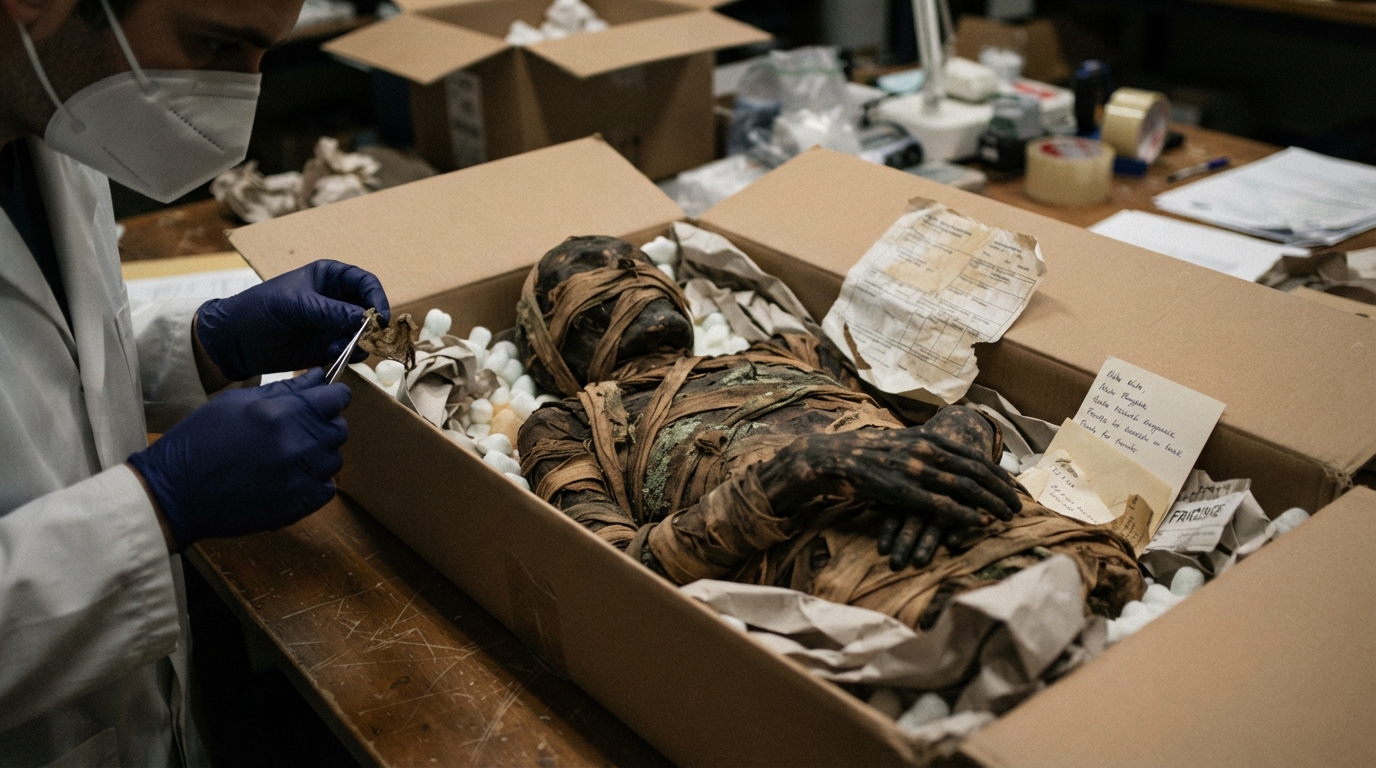
The sale of real mummies, which is dangerous for human life, has begun on the Internet. Naked Science reported this. Human mummies sold in online stores are being sent by regular mail, which can pose a biological hazard.
Experts in the fields of health, biology, anatomy and chemistry from universities in the UK, Lithuania, Italy and Australia studied ads on social networks, online stores and auction sites. They analyzed 122 publications with human remains and 6 with animal remains dating from 2015 to 2025.
Some of the materials were taken from the archives of one of the researchers who has been monitoring the trade in human remains since 2014. Analysis of the ads showed that some of the mummies offered for sale had signs of fungal infection. And the sellers did not warn buyers about the rules for their safe use.
The dryness inherent in mummification does not guarantee that biological processes have completely stopped. Preservatives can become reactivated when transported and stored in the wrong environment. Fungal spores can become airborne, posing a risk to people working with or transporting the mummy.
The researchers also identified another case of non-compliance with safety rules. In 22 cases, people touched the mummy's remains without gloves or masks. Such protective equipment is necessary not only to protect against microorganisms, but also because of the substances used in embalming.
The danger is that at different times in history, toxic substances such as arsenic, mercury, and lead may have been used to preserve bodies. In some cases, bitumen, cedar oil, natron, plant resins, and other substances were used. Their properties vary, and some compounds can affect the skin and respiratory tract or, in large quantities, can lead to more serious consequences.
The results of the study cannot be applied to the global market for mummified remains. However, the research suggests that their online trade and movement pose risks. It was previously reported that modern and ancient bacteria were found in a 5,300-year-old mummy discovered in the Ötztal Alps in 1991.