

Kyrgyzstan has strengthened sanitary control at the border following reports of plague in Russia
Kyrgyzstan has strengthened sanitary control at the border following reports of plague in Russia
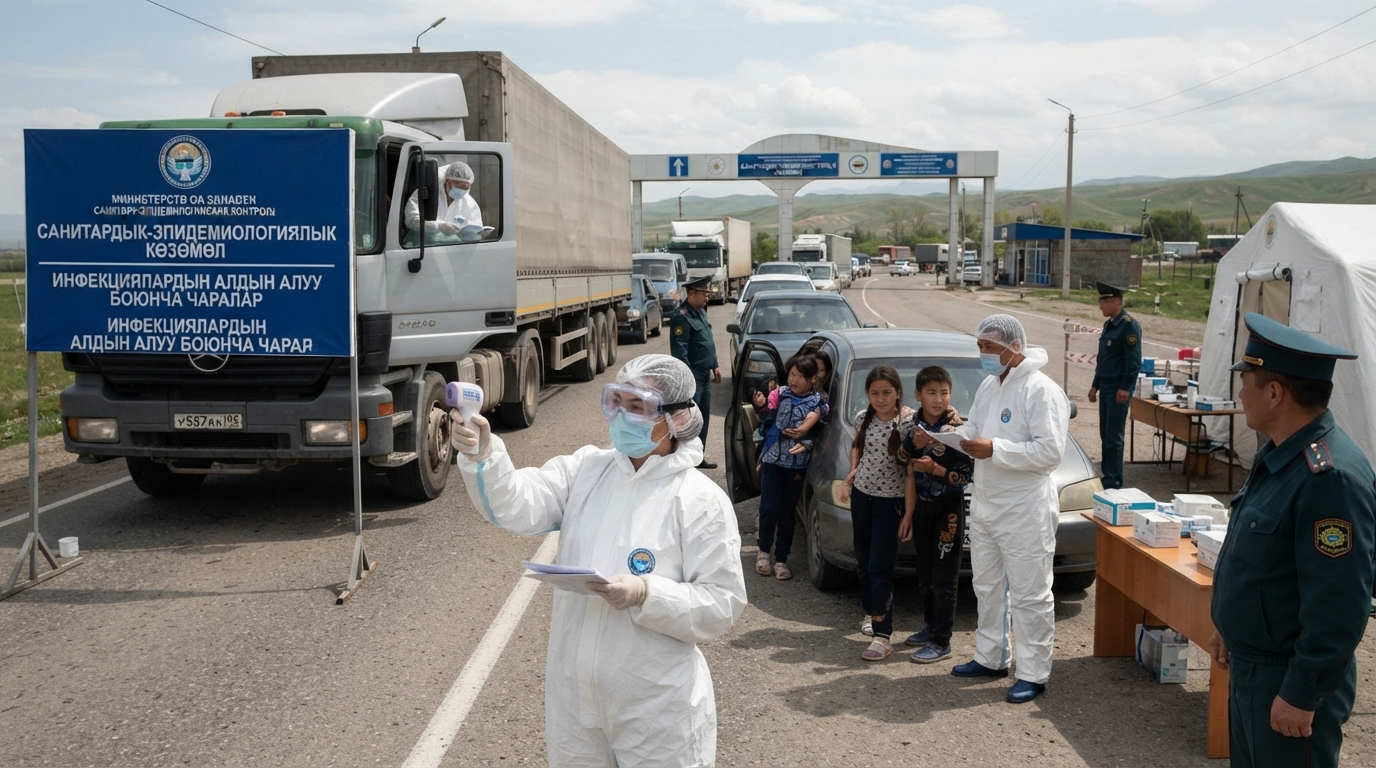
Kyrgyzstan has strengthened sanitary control at the border with Russia following reports of a possible case of plague in the Irkutsk Oblast. At the same time, the authorities have not introduced any restrictions on entry from Russia or the operation of checkpoints.
The Ministry of Health of Kyrgyzstan announced the additional measures on October 4. The strengthened control applies to people, transport, and cargo, and is aimed at preventing the import and spread of particularly dangerous infections.
The current rules of sanitary and epidemiological control provide for questioning arrivals about their health status and a visual inspection. If there are epidemiological indications, thermometry may be conducted, and if a person suspected of having an infectious disease is identified, isolation and anti-epidemic measures are carried out.
The reason for strengthening control was the situation in the city of Shelekhov, Irkutsk Oblast, where a female employee of the Irkutsk Scientific Research Anti-Plague Institute died. Russian publications named plague as the cause of death, and the head of Buryatia, Aleksey Tsydenov, also publicly stated that the woman had died from this disease.
Amid reports of the situation, Russian presidential press secretary Dmitry Peskov urged people to rely on official statements from Rospotrebnadzor rather than rumors and unconfirmed speculation. The agency itself reported that no microorganisms related to her professional activity were found in the deceased employee, and an examination of those who had been in contact with her revealed no changes in health status associated with infectious pathology.
Rospotrebnadzor also stated that the sanitary and epidemiological situation in the Irkutsk Oblast remains stable. Earlier, the governor of the region, Igor Kobzev, had reported the detection of a dangerous infectious disease and the implementation of anti-epidemic measures.
The Sanitary and Epidemiological Committee of Uzbekistan has also increased the readiness of its services amid reports of a possible case of plague in the Irkutsk Oblast.