

July 2026 in Uzbekistan was one of the hottest on record.
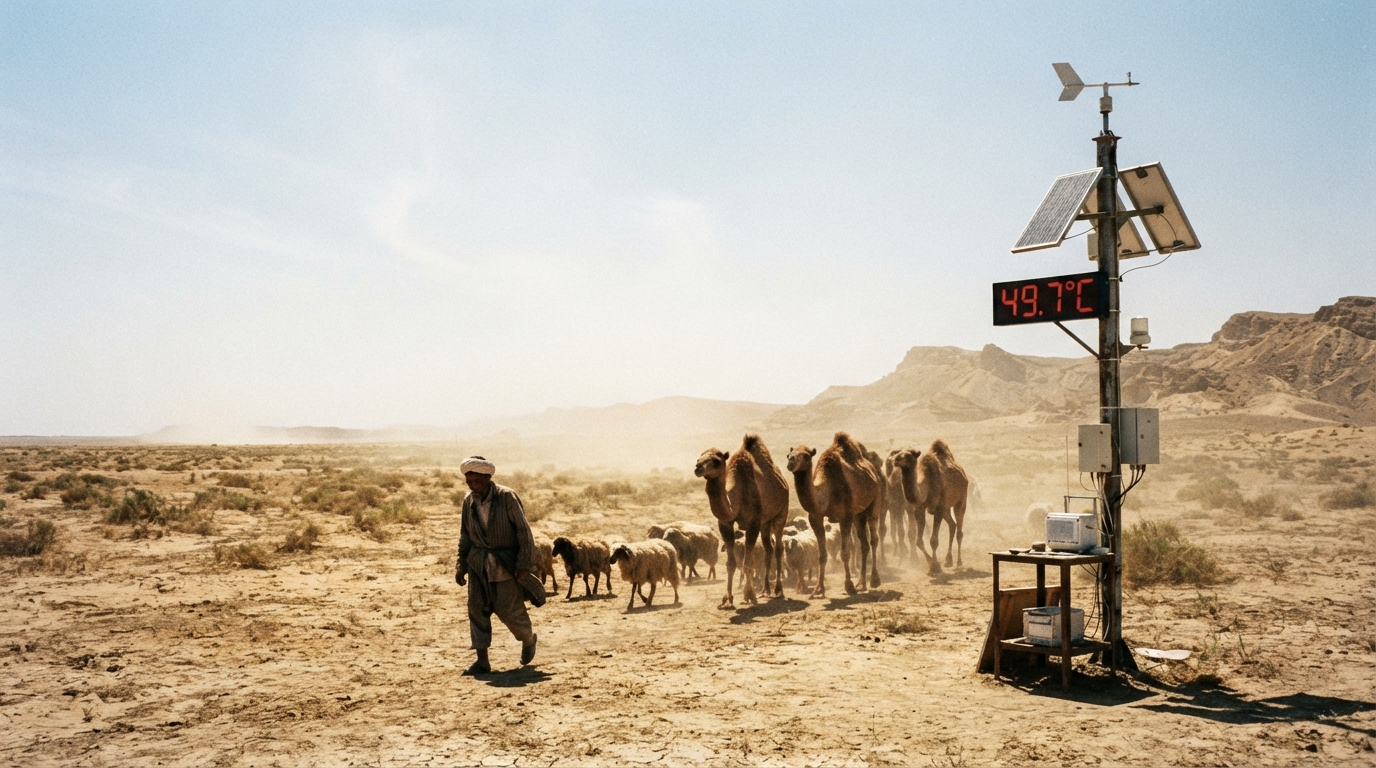
July 2026 went down in Uzbekistan's meteorological history as one of the hottest months ever recorded.
Tashkent, Uzbekistan – Podrobno.uz News Agency.
July 2026 in Uzbekistan was characterized by abnormally high temperatures, significantly exceeding the climatic norm. New absolute temperature records were set in several regions of the country, and in desert zones, the thermometer approached 50 degrees Celsius.
According to Uzhydromet, the average monthly temperature in most of the country exceeded the norm by 1.3–2.3 degrees Celsius. In the northern and desert regions, this excess reached 2.5–2.8 degrees Celsius.
In contrast, the beginning of July was unusually cool, with temperatures 3–5 degrees Celsius below normal and daytime readings ranging from 27–32 degrees Celsius. However, a gradual increase in heat began in the second five-day period of the month. Peak temperatures were recorded on July 18-19. In most regions, the air warmed up to 43-45 degrees Celsius, while in the south and desert regions, it reached 46-50 degrees Celsius.
During this period, several cities broke their temperature records. The highest temperature was recorded at the Uchkuduk weather station in the Kyzylkum Desert, reaching 49.7 degrees Celsius. In Bukhara, the temperature rose to 46.9 degrees Celsius, in Navoi, to 46.5 degrees Celsius, and in Arnasay, also to 46.5 degrees Celsius.
In Tashkent, the maximum temperature on July 19 was 44.3 degrees Celsius, just 0.3 degrees Celsius below the all-time record for the capital, set on July 18, 1997.
The heat wave was accompanied by abnormally warm nights. During the peak temperature period, nighttime minimums did not fall below 25–28°C, and in some places in the south and desert regions, they remained at 30–33°C.
Further evidence of the extreme heat was the significant number of days with temperatures above 40°C. In July, such days ranged from 3–8 in the central and eastern regions to 19–23 in the far south and the Kyzylkum Desert, significantly exceeding long-term averages.
Precipitation in July was unevenly distributed. Dry weather prevailed in the Khorezm, Bukhara, Navoi, Kashkadarya, and Surkhandarya regions. However, short-term but heavy rains occurred in some regions.
For example, in Tashkent, 9 mm of precipitation fell on July 4, compared to a monthly average of 3.4 mm. In Dustlik, Jizzakh Region, precipitation totaled 24.6 mm in less than two hours, compared to the norm of 2.8 mm. In some areas, the downpours were accompanied by hail.
Winds also increased to 15–20 m/s in some regions. In Nukus and Ustyurt, gusts reached 22–25 m/s, with dust storms and dust haze observed in places.
Uzhydromet emphasized that the impact of the extreme heat is determined not only by the maximum temperatures but also by the duration of the period of extreme temperatures, which in July 2026 significantly exceeded the long-term average.