

Jellyfish force partial shutdown of French nuclear plant
It is the second consecutive year that jellyfish has forced the closure of the Gravelines power station in northern France.
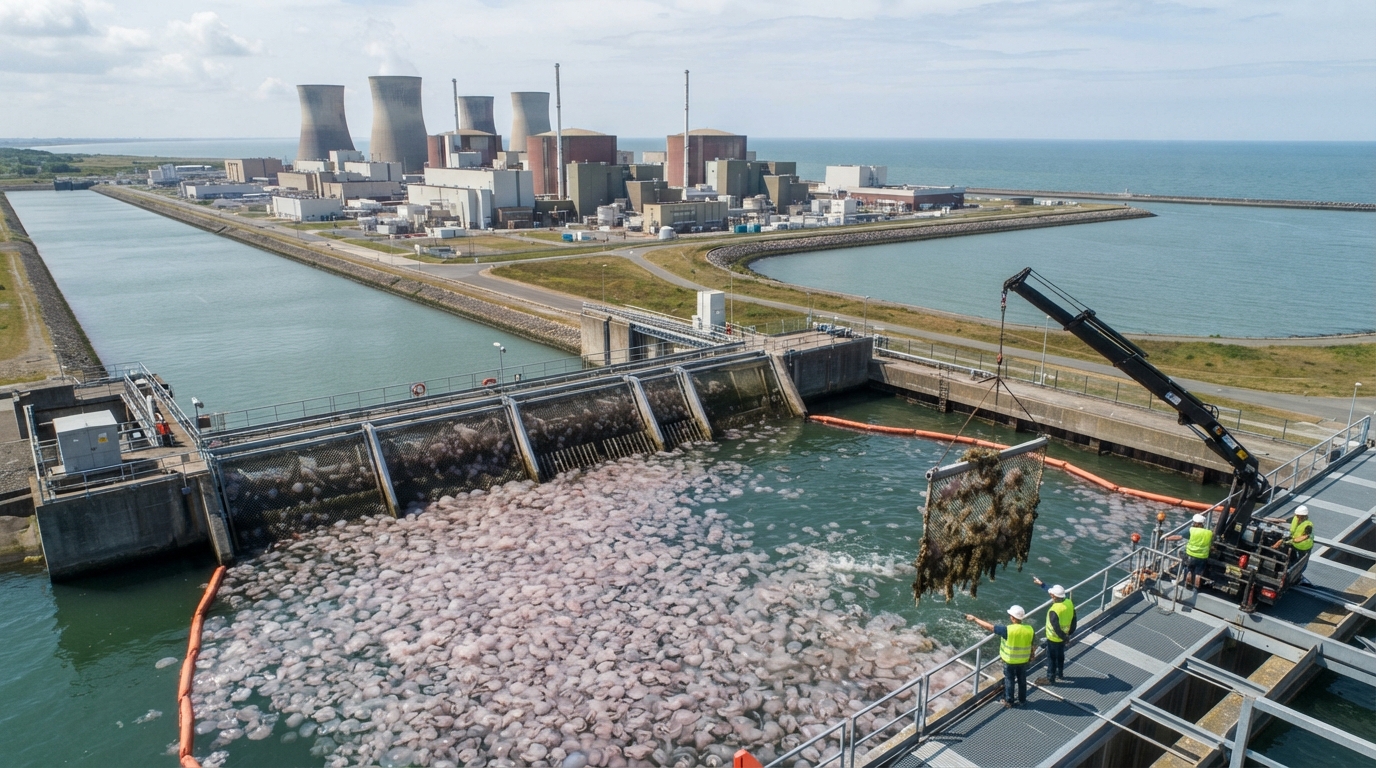
A significant surge in jellyfish population has caused a partial closure of a nuclear reactor in northern France.
Électricité de France (EDF) reported that two of the six units at the Gravelines nuclear power station were powered down on Wednesday and Thursday. This action was necessitated by the presence of jellyfish within the seawater filtration system, which is crucial for cooling the plant.
A third unit has been offline since August 10 due to the identical problem, and a fourth unit is currently undergoing an inspection.
The Gravelines plant, one of France's largest nuclear power stations, situated between Dunkirk and Calais in the Hauts-de-France region, experienced a similar shutdown last August, also attributed to jellyfish obstructing its filters.
EDF confirmed that units three, four, and six are presently non-operational. Unit three had only been reconnected to the grid on August 18, following an earlier influx of jellyfish this month. As a precautionary measure, units one and two are also operating at a reduced capacity.
Each of Gravelines' six units generates 900 megawatts of power. The plant's cooling system draws water from a canal linked to the North Sea.
Several species of jellyfish are indigenous to the area and are commonly observed along the coast during warmer periods. Experts indicate that jellyfish activity peaks in warmer months, as elevated temperatures lead to increased plankton levels at the water's surface, attracting the jellyfish.
According to the French news source Ici, measures have been put in place to try and prevent jellyfish infiltration. These include a collaboration with local fishermen who catch the jellyfish and release them further out at sea.
Similar problems have occurred at other nuclear facilities, such as the Torness plant in Scotland in 2011 and Sweden's Oskarshamn plant in 2013, though such incidents remain uncommon.