

'I've never been to Afghanistan': Six million deportees forced to start over under the Taliban
As of August, the number forced to return this year from Pakistan and Iran had reached another million.
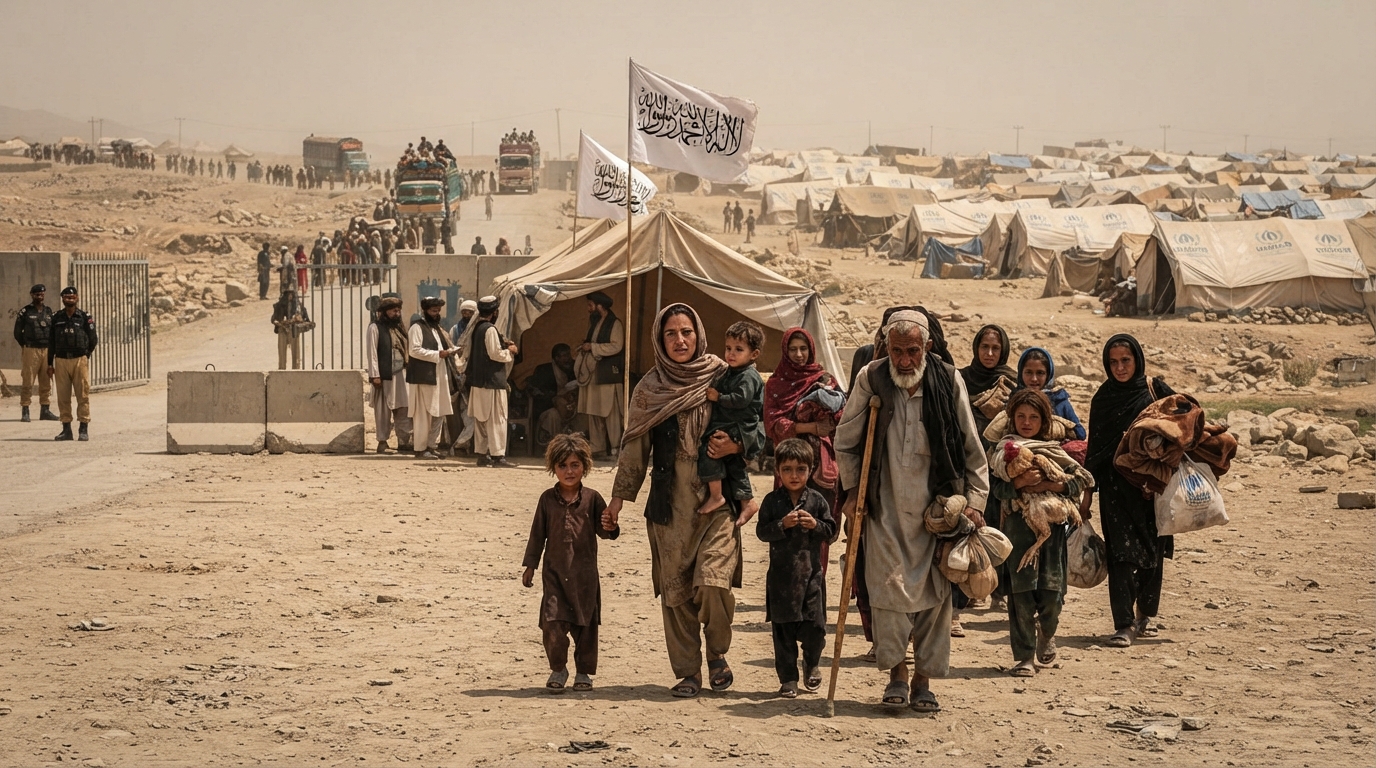
**Six Million Deportees Face New Start Under Taliban, Many Never Having Seen Afghanistan**
Elderly individuals, leaning on crutches, and wide-eyed children clutching chickens, are among the six million people forced to return to Afghanistan, many of whom have never set foot in the country before.
"It feels good to be in my own country," stated 35-year-old Nazia, moments after crossing from Pakistan, her birthplace, into Afghanistan at the Torkham crossing, known as "Zero Point." However, she quickly added, "But I've never been to Afghanistan before and many people here don't even have enough bread to eat," as she headed towards registration counters adorned with white and black Taliban flags, her two children in tow.
Nazia's extended family, including eight sisters and their children, were among the millions deported to Afghanistan this year from Pakistan or Iran. This mass movement represents the largest cross-border displacement of people globally.
For decades, millions of Afghans sought refuge or employment in Pakistan and Iran, a number that continued to grow after the Taliban's takeover in August 2021. Now, these two neighboring countries are cracking down on undocumented migrants, forcing many to return. While Nazia and her family were undocumented, the UN and human rights organizations report that the security sweeps are also impacting registered Afghans. Pakistan has publicly stated that even Afghans with Proof of Registration cards are not exempt from these expulsions, which show no signs of abating.
The UN's Refugee Agency (UNHCR) reports that one million people have been forced to return from Pakistan and Iran this year alone. Charlie Goodlake, UNHCR spokesperson in Afghanistan, observed, "In a little under three years, we've seen six million people, a population that is itself the size of a small country, come back to Afghanistan." He emphasized, "We've never seen in recent history a return movement on this scale," speaking from a tented village near the border.
This desolate landscape of tattered tarpaulin and plastic shelters, erected by the UN and other aid agencies, offers temporary refuge for those arriving with nowhere else to go. Many returnees haven't been in Afghanistan for decades, and many, like Nazia, have never been there at all.
Sarwar, who arrived days earlier with seven brothers and their families in a convoy of 40 people and their belongings packed into a Pakistani lorry, explained, "I left 45 years ago during the Soviet invasion of Afghanistan and most of my brothers were born in Pakistan." He expressed heartbreak at being forced from their home but also relief at being "finally free of harassment by Pakistan's police." Every family interviewed reported experiencing prejudice and harassment from Pakistani authorities.
The Pakistan government has not responded to the BBC's inquiries, but a foreign ministry spokesman stated in Islamabad that "the Government of Pakistan undertakes the necessary measures to prevent any instance of harassment or maltreatment of Afghan nationals in Pakistan. If such incidents have taken place, they are sporadic and are dealt with fully in accordance with the law."
Both Pakistan and Iran assert that it is time for Afghans to return home, citing security risks and financial burdens. Expulsions from Pakistan and alleged abuse intensified after a significant escalation in fighting between Pakistan and Afghanistan last October. In February, Human Rights Watch documented "door-to-door raids, late-night home searches and arrests without warrants." In Iran, which claimed to host over four million undocumented Afghans last year, mass deportations accelerated after its 12-day conflict with Israel and the US in June 2025. The New York-based Centre for Human Rights in Iran accused authorities of using the post-war climate to "cast suspicion on Afghan migrants - accusing them of espionage and branding them as potential spies for Israel."
The UNHCR continues to stress the humanitarian principle that any return should be "voluntary, safe and dignified." However, at Torkham, Sarwar's sister-in-law, Zarina, lamented their precarious future: "We have no resources to start a business or earn a living, and we don't even own a tent to live in."
Zarina, 40, is among the million Afghans who have returned this year. Inside a barren transit tent, offering little respite from the scorching 41C heat, she sat with an anxious group of women and children. When asked about concerns for women and girls in a country where the Taliban has largely barred them from public life, including education, Zarina gestured to the children, saying, "Look at them, they're all girls. Of course I'm worried."
Some returnees are not just worried; they are terrified. A former Afghan security guard, deported first from Iran and then Pakistan, nervously stated from what he hoped was a safe house, "I don't leave this house. We are all living in fear including my wife and children who are also afraid to go outside." He dismissed the Taliban government's amnesty, announced after their return to power, which declared that former government officials, security personnel, and civil servants would not face retaliation. "I have no trust in their amnesty because many of my colleagues have been killed." He added that his case was registered with the UN, but he was deported before he could be transferred to a safer country.
Financial hardship exacerbates the pain. Steep cuts in global foreign aid are particularly severe in Afghanistan, where the Taliban remain under sanctions related to terrorism and human rights. Pakistan confirmed on Sunday that 16,000 vulnerable Afghans have been granted a temporary exemption from deportation on humanitarian grounds, a decision welcomed by the UN. However, sources estimate that up to 250,000 Afghans in Pakistan, including women and girls who would be denied education, are at risk of serious harm.
At the foreign ministry compound in Kabul, Taliban Foreign Minister Amir Khan Muttaqi acknowledged, "There's no doubt that we need some help. There is pressure due to their return but in the long run, it will benefit them as well as Afghanistan." In the initial years after the Taliban's 2021 takeover, some ministers downplayed humanitarian issues, suggesting divine provision. The UN now estimates that 21.9 million people, nearly half the country, require assistance this year to survive. UNICEF reported last week that one million children face "life-threatening" malnutrition.
UNHCR spokesperson Goodlake assessed, "No country in the world could handle this kind of crisis on its own," while acknowledging the Taliban government's efforts to assist arriving returnees. However, he added, "We also know that many of the restrictions and edicts they put in place, particularly on women and girls, don't help us elicit international support." Muttaqi reiterated his government's stance that issues like girls' education are "internal issues" for Afghans to resolve.
The severe restrictions on the lives of girls and women are a major impediment to the Taliban's international relationships, costing them recognition. Five years on, only Russia has formally recognized their rule. When questioned about this, Muttaqi highlighted deepening diplomatic and economic ties with neighbors like China and India, as well as Central Asian states. Regarding Kabul's relative isolation from Western nations, he asked, "those who didn't have relationships with us over the past five years, what have they achieved?" He answered his own question: "Nothing."
That word – "nothing" – was echoed by every family encountered at Zero Point, though in a profoundly different context. All were embarking on the most challenging of homecomings, starting over again – with almost nothing.