

I've been stuck on a tiny Pacific island for years and can't get a transit visa to fly home
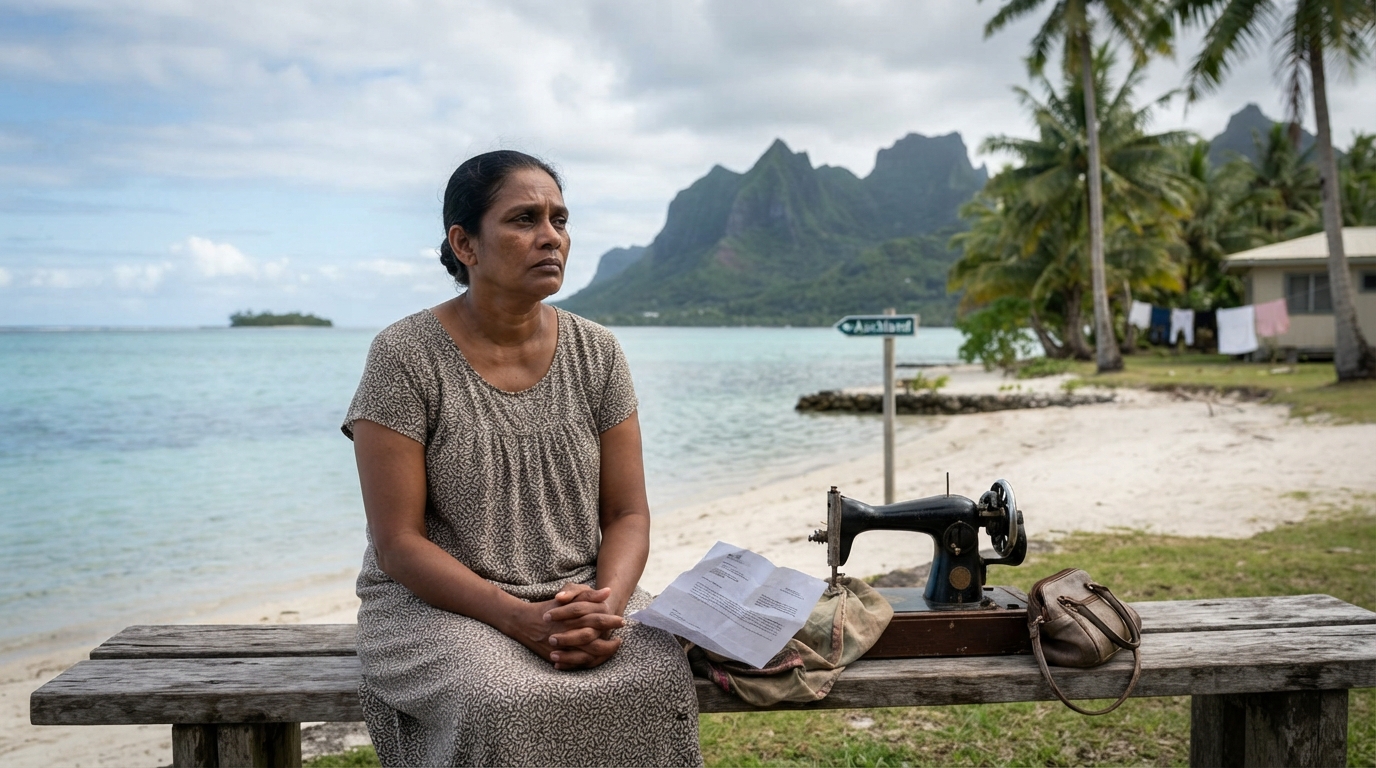
Ruchira Ranasingha, 50, has been stranded in the Cook Islands since 2023 and wants to return to Sri Lanka.
I’ve been stranded on a tiny Pacific island for years and can’t obtain a transit visa to return home
When Ruchira Ranasingha left Sri Lanka nearly a decade ago, she could never have foreseen that she would one day be stuck on a small archipelago in the South Pacific.
The 50-year-old has now been trapped in the Cook Islands for three years. She tells the BBC she is desperate to return to Sri Lanka and has even said she would go back "handcuffed, bound and gagged".
Ranasingha had hoped to make a life in New Zealand.
After applying for asylum there, she says she followed advice from an immigration adviser to leave the country temporarily in order to apply for a work visa. But once she reached the Cook Islands, her application was turned down. By departing New Zealand, she also breached the conditions of her existing asylum-linked visa.
Now New Zealand is refusing to give her a transit visa that would let her fly back to Sri Lanka.
Australia is refusing as well. The only other overseas destinations she can reach from the Cook Islands - Tahiti and Hawaii - require her to provide biometric data in New Zealand before any visa can be processed.
That leaves her with no practical way out.
"My son - my only child - is getting married in November and I really want to be there for his wedding. My mother is so worried about what has happened to me that she is constantly in and out of hospital," she says through tears.
"I will do anything they ask of me - I just want to go home."
Ranasingha left Sri Lanka in 2018 after being forced to shut down her small T-shirt factory because business had collapsed. Unable to repay loans, she moved to Hong Kong to work as a domestic caregiver for elderly people and children.
Her brother told BBC Sinhala that she had been under severe financial strain. He added that her husband was a drug addict who died about seven years ago.
In December 2022, Ranasingha went to New Zealand, where she says she stayed with a cousin on a two-month visitor visa. As the visa neared expiry, she says an immigration interpreter helped her apply for asylum on the basis that she was facing threats from lenders in Sri Lanka.
She was granted an asylum seeker "open work visa", which allowed her to work for almost any employer for a year. She says she found a job in a restaurant, which eventually agreed to sponsor an employment visa, something she believed would provide longer-term security.
But because asylum seekers generally cannot apply for other visas while their claims are being processed in New Zealand, the application was refused.
That was when she contacted Immigration & Secretarial Services, a firm she says told her that a new employment visa application could be submitted from abroad. Email exchanges seen by the BBC show its manager, Sylviane Gallant, saying she would begin the process once Ranasingha had left the country.
So she arranged a short stay in the Cook Islands while the application was being handled.
It proved to be a disastrous choice.
Cook Islands is famous for its beaches and volcanic peaks - but Ruchira Ranasingha is there against her will
She was refused the employment visa again. And by leaving New Zealand, she had broken the terms of her existing visa. New Zealand authorities made clear they would not issue her any future visas.
Gallant said she made several interventions on Ranasingha’s behalf, including writing to politicians such as Chris Penk, New Zealand’s then-immigration minister. But in the end, Ranasingha says Gallant admitted the problem was her fault and told her "there was nothing more she could do".
"She told me I was better off going home. There was nothing holding me there so I agreed to go."
But when she arrived at the airport with an Air New Zealand ticket to Sri Lanka, she was told she could not board without a New Zealand transit visa.
Three applications for a New Zealand transit visa were rejected. Officials said they were not convinced she would leave New Zealand. Four applications for Australian transit visas were also rejected.
In one rejection, New Zealand advised her to look into other routes. But both the US state of Hawaii and the French Polynesian island of Tahiti told her she would need to submit biometric information before any visa could be processed - and that could only be done in person in New Zealand.
Her most recent application to New Zealand, which included details of the alternative routes she had been pursuing, along with her son’s approaching wedding and her mother’s declining health, was also turned down.
"I have lost so much money on tickets. For almost four years I have been just applying for visa after visa with nothing working out," she says, breaking down.
On an island group known for its broad sandy beaches and dramatic volcanic peaks, just four hours from Auckland, Ranasingha is an unwilling visitor.
She says she is luckier than some in her situation, because her hotel allows her to stay free in staff accommodation and kind locals have given her food and clothing.
One of the hotel directors even gave her a sewing machine, she says, allowing her to earn a little money.
"My mother always tells me I must have done something good, for me to be in a place like this where people have been so kind to me," she tells the BBC.
But that does little to relieve the feeling of being trapped.
Ranasingha says the stress is affecting her health. "I am scared something is going to happen to me," she says.
"I don't know what her solution is, to be honest," says Auckland-based immigration law specialist Alastair McClymont.
He says she received "terrible advice" that "certainly" could not have come from a genuine immigration lawyer, pointing to an industry of "so-called immigration consultants" who charge people to file applications without fully understanding the risks. Ranasingha says she has paid thousands of New Zealand dollars in fees to Immigration & Secretarial Services.
The BBC contacted Gallant but did not receive a reply.
McClymont says New Zealand authorities are unlikely to grant the transit visa because, in their view, she has no intention of returning to Sri Lanka after making an asylum claim saying her life was in danger there.
He says New Zealand coordinates with Australia, so it will not want to allow her to transit either, and France and the US are likely to draw the same conclusion.
To leave, "she is going to have to transit through somewhere and no-one will want to take the risk."
Immigration New Zealand told the BBC it had received several transit visa applications from Ranasingha - all refused "as we were not satisfied she has a genuine intention to transit through New Zealand".
When asked why one could not be granted even after Ranasingha offered to be handcuffed and escorted, a representative of the immigration minister’s office said those measures do not stop people from making an asylum claim.
Australia’s interior ministry said it would not comment on individual cases. It said any non-citizens travelling to Australia "must satisfy the requirements of the Migration Act 1958 (the Act) and the Migration Regulations 1994".
Meanwhile, Ranasingha’s family has been trying to see whether the Sri Lankan government can help. Her brother says they have tried "every possible avenue... but so far we haven't been able to get anywhere on this".
Sri Lanka’s foreign ministry told the BBC it was "taking all necessary steps to facilitate her return to Sri Lanka from the Cook Islands. Officials of the Sri Lankan High Commission in Wellington, New Zealand, as well as the relevant New Zealand authorities, are working closely with the Ministry of Foreign Affairs on this matter."
But Ranasingha’s brother remains deeply concerned.
"Her mental state is not good," her tells BBC Sinhala.
"One of the times we spoke, she told me that if they were not willing to get her back home alive, they might at least repatriate her body."