

'It's definitely tight trying to budget on maternity leave'
An estimated 47,500 people in Sheffield are unable to make ends meet and pay their bills.
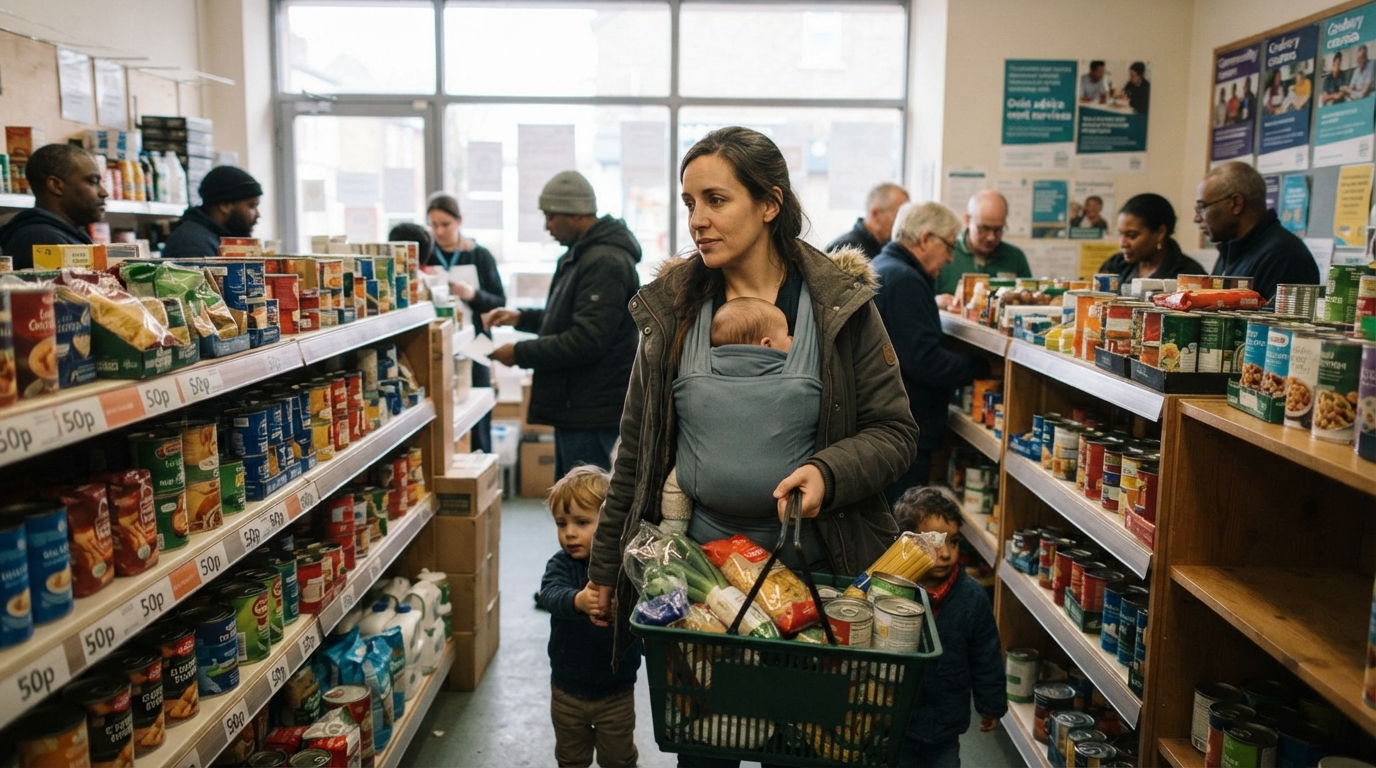
“It’s definitely tight trying to budget on maternity leave”
Sara Ody was one of the first customers at a new community food pantry in Sheffield
Nearly 50,000 households in Sheffield are struggling to get by and cannot cover their bills, according to a new council report on the cost of living.
The report says these households have a “negative budget”, meaning they cannot meet essential costs even after claiming all benefits they are entitled to and cutting spending back to the bare minimum.
In the same week the report came out, a new food pantry opened in the Woodseats area of the city, providing low-cost food for anyone affected by the cost of living.
Fourteen people visited within the first hour, including 37-year-old Sara Ody.
“There’s always a thought process, ‘can we afford this? do we have to sacrifice this to be able to afford food, childcare and clothes?’ It’s definitely tough,” she said.
The Community Grocery pantry, run in partnership by The Message Trust and Ikon Church at Woodseats, charges £1 a year for membership, with food and household essentials starting at just 50p.
Sara said her money was especially stretched now that she is on maternity leave from work.
“There’s four of us now, and I’ve got to the point in my maternity leave where there is not really any money coming in, so it’s definitely tight trying to budget, especially in the run up to Christmas,” she said.
“It’s frustrating because I saved up so much money while I was working to be able to still have opportunities and do things while on maternity leave, but you have to budget all the time.
“We’re finding food is so expensive and every week it seems the prices are going up and up so things like this are amazing. We can get definitely some staple bits to see us through winter.”
Citizens Advice estimates that 47,500 people in Sheffield have negative budgets.
It says poverty in the city existed before the cost-of-living crisis and reflects long-term inequalities in income, employment, health, housing and opportunity.
But it also says years of financial strain have left some households with reduced savings, debt and arrears, making it harder for them to cope with further shocks.
It adds that children are especially affected, with around one in three children in Sheffield living in poverty, “substantially above” the national rate.
John Lawson, the regional lead for The Message Trust, which has 35 stores across the country and is based in Sheffield, says community grocery stores can fill the gap between food banks and supermarkets because they provide a range of food at a much lower price.
“We opened here after seeing the need on the doorstep and the challenges that people are facing with the cost of living,” he said.
“Even a lot of the community who wouldn’t necessarily have been struggling five years ago are now finding themselves living paycheck to paycheck.”
The shop is open to everyone and there is no means testing.
Lawson added: “We want to make it accessible for everyone, so if someone is passionate about saving food from landfill, they should shop here. If someone’s in crisis and needs free food, they can come here.
“Or if someone just wants to be in the community, in an amazing space like we’ve got here, they can come and hang out.
“We want to create an opportunity and a resource where anyone can come and access healthy food and wraparound care so we can holistically look after the whole person with mental health support, debt advice, cookery courses or just simply offering a social space for people to come together.”
Another customer, Debbie Schofield, 44, said she believed the pantry would help people see they are not alone.
“I think Woodseats needs this community hub where people can get some cheaper resources and have a chat somewhere warm,” she said.
“I like the concept of the community pantry. I think everybody’s struggling with the cost of living, everything has gone up quite considerably, but I also feel like social media isolates us in our own homes.
“I don’t feel there’s a sense of community like when I was growing up, like in the 1980s and 90s. It’s really important for these pantries to exist because they bring neighbours together and then people in the wider community start to recognise each other.”