

'I don't have a buoyancy aid': Living without the Bank of Mum and Dad
Three 20-somethings tell BBC News how they are navigating life without parental support.
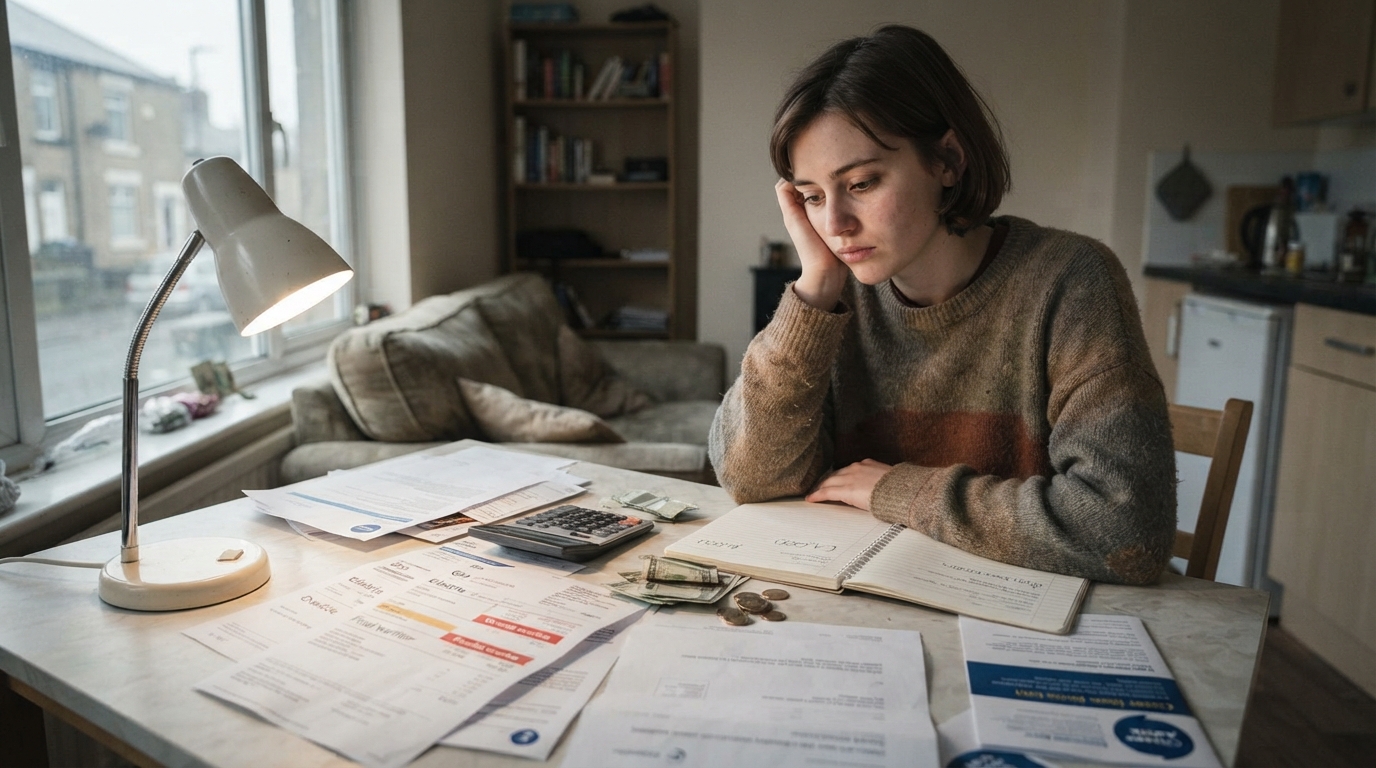
**'I don't have a buoyancy aid': Living without the Bank of Mum and Dad**
For many young people, buying a home or even renting somewhere to live is becoming an increasingly out-of-reach dream.
This summer, BBC Your Voice found that more than 40% of 25-year-olds were living with their parents. Many young people told us they were depending on the so-called Bank of Mum and Dad to help with rent, bills and other everyday costs.
But what if family support is not an option? Citizens Advice says growing numbers are finding it hard to pay for essentials such as rent and food without help from their parents.
Three women shared how they are getting by without that safety net.
**Eleanor Bell, 23, from East Riding of Yorkshire, has a first-class degree but is struggling to find work**
**Eleanor says she has applied for more jobs than she can count**
Eleanor Bell is 23 now, but she was taken into care when she was 10. She worked hard at school and earned a first-class degree from the University of Central Lancashire.
When she graduated two years ago, she believed things would become fairer. They haven't.
Eleanor says she has applied for more jobs than she can count and has had only a handful of unsuccessful interviews.
She is currently living in her boyfriend's home outside Penistone in South Yorkshire, which helps with living costs, but the rural setting has made job hunting more difficult for someone without a driving licence.
"I know a lot of people who've got jobs because their mum or dad worked there before them."
After seeing a BBC article about how many young people now live with their parents, she contacted us.
"I guess it makes me a bit sad. I'd like to live with my parents... but it made me think about the people like me, the people that don't have that, what are they doing then? Where are they? Who do they have to fall back on?
"It's like everyone in their 20s is having to tread water, but I haven't been given a buoyancy aid," Eleanor tells the BBC.
Official figures show that 39% of care leavers aged 19 to 21 in England are not in education, employment or training, compared with around 13% of young people overall.
"I want to be independent and so when you get to this kind of thing it's like hitting a wall."
For Eleanor, it is not only financial help and a roof over her head that she lacks.
"You don't have someone to hold you and go, 'Look I've done the same thing, but don't worry' … that lack of preparation I think really does affect you," she explains.
"I don't quite know what to do, that's how I feel, just a bit lost. I'm just back to being in the dark without a torch kind of thing, that's what it feels like."
**Sam Barrett, 24, from Sunderland, is studying part-time. She left her full-time job to care for her mum**
**Sam says that Carer's Allowance and Universal Credit don't cover her main expenses**
In Sunderland, Sam Barrett, 24, says she feels frustrated that people her age have a financial back-up that she does not.
She left her full-time hospitality job to care for her mum and is studying health and social care part-time, but says Carer's Allowance and Universal Credit do not cover her main expenses.
"Not a lot is coming in, you only get so much being a carer. I don't buy any luxuries, I rarely do anything fun," she says.
Her mum helps financially when she can, but there is not much money available and Sam says she is aware of that.
"I've always felt it was a bit unfair growing up and seeing other people being at a massive advantage compared to me. Like a lot of parents would be like, 'here's money for driving lessons, and here's your car', and I can't just do that," she says.
Sam is angry that carers like her are not paid more. "I'm saving the government money by caring for my mam. The government aren't doing anything to help you, they're basically saying just get into debt."
**Ezgi Polat, 23, from Cambridgeshire, lost her job a year ago and quickly fell behind on rent and bills**
**Ezgi turned to Citizens Advice for help after her debts spiralled to about £4,000**
In a recent survey of more than 5,500 people commissioned by Citizens Advice, 36% of adults said they were behind on at least one bill, but among people in their 20s that rises to 57%.
Ezgi Polat is one of them. When the 23-year-old from Ramsey in Cambridgeshire lost her job 12 months ago, her family could not help, so she soon fell behind on rent and bills.
"My parents were struggling financially, just like I am, just like everyone else.... I got myself in arrears, a lot of debt because I just couldn't afford it - £300 was not covering any of my bills at that point."
Her local bus service was cancelled, making trips to the job centre harder and harder, so her benefits were cut. She was getting £360 a month in Universal Credit, but with rent of £460, plus utility bills, council tax and living costs, her debt grew to about £4,000.
After seeking help from Citizens Advice, her rent arrears were cleared by the council three months ago, and she has agreed repayment plans of £200 a month to both her electricity and water company.
She is pleased to have found work in a warehouse and feels life is getting back on track, but it has not been easy.
"A lot of older people feel like we're not ambitious enough, or we're not striving hard enough, but they'd be surprised at the amount of people out there so desperate for work and so desperate for support but with nowhere to turn to," she says.
The latest government figures show that just under a million young people are currently not in employment, education or training.
A government spokesperson said: "We are determined to restore hope and deliver opportunity for young people in every postcode. That's why we are investing £2.5 billion to create opportunities for young people to earn or learn through more apprenticeships, job grants, and training. And for those moving out for the first time, our Renters' Rights Act gives tenants more rights and protection from excessive increases."
But Luke Young, head of policy at Citizens Advice, believes young people are caught between rising costs and a tough jobs market.
"For young people right now the divide is growing bigger between those who do have financial support from families and other networks, and then those who don't. Young people who don't have that wider support network are being let down."