

It was stated that the HIV epidemic has spread to the general population in 27 regions of Russia
A generalized stage of the HIV epidemic is being observed in 27 regions of Russia. According to Rospotrebnadzor experts, the virus is being detected in more than 1 percent of pregnant women in these regions. The most severe situation has been recorded in the Kemerovo, Irkutsk, and Sverdlovsk regions.
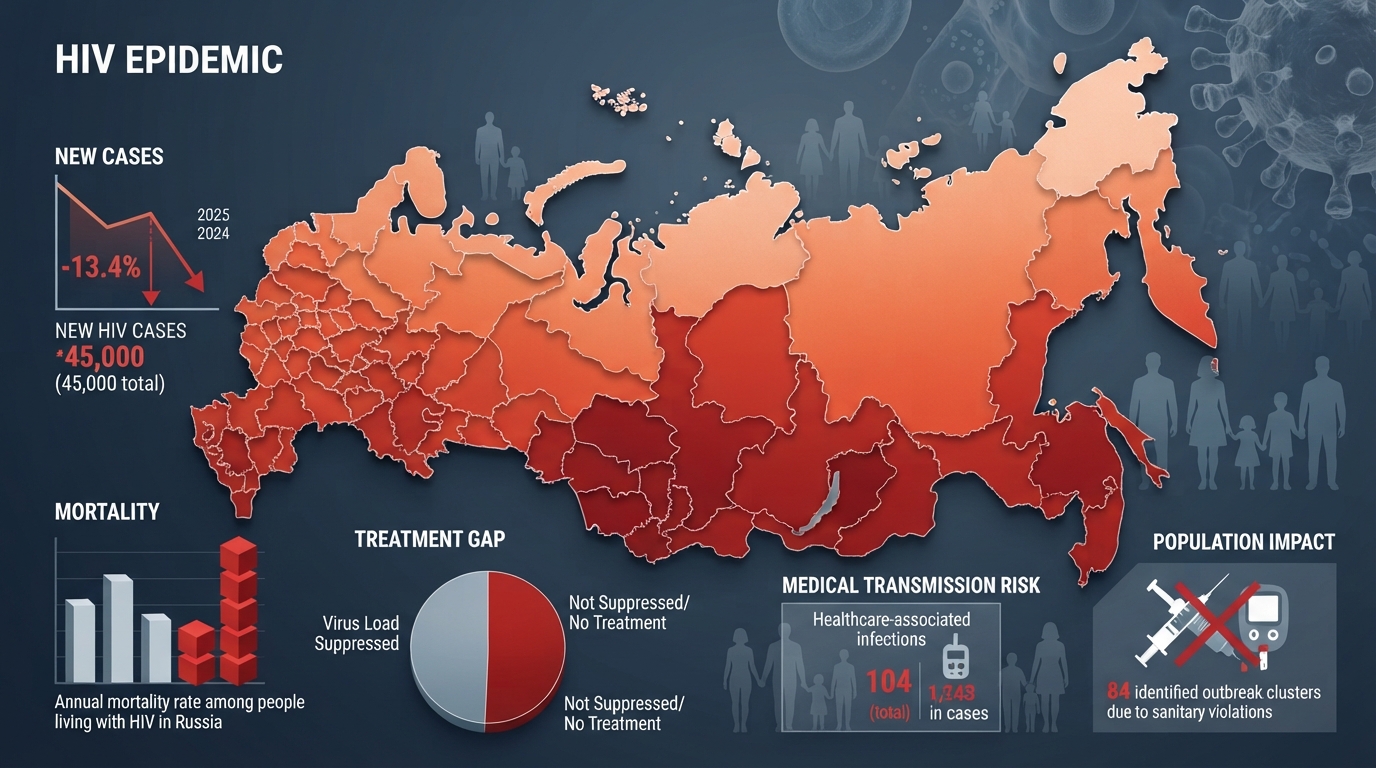
HIV epidemic has spread to the general population in 27 regions of Russia
This was reported by "Nezavisimaya Gazeta" referencing data from Vasiliy Akimkin, Director of the Central Research Institute of Epidemiology of Rospotrebnadzor, and the "Medvestnik" publication.
The generalized stage of the epidemic means that the spread of the infection is not limited only to specific high-risk groups, but is also observed among the general population.
Natalya Ladnaya, lead researcher at the institute's department for AIDS prevention and control, reported that although the number of new cases is steadily declining, the overall problem associated with HIV infection is not easing.
### 45 thousand new cases in one year
According to the provided data, 45 thousand new HIV cases were detected in Russia in 2025. This is 13.4 percent less than the indicator in 2024.
At the same time, as "Nezavisimaya Gazeta" writes, additional funds provided for medicines in Russia's draft budget for 2027 are intended to cover another 30 thousand people diagnosed with HIV.
Ladnaya stated that 30–34 thousand deaths per year are recorded among people living with HIV in Russia. "Medvestnik" assessed this figure as extremely high.
### Viral load suppression rate is low
According to Ladnaya, by the end of 2025, viral load was suppressed in only half of the people living with HIV in Russia.
Among those receiving treatment, this figure was 77.9 percent. The international target figure cited in the report is at least 95 percent.
### Cases of transmission in medical facilities were also recorded
Yelena Igonina, head of Rospotrebnadzor's department for the epidemiological well-being of the population, reported that eight outbreaks of HIV and hepatitis transmission during the provision of medical care were identified in 2025. This is said to be the highest figure in the last 15 years.
In these outbreaks, a total of 104 patients were infected. The report does not specify how many of them were diagnosed with HIV and how many with hepatitis.
Igonina cited violations of sanitary and epidemiological requirements as the main reason for such cases. In particular, it was noted that catheters intended for individual use or glucometers measuring blood sugar levels were used on several patients.