

It is proposed to process hazardous waste in cement kilns in Uzbekistan – the project is valued at 3.9 million euros
According to FAO, the limited capacity for hazardous waste disposal in Uzbekistan poses a threat to the environment and public health. For this reason, international organizations are proposing to co-process hazardous waste in cement kilns. The project is funded by the European Union, and its total value amounts to 3.9 million euros.
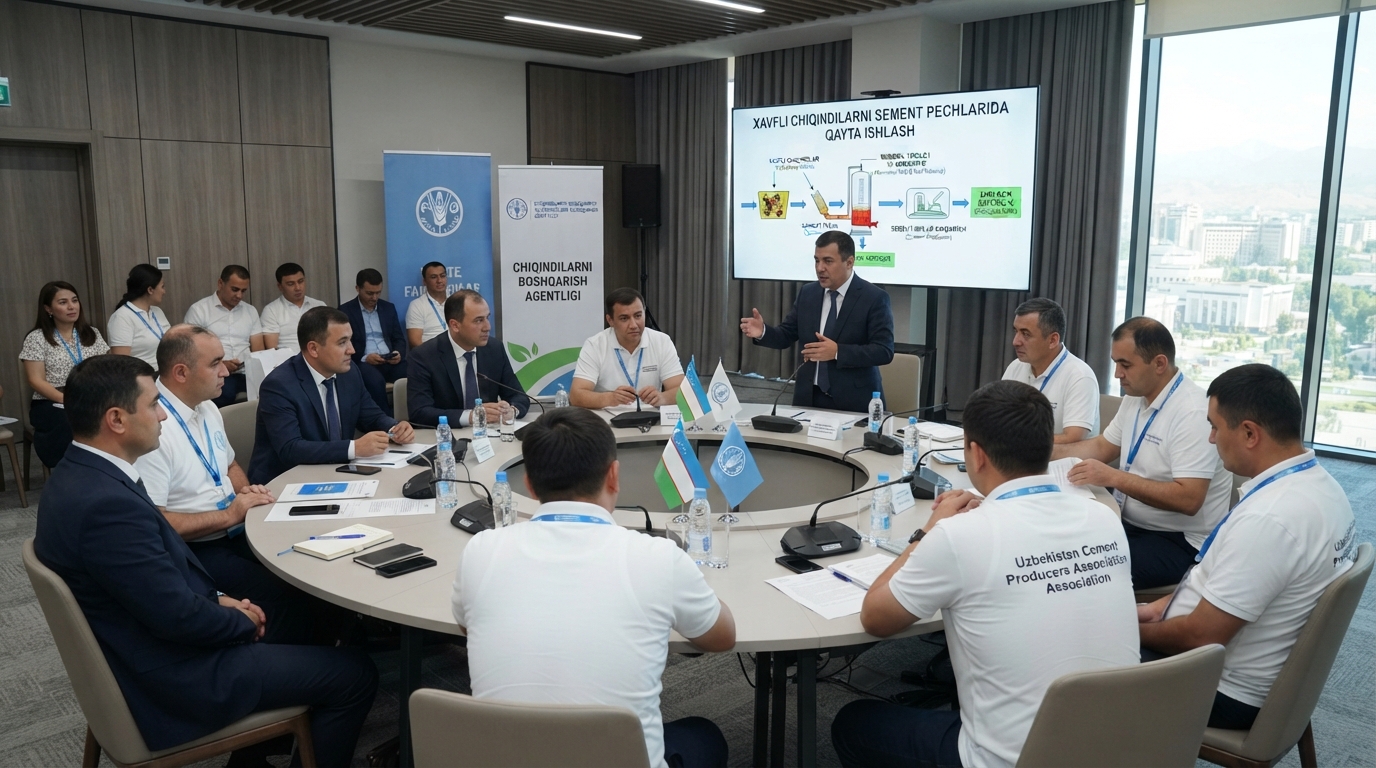
It is proposed to process hazardous waste in cement kilns in Uzbekistan — project value is 3.9 million euros
The Food and Agriculture Organization of the United Nations (FAO) and the Agency for Waste Management and Circular Economy Development organized a roundtable discussion in Tashkent dedicated to the environmentally sound management of hazardous waste.
The event was attended by representatives of international organizations, development partners, government agencies, the Uzbekistan Cement Producers Association, and cement plants — where the possibilities of co-processing certain types of hazardous waste as alternative fuel and raw materials in the cement production process were discussed.
Co-processing of waste in cement kilns is used in some countries as one of the methods for managing hazardous waste. In this process, waste can be used as an alternative to fuel or raw materials in the cement production process.
According to FAO, the limited capacity for hazardous waste disposal in Uzbekistan poses a threat to the environment and public health. Therefore, the issue of studying the potential of the cement industry in this direction has been put on the agenda.
During the roundtable, a pilot experiment conducted in Azerbaijan with the support of FAO on the controlled co-processing of pesticide waste containing persistent organic pollutants was also presented.
Additionally, the approach of the Uzbekistan Cement Producers Association towards waste co-processing as a business and investment decision was discussed.
At the end of the event, the initial regulatory, permitting, infrastructural, and investment issues that need to be resolved for the implementation of pilot projects were identified.
Roberto Aparicio, Program Manager of the European Union Delegation to Uzbekistan, emphasized that in the next stage, it is important to turn the discussions into a roadmap agreed upon with government agencies and industry representatives.