

Is Zelensky right to say data centre strikes have taken down Russian bots?
Experts say there is no evidence that Russian trolls have been affected by Ukraine’s Yandex attacks.
**Is Zelensky right to say data centre strikes have taken down Russian bots?**
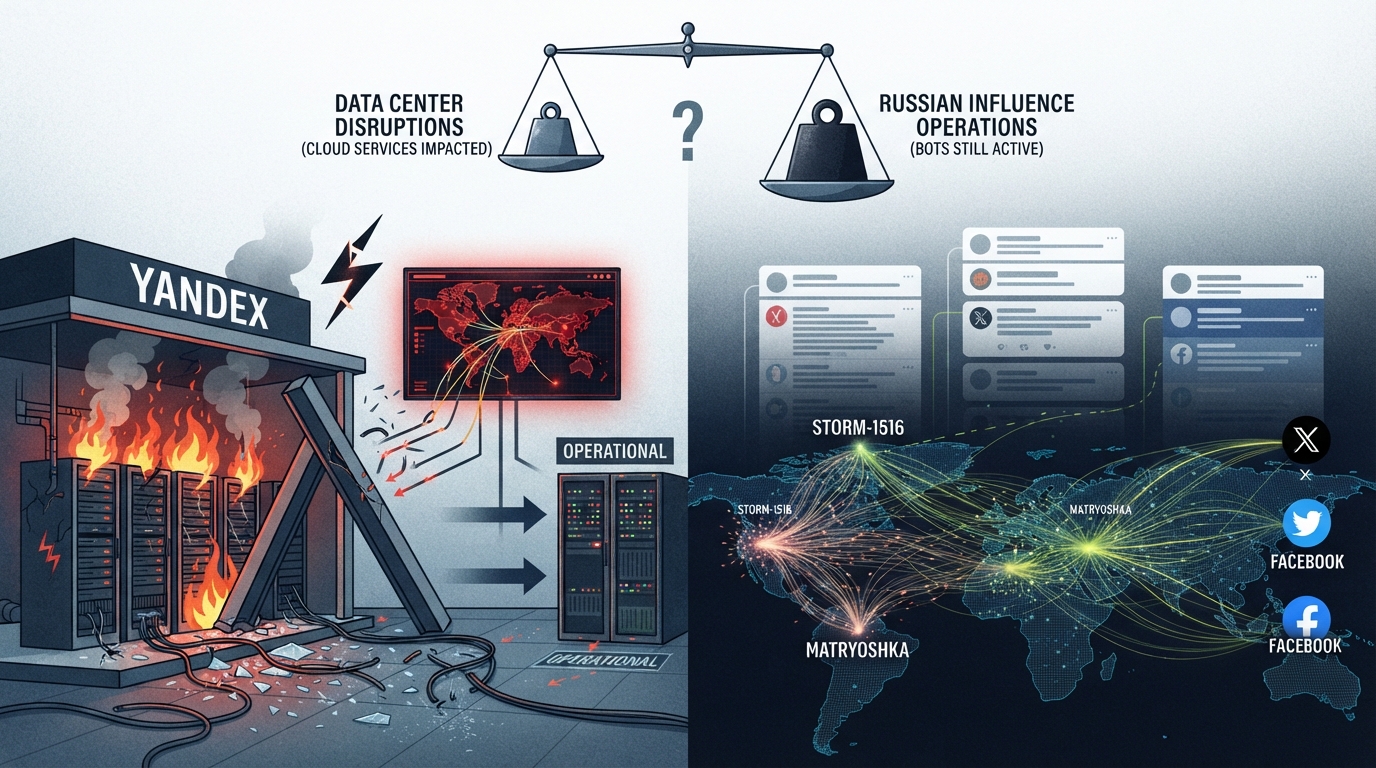
Claims that Ukrainian strikes on Russian data centres have cut down Kremlin-linked bot networks have spread widely online, but experts have told BBC Verify there is no evidence the attacks have significantly reduced them.
Viral social media posts have said there has been a major decline in influence operations in recent days, with Ukrainian President Volodymyr Zelensky saying on Monday there was "less hate, less division and fewer provocations" online because of "fewer bots".
Russian influence operations, which promote pro-Kremlin narratives and spread disinformation, have been monitored by researchers and journalists including BBC Verify for more than a decade.
These campaigns push disinformation into people's social media feeds on topics such as the Ukraine war, or post messages backing Moscow's interests.
Since 8 October, Ukraine has struck three of Russian tech giant Yandex's five data centres in response to Moscow's attacks on Ukrainian internet hubs.
The second of those strikes, on Thursday, led Yandex, often called Russia's Google, to say it was having difficulty keeping its services running.
But claims that these attacks have affected Russian disinformation operations, including accounts posting supportive messages about groups such as the Make American Great Again (MAGA) movement in the US and the far-right AfD party in Germany, appear to stem from a misunderstanding of data from tech company Cloudflare.
Some social media users have been circulating charts of Cloudflare data showing that bot activity using Yandex's network has fallen.
Although bots are often linked with fake social media accounts that may spread false, divisive and inflammatory content, they are also used to automate tasks such as scanning web pages so they show up on search engines.
Cloudflare clarified that its data covers all automated internet requests to websites hosted on its network, including bots crawling websites for information.
The company also said the decline was "not necessarily bot behaviour on social media platforms".
Tomáš Zdechovský, a Czech member of the European Parliament, shared a post on X that has been viewed more than four million times, saying: "If confirmed, this is telling: Russian data centres get hit, and online activity around AfD suddenly plummets."
He has since said he "did not present it as a clear fact", but the post is still pinned at the top of his X profile.
Researchers from dTeam, a US-based group that tracks Moscow-linked influence operations, told BBC Verify there has not been "any traffic change from known Russian accounts and bot clusters on any platform".
They added that if the offices of known groups involved in these operations "were in flames then we would see a change".
Bots linked to pro-Kremlin influence operations such as Storm-1516 and Matryoshka - both of which BBC Verify has previously reported on - were still active on social media on Tuesday, according to evidence shared with BBC Verify by dTeam.
Zelensky's office told BBC Verify the president was "talking about the atmosphere on social media" rather than a drop in bot activity. It added that it had seen "reports of fewer provocative and hateful comments" from many social media users.
Mikhail Klimarev, an independent internet analyst, told BBC Russian that while Cloudflare can show whether bots or real people have visited a website, it does not reveal what those bots are doing.
He added that Yandex uses bots to "essentially crawl the entire internet once a day" and index websites for search engine purposes, so it is most likely the company turned these off after its computing resources were severely degraded.
Yandex has said that using its cloud services for "large-scale manipulation on social media, spam and other improper activities" is against its rules and that accounts breaking these rules are blocked.
While there is no evidence to conclude the strikes on Yandex's data centres have affected Russia's influence operations, they have disrupted internet services for many.
Isik Mater, director of research at the internet monitoring group Netblocks, told BBC Verify that disruptions linked to Ukrainian strikes "affect all users" globally and that "websites which rely on Yandex may be partially or entirely unusable".
She said that after Ukraine's attacks there has been a clear impact on the company's cloud services and platforms depending on them, adding that an entire area remaining "out of service indicates a significant infrastructure-level incident rather than a brief service interruption".