

International students, 'visa hoppers' and backpackers targeted in Australia migration crackdown
The government wants to reduce net overseas migration to 225,000 people by 2028.
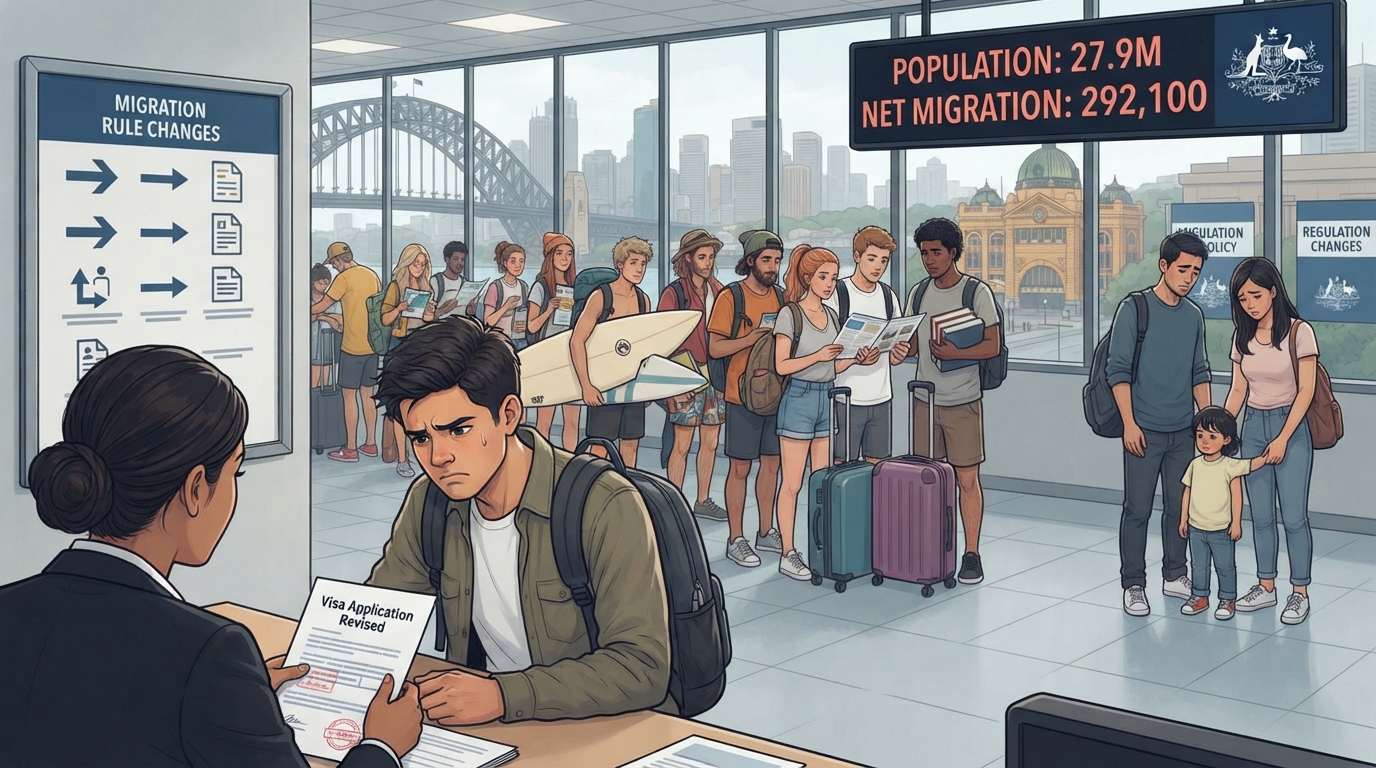
International students, “visa hoppers” and backpackers are being singled out in Australia’s migration crackdown
Australia plans to reduce immigration by tightening rules on international students and backpackers, Home Affairs Minister Tony Burke said.
International students, the so-called “visa hoppers” and backpackers will be affected by tougher measures announced by Australia on Thursday as part of an effort to rein in immigration.
Foreign students will no longer be allowed to bring family members with them, and anyone seeking to stay longer will have to move up to a higher qualification.
Working holiday visas — widely used by backpackers and an important source of labour for the agricultural sector — will also face stricter rules, including a ballot system, though the changes will not apply to the UK.
Home Affairs Minister Tony Burke unveiled the new measures, saying immigration was a “strength” of Australia but that there had to be a “high level of control”.
For international student and graduate visas, Burke said: “We will no longer be adding to the stock of students automatically being able to bring family members over.”
He said there would be exemptions for foreign students already in Australia, as well as applicants from Pacific and South East Asian countries.
PhD students would also still be able to bring their families because they are in different life circumstances from undergraduates, Burke said.
In a speech called “The work of managing the migration program: who arrives, who stays, who leaves”, Burke set out a series of changes as the government seeks to reduce net overseas migration to 225,000 people by 2028.
On student visas, he said the government would crack down on “visa hopping” — when a student completes one course, then applies for another, often at a lower level and sometimes with a “not so legitimate provider”.
Students who want to go “up the scale” will still be permitted, Burke said, such as a student finishing a bachelor’s degree and then moving on to a master’s.
He also announced significant changes to working holiday visas for people aged 18 to 30, who can work in Australia for 12 months and then extend for a second and third year.
At present, these visa holders must work for three months in regional Australia during their first year to qualify for a second year, and six months to qualify for a third year.
Under the new rules, those eligible for a second year will have to enter a ballot capped at 45,000, down from 57,000 who qualified last year.
For the third year, the ballot will be limited to 5,000, down from 31,000 who qualified last year. British working holidaymakers will not be affected because of the UK’s free trade agreement with Australia.
Fresh figures released by the Australian Bureau of Statistics on Thursday showed Australia’s population rose 1.4% in the 12 months to March 2026, reaching 27.9m.
That total included births and deaths, along with net overseas migration of 292,100.
Migration remains a major political issue as debate over Australia’s population intensifies amid higher living costs, housing affordability concerns and growing pressure on public services.
Earlier this week, One Nation, a populist right-wing party known for its anti-immigration position and which has gained support in recent months, set out its migration policy, proposing to cut temporary migrant visas by 750,000 over three years.
The party, which won its first lower house seat in May, also wants to cap net overseas immigration at 130,000, prompting a rebuke from Burke, who said the proposal would risk “smashing parts of the Australian economy”.
In July, the government brought in a policy giving priority to family visa applications lodged onshore — where the applicant is already in the country — over those filed overseas.
Skilled migrants already in Australia who had applied for permanent visas were also given priority over applicants from overseas.
It also suspended applications for working holiday visas from 24 countries, excluding the UK.
Violet Roumeliotis, from Settlement Services International, which helps new arrivals to Australia, said the migration debate was increasingly being driven by “short-term politics rather than what is best for the country”.
“The proposed changes to family visas for international students is a good example of this,” she said, adding that it would make it harder for Australia to compete for “future talent”.