

Indicators of those who received subsidies in the agricultural sector will be verified
Initially, this mechanism will be tested in the direction of introducing water-saving technologies. After the subsidy is allocated, two to three
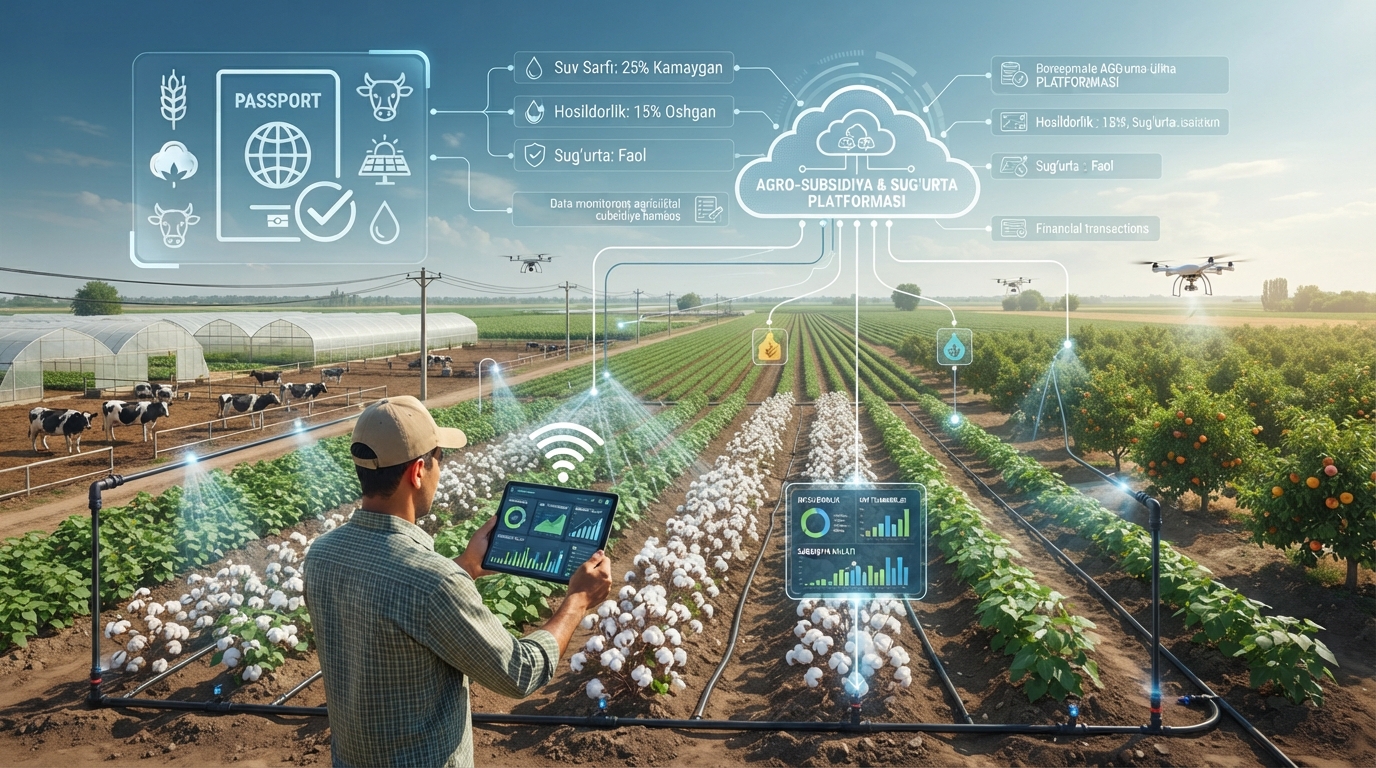
Performance indicators of agricultural subsidy recipients to be verified
President Shavkat Mirziyoyev familiarized himself with a presentation of proposals to improve the subsidy allocation and insurance systems in the agricultural sector.
In recent years, the scale of state support for agriculture has expanded, and subsidy allocation processes are being gradually digitalized. This year, subsidies in the sector have been increased to 29 directions and 91 types, with 2.7 trillion soums allocated for these purposes. In some directions, applications are generated proactively, and payment terms have been significantly reduced.
During the presentation, it was noted that subsidies should not be viewed merely as a means of cost recovery, but must be linked to concrete results. Starting next year, a gradual transition from the "allocation of funds" model to the "result-oriented subsidy" model was proposed.
Under the new system, the main criteria will be productivity, water and energy efficiency, and the volume of products obtained relative to the resources spent. All data will be retrieved from the information systems of relevant state bodies and organizations without human intervention. An electronic passport will be generated for each subsidy recipient, and the results will be monitored online.
Initially, this mechanism will be tested in the direction of introducing water-saving technologies. For two to three years after the subsidy is allocated, water consumption, productivity, and water efficiency will be evaluated. If the set indicators are not met, a mechanism for returning the subsidy funds will be applied. This will ensure the targeted and effective spending of state funds.
Special attention was also paid during the presentation to improving the agricultural insurance system. Today, processes ranging from electronic application submission to contract and policy issuance, monitoring, expertise, and compensation payment are digitalized through the "Agrosafe" information system.
As part of expanding insurance coverage, it is planned to insure seedlings and trees in orchards and vineyards, imported livestock, and risks associated with accidental events. New insurance products will also be introduced for livestock farming, melon growing, potato, and onion cultivation.
The goal is to cover 45,000 agricultural enterprises with insurance in 2027, increase the insurance coverage of agricultural products to 60 percent, train 500 independent experts, and fully digitalize insurance services.
Under the new approach, priority will be given to preventing risks alongside covering the consequences of damage. It was proposed to accumulate 3-5 percent of the insurance premium in a special fund and direct it to vaccination, prevention, and veterinary services in livestock farming, biological protection measures in cotton and grain growing, and the installation of protection devices against natural disasters in horticulture and viticulture.
The head of state emphasized that the subsidy and insurance systems must, first of all, be simple and convenient for the farmer, and state funds must serve a concrete result. Instructions were given to reduce the human factor in the processes, ensure transparency, fairly assess insurance events, and promptly pay compensations.
Officials were tasked with refining the proposals presented and submitting relevant draft legal documents.