

India launches first geosynchronous imaging satellite, bolstering earth observation capabilities
Tashkent Times is an English language online-newspaper that brings all latest Uzbekistan news
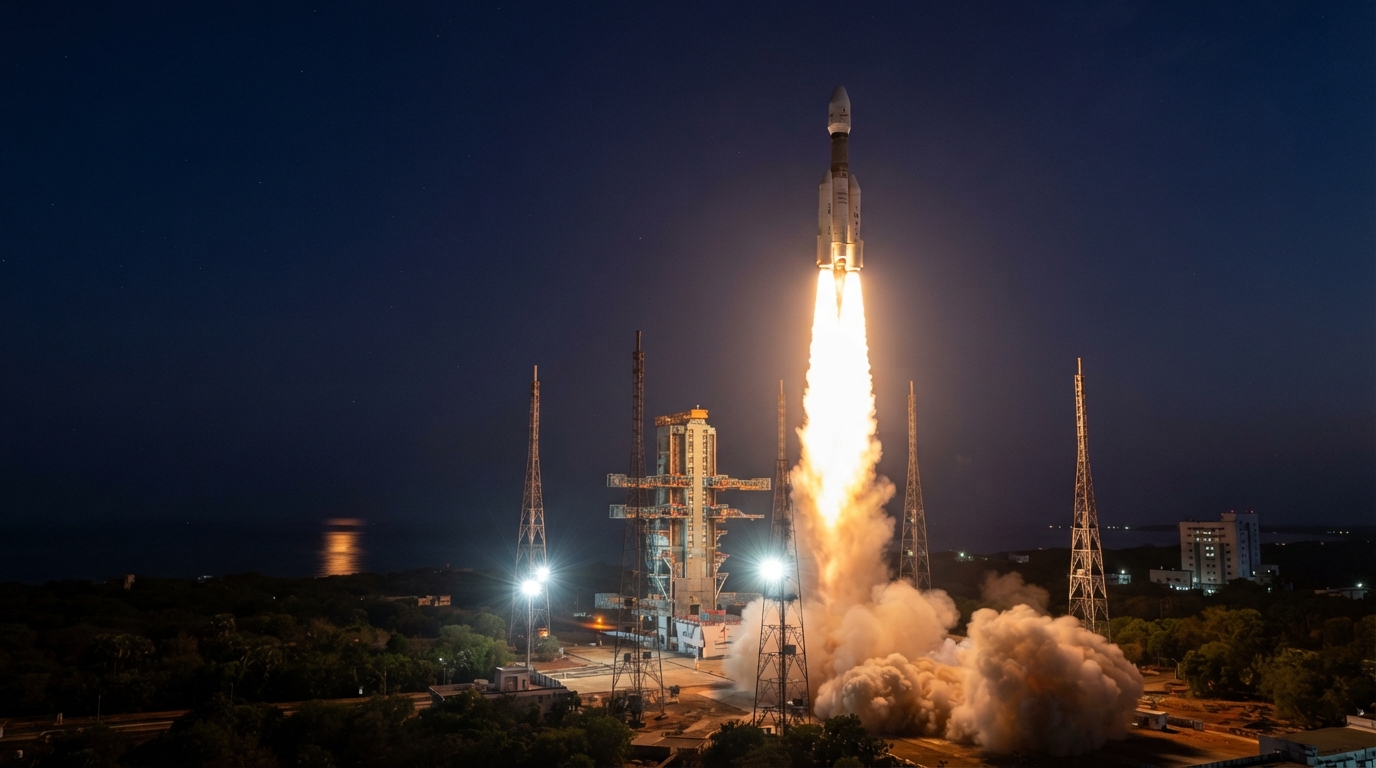
India launches first geosynchronous imaging satellite, strengthening earth observation capabilities
India’s space agency has successfully put its first imaging satellite built for geosynchronous orbit into space in the early hours of Friday, adding an important new asset to the country’s earth observation fleet.
The Indian Space Research Organisation (ISRO) said its GSLV-F17 rocket lifted off exactly on time at 2:55 a.m. from the second launch pad at the Satish Dhawan Space Centre in Sriharikota, after a smooth 27-hour countdown. The rocket, carrying 2,367 kilograms, deployed the EOS-05 satellite into its planned sub-geosynchronous transfer orbit about 18 minutes after launch, before the spacecraft proceeds to its final geosynchronous location.
After it becomes operational, EOS-05 is expected to provide real-time imagery for uses ranging from agricultural monitoring to disaster response — functions officials say will be greatly improved by the satellite’s distinctive position. Unlike most earth observation satellites, which fly at low altitude and only pass over a location at intervals, EOS-05 will effectively remain fixed relative to India, enabling continuous, uninterrupted monitoring instead of occasional snapshots.
ISRO Chairman V. Narayanan said the mission is a major advance for India’s earth observation programme, enhancing the country’s capacity to collect and provide vital environmental and geospatial information.
Recent momentum for India’s space program
Friday’s launch adds to a series of achievements that have changed India’s position in global spaceflight over the past few years. In 2023, ISRO’s Chandrayaan-3 mission made India the first country to successfully soft-land a spacecraft near the moon’s south pole, a success soon followed by the launch of Aditya-L1, the country’s first dedicated solar observatory. In the same year, ISRO also moved forward with its human spaceflight goals through early testing under the Gaganyaan program.
That progress carried into 2025, when ISRO carried out its SpaDeX docking demonstration, validating satellite rendezvous and docking technology regarded as crucial for future space station and crewed missions. In July 2025, India broadened its scientific reach further with the launch of NISAR, a satellite jointly developed with NASA and the world’s first to use dual-frequency radar imaging, intended to monitor subtle changes in Earth’s surface tied to earthquakes, landslides, glacier movement, forests and agriculture. That year also saw an Indian astronaut gain practical orbital experience through the Axiom-4 commercial mission, viewed as useful preparation for India’s own human spaceflight effort.
Looking ahead, ISRO is now preparing for the uncrewed test flight of its Gaganyaan human spaceflight program, with two uncrewed missions planned for 2026 and the first crewed flight aimed for 2027. The government has also approved ambitious follow-on missions, including a Venus orbiter and Chandrayaan-4, a lunar sample-return mission, along with plans for India’s own space station later this decade — highlighting a space program that has shifted from occasional milestones to sustained expansion across multiple fronts.