

**Included in the Heritage**
Five petroglyph complexes located in the Gorno-Badakhshan Autonomous Region in eastern Tajikistan, as well as four historical and natural sites in the Khatlon Region in the south of the country, have been included in the UNESCO World Heritage Tentative List. This was announced by the Agency for the Protection of Historical and Cultural Heritage under the Government of Tajikistan.
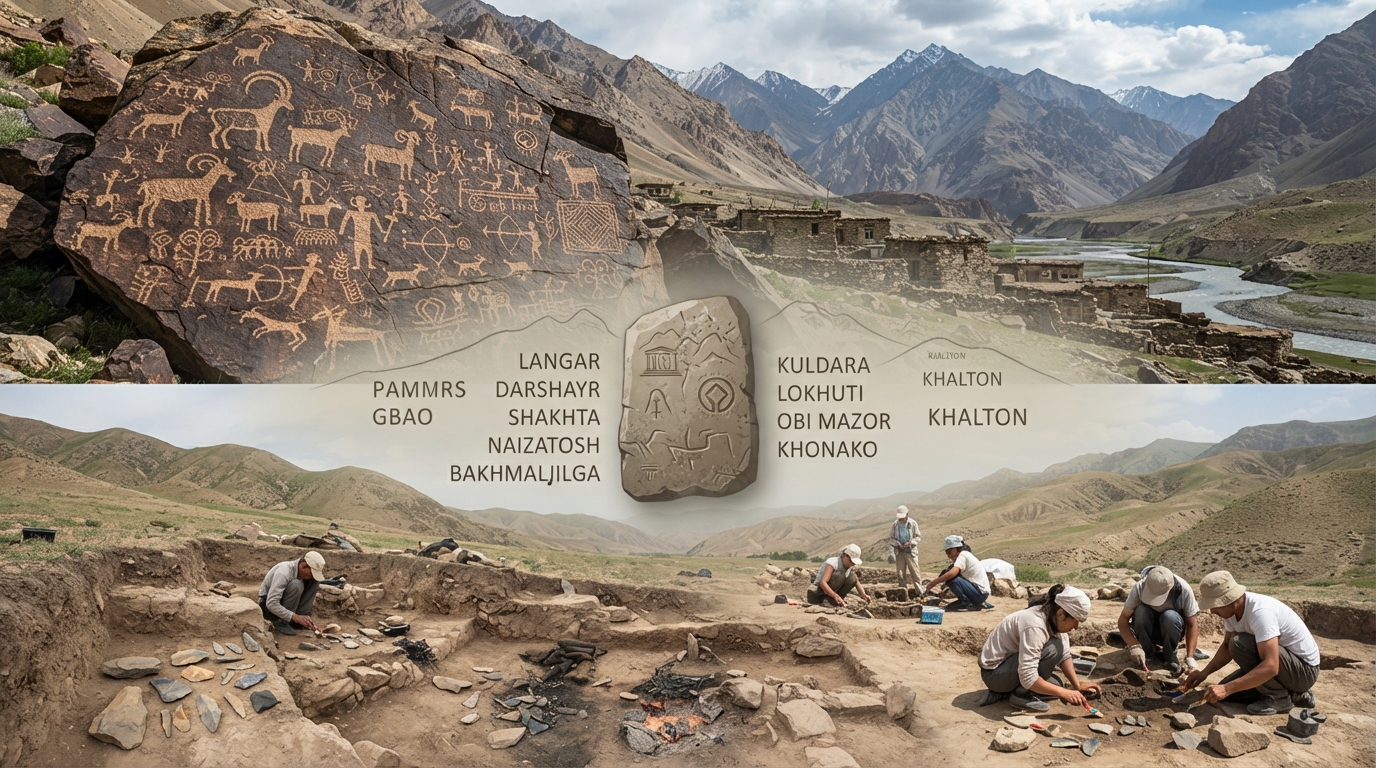
The statement on the agency's website says that, on the initiative and proposal of the agency, the petroglyph complexes of Langar, Darshair, Shakhta, Nayzatosh, and Bakhmaldjilga were added to the list. In addition, it includes the ancient historical and natural sites of Kuldara, Lokhuti, Obi Mazor, and Khonako, located in the Khovaling District of the Khatlon Region.
"These petroglyphs and ancient monuments, being valuable examples of Tajikistan's historical and cultural heritage, hold important scientific, cultural, and historical significance," the agency's statement said. It noted that their preservation is of particular importance for studying the history of ancient civilizations and the cultural development of the region.
The agency called the inclusion of these sites in the tentative list "an important step towards presenting the historical, cultural, and natural heritage of Tajikistan at the international level, as well as expanding work on its preservation, study, and promotion."
According to UNESCO, the petroglyph complexes included in the tentative list date back to various historical periods — the Mesolithic, Neolithic, Bronze, and Iron Ages, as well as the Middle Ages. The petroglyphs include images of mountain animals, anthropomorphic figures, hunting scenes, various symbols, and geometric shapes.
The archaeological complexes of Kuldara, Lokhuti, Obi Mazor, and Khonako date back to the Paleolithic era. Numerous evidences of the life of primitive humans have been preserved on the territory of these historical sites.