

In Uzbekistan, the poverty rate decreased to 3.9 percent in the eight months of 2026
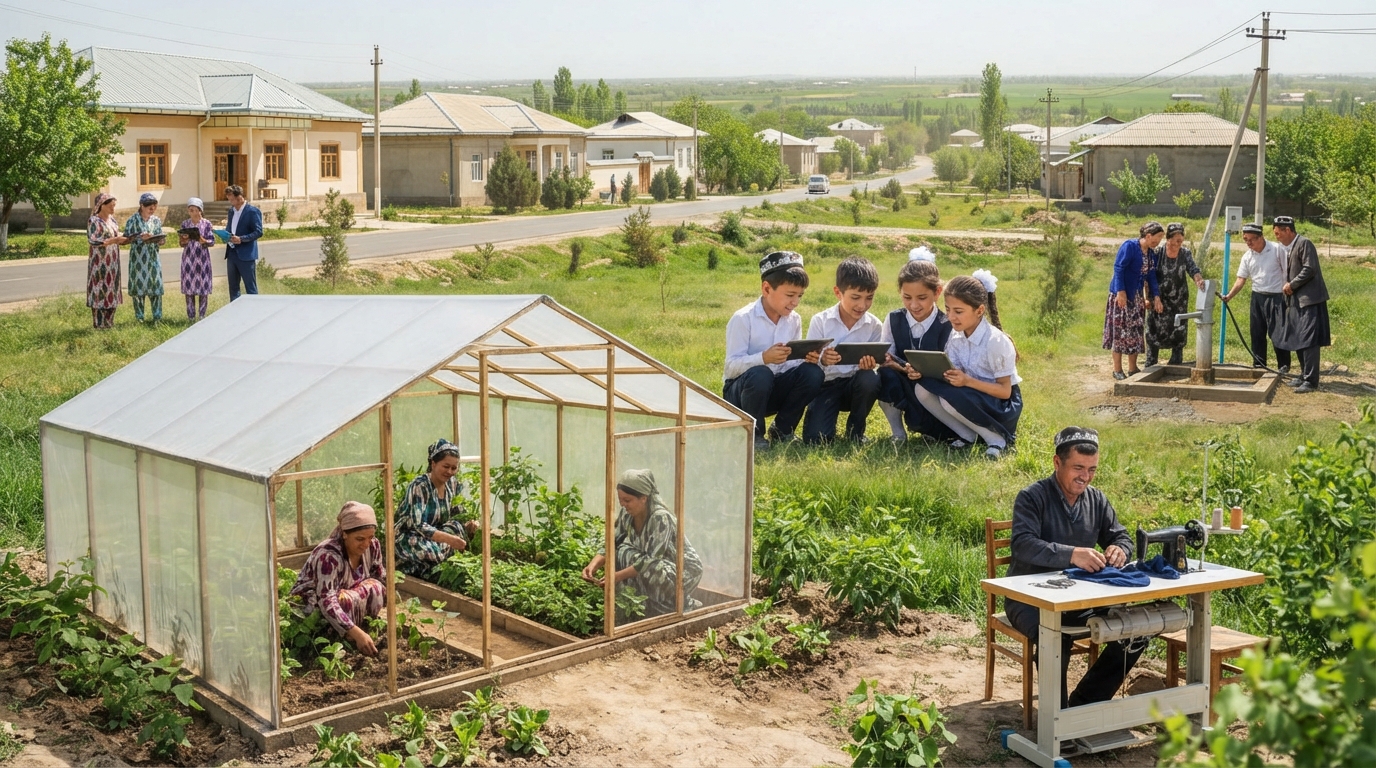
In Uzbekistan, the poverty rate fell to 3.9 percent in the first eight months of 2026
In the first eight months of 2026, the poverty rate in Uzbekistan decreased from 5.8 percent at the beginning of the year to 3.9 percent. During this period, 49 districts and 3.5 thousand mahallas were transformed into poverty-free areas.
For 2026, the task has been set to lift 1.1 million people, i.e., 263 thousand families, out of poverty and to significantly reduce the poverty rate from 5.8 percent by the end of the year. To this end, during the eight months of the current year, individual plans were prepared for 515 thousand families based on the needs and capabilities of the families included in the Social Register.
Based on these plans, 390 thousand poor families were covered by 554 thousand employment services aimed at increasing their income. In particular, more than 160 thousand citizens were employed, 67 thousand received preferential loans and subsidies, 304 thousand were involved in entrepreneurship, and 22 thousand were trained in professions.
In order to create new sources of income in mahallas, hokim assistants launched nearly 55 thousand micro-projects, increasing the income of 164 thousand residents. To support the entrepreneurial initiatives of poor families, 700 billion soums in loans and 77 billion soums in subsidies were allocated.
Additionally, 1.4 thousand hectares of forest fund lands were leased to more than 1.8 thousand poor families for establishing nurseries and growing medicinal plants. According to the ministry, special emphasis was placed on creating opportunities for families to earn income through their own labor, rather than providing ready-made aid.
To expand educational opportunities for children from poor families, 125 thousand children were involved in extracurricular clubs. For this purpose, nearly 130 billion soums were allocated from the state budget. Furthermore, nearly 50 thousand children were trained in free courses in fields such as information technology, foreign languages, e-commerce, SMM, and graphic design.
In cooperation with relevant German organizations, the training of nearly 1,600 students in entrepreneurship was established in 89 technical schools across 37 heavily disadvantaged districts.
Along with increasing the population's income-earning opportunities, attention was also paid to their health. Various diseases were detected in 351 thousand citizens on the Social Register, and they were treated at home, in outpatient settings, and in hospitals of various levels. Nearly 8.5 thousand people were restored to health through surgery and returned to the labor market.
To improve infrastructure in the regions, a total of 7.7 trillion soums was directed to 33 districts and 330 mahallas under the "New Uzbekistan" image, as well as to 37 heavily disadvantaged districts and 915 mahallas. These funds are being used to improve water, electricity, roads, and social facilities.
For the remainder of the year, regional leaders have been tasked with placing another 350 thousand residents in permanent jobs, increasing the income of 1 million residents, and lifting 230 thousand families out of poverty.
At the meeting, it was stated that while the poverty rate has decreased and the number of needy people has declined, the results of the officials' activities in transforming some mahallas into areas free of unemployment and poverty remain insufficient. Shavkat Mirziyoyev criticized some regional leaders, stating that they lack either the knowledge or the patience to provide people with jobs.