

In Uzbekistan, criminal liability has been introduced for violating the immunity of members of the Presidential Administration
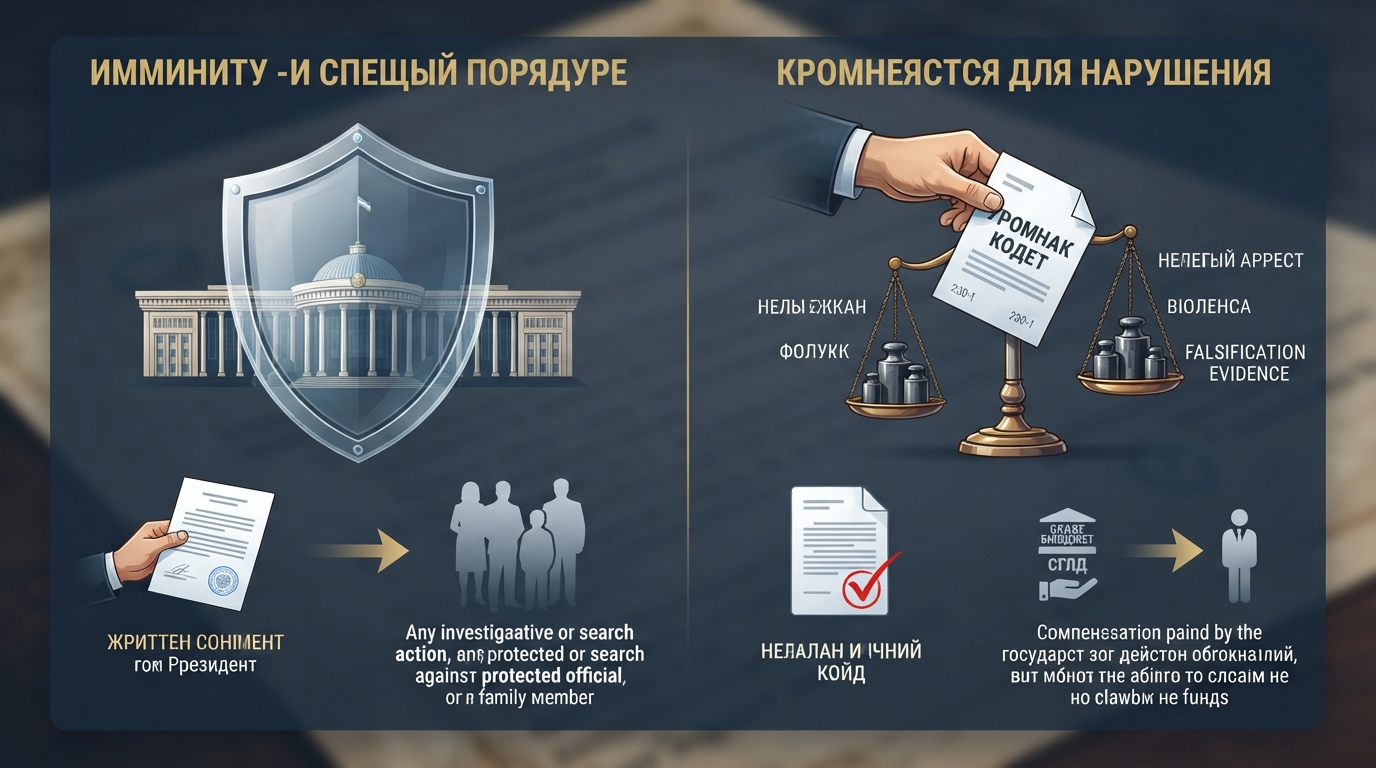
Criminal liability introduced in Uzbekistan for violating the immunity of Presidential Administration members
Uzbekistan has established criminal liability for violating the guarantees of inviolability and immunity provided for a number of officials. At the same time, the law introduces a special procedure for conducting investigative and operational-search measures against protected persons, and also provides for the payment of compensation from the state budget for harm caused by employees of the presidential administration in the performance of their official duties.
Shavkat Mirziyoyev signed the law on October 14, and it entered into force on October 15. The amendments affected five legislative acts: the Criminal and Criminal Procedure Codes, the Code of Administrative Responsibility, the law "On Operational-Search Activity," and the law on compensation for harm caused by state bodies and their officials.
Article 230-1 on the violation of guarantees of inviolability and immunity has appeared in the Criminal Code. Deliberately unlawful detention of a protected person, their forced bringing, operational-search or investigative actions against them, as well as the issuing of relevant orders carry a penalty of restriction of liberty or imprisonment for a term of three to five years.
Under aggravating circumstances — a repeated violation, commission of the act by a group of persons by prior agreement, the use of violence, falsification of evidence, unlawful arrest, or prosecution — the term of imprisonment will range from five to eight years.
Permission will be required to start investigations
The law introduces separate procedures for initiating criminal cases, detention, arrest, search, and other procedural actions against persons with guarantees of inviolability. Depending on their status and the nature of the measure, the consent of the relevant authorized body is required, including the President, the Prosecutor General, a house of parliament, or a judicial body.
Operational-search activity is not allowed at all against officials of the presidential administration and members of their families. For managerial workers of the administration, such measures are possible only for actions not related to their service, and only with the written consent of the head of state. Written consent from the presidential administration is provided for conducting such measures against family members of managerial workers.
Thus, the possibility of conducting certain investigative and operational measures depends not only on the existence of legal grounds, but also on passing a special approval procedure. At the same time, immunity guarantees in themselves do not repeal the rules established by law, but determine a special procedure for their application.
Decisions and actions committed in violation of these requirements are declared unlawful and subject to cancellation. Evidence obtained in violation of the rules on inviolability and immunity is declared inadmissible and cannot be used for the prosecution.
A separate norm concerns harm caused by decisions or actions of officials and managerial employees of the presidential administration in the performance of their official duties. Such damage will be compensated at the expense of the state budget, and the state will not be able to recover the paid funds from the officials themselves by way of recourse.
As a result, the financial consequences of such actions in cases provided by law fall on the state, and not on a specific employee. The compensation procedure will be regulated by a separate law.
, the special legal status of presidential administration employees was secured by a constitutional law signed in August.