

In Namangan, the operations of a soap manufacturing enterprise were suspended due to violations of environmental requirements
The inspection revealed the absence of dust and gas collection filters, exceeding the standards for certain chemical emission indicators, and the absence of a state ecological expertise conclusion.
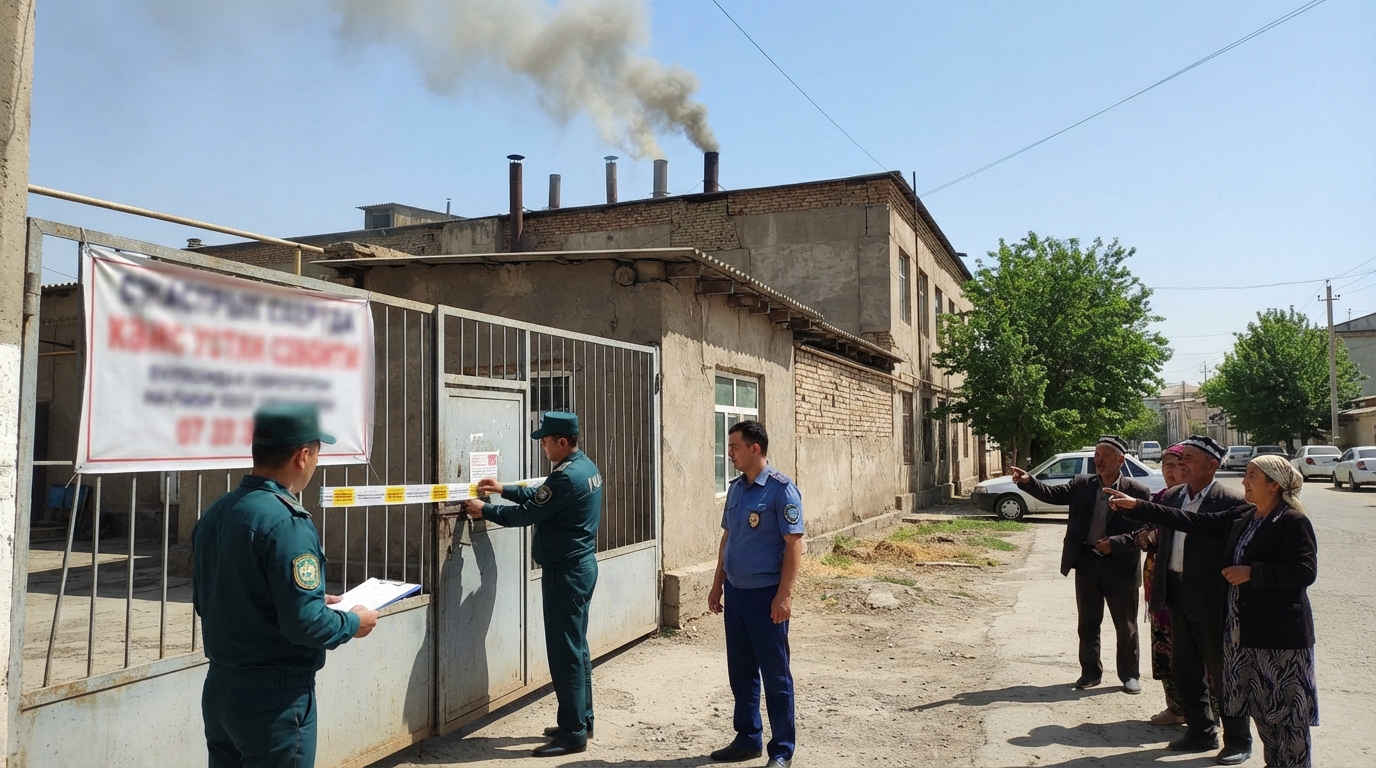
In Namangan, a soap manufacturing plant suspended operations due to environmental violations
An inspection revealed the lack of dust and gas collection filters, the exceeding of standards for certain chemical emission indicators, and the absence of a state environmental expertise conclusion.
Following complaints from local residents about a foul odor in Namangan, the operations of a private laundry soap manufacturing enterprise have been temporarily suspended. This was reported by the Department of Ecology and Climate Change of the Namangan Region.
The basis for the inspection was an appeal from residents of the "Porlok" mahalla in the Davlatabad district of Namangan city, who reported a unpleasant smell originating from a nearby soap production workshop.
Officers of the Eco-Police, together with specialists from the regional ecology department, conducted an inspection of the private enterprise "H.S.", having notified the authorized body in advance.
During the control measures, violations of environmental requirements were uncovered. In particular, the plant was not equipped with modern dust and gas collection filters, allowing pollutants to enter the atmosphere freely.
In addition, laboratory tests revealed that established standards for certain chemical emission indicators were exceeded. It was also established that the enterprise lacked a positive conclusion of the state environmental expertise.
Due to the identified violations, the manufacturing operations have been temporarily suspended. Work can only resume after the identified deficiencies are fully rectified.
The environmental authority recalled that earlier in Tashkent, the operations of a greenhouse facility were also suspended due to the burning of coal in violation of environmental requirements and the use of a faulty filter.
The case in Namangan draws attention once again to the need for enterprises to comply with industrial emission control requirements and ensure environmental safety.