

In Italy, artificial intelligence has found a painting stolen 20 years ago
The criminals tried to hide the original appearance of the 17th-century painting by altering some of its parts. However, artificial intelligence helped identify the artwork.
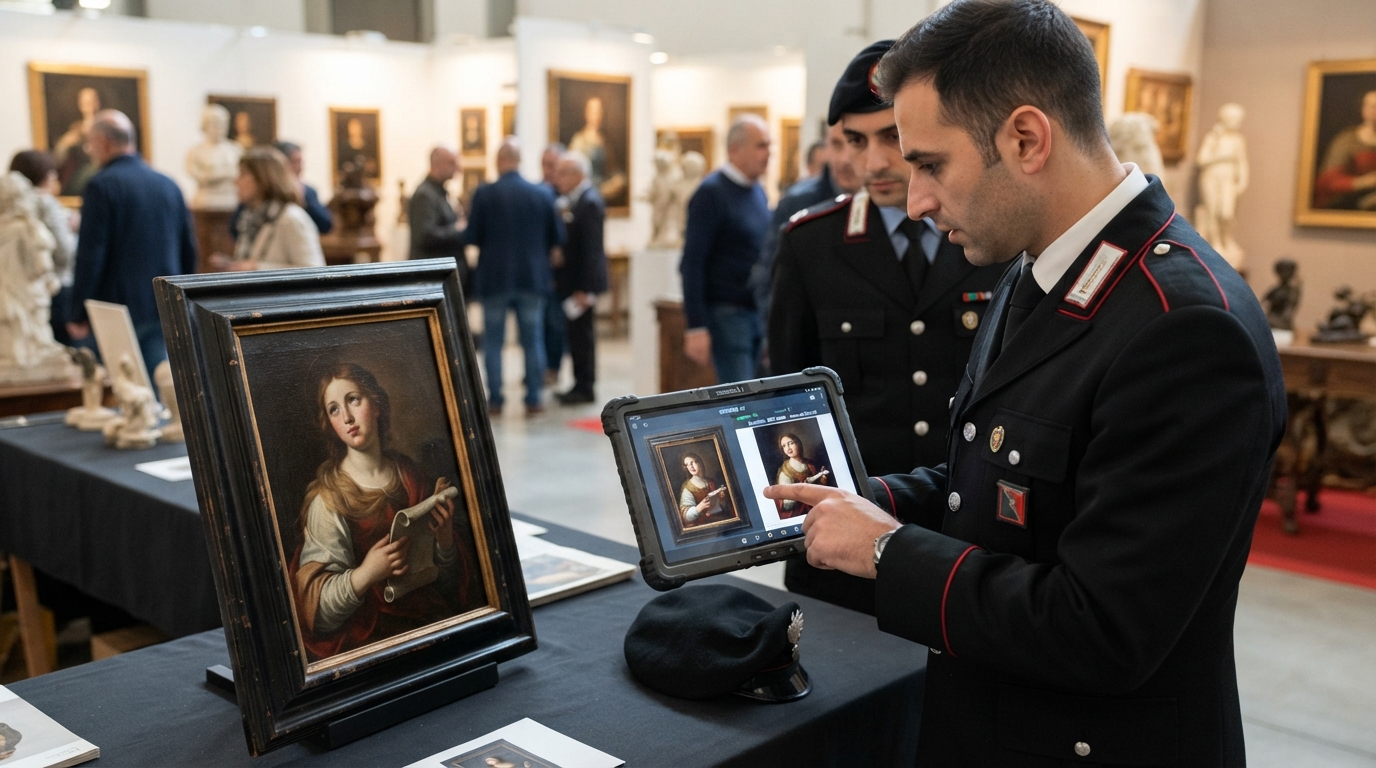
Artificial Intelligence Finds Painting Stolen 20 Years Ago in Italy
Italian police are using an artificial intelligence system named Swoads to search for stolen works of art. Since November 2023, more than 300 major paintings and sculptures, as well as over 165,000 coins, medals, and manuscripts, have been recovered with the help of this technology. Their total value exceeds 203 million euros, BBC reports.
The system compares the colors and shapes of artworks to identify similarities. Even if certain images in a painting have been altered, the artificial intelligence can still recognize it.
In October 2024, during an antiques fair in Parma, Italy, police officers took photographs of the displayed artworks and uploaded them into the system. The artificial intelligence drew attention to a painting depicting a young woman holding a scroll in her hand.
During the investigation, it was revealed that this was a 17th-century painting stolen from a church in the city of Sulmona in 2004. It depicts Saint Agnes of Rome, and criminals had altered parts of the work to make it unrecognizable. In particular, a scroll was painted in place of the lamb in the saint's hand, and the halo above her head and the palm branch were removed.
However, artificial intelligence cannot return stolen works of art on its own. It only helps identify similarities. Returning the works to their rightful owners depends on the work of investigators and cooperation between law enforcement agencies.
Italy plans to create an international system for identifying stolen works of art by 2027.