

In China, 116 drones set a record underwater
In China, 116 underwater drones set a world record by traveling along a designated route simultaneously without human control. The devices covered a distance of approximately 500 meters in 34 minutes. The result was officially recorded by representatives of the Guinness World Records.
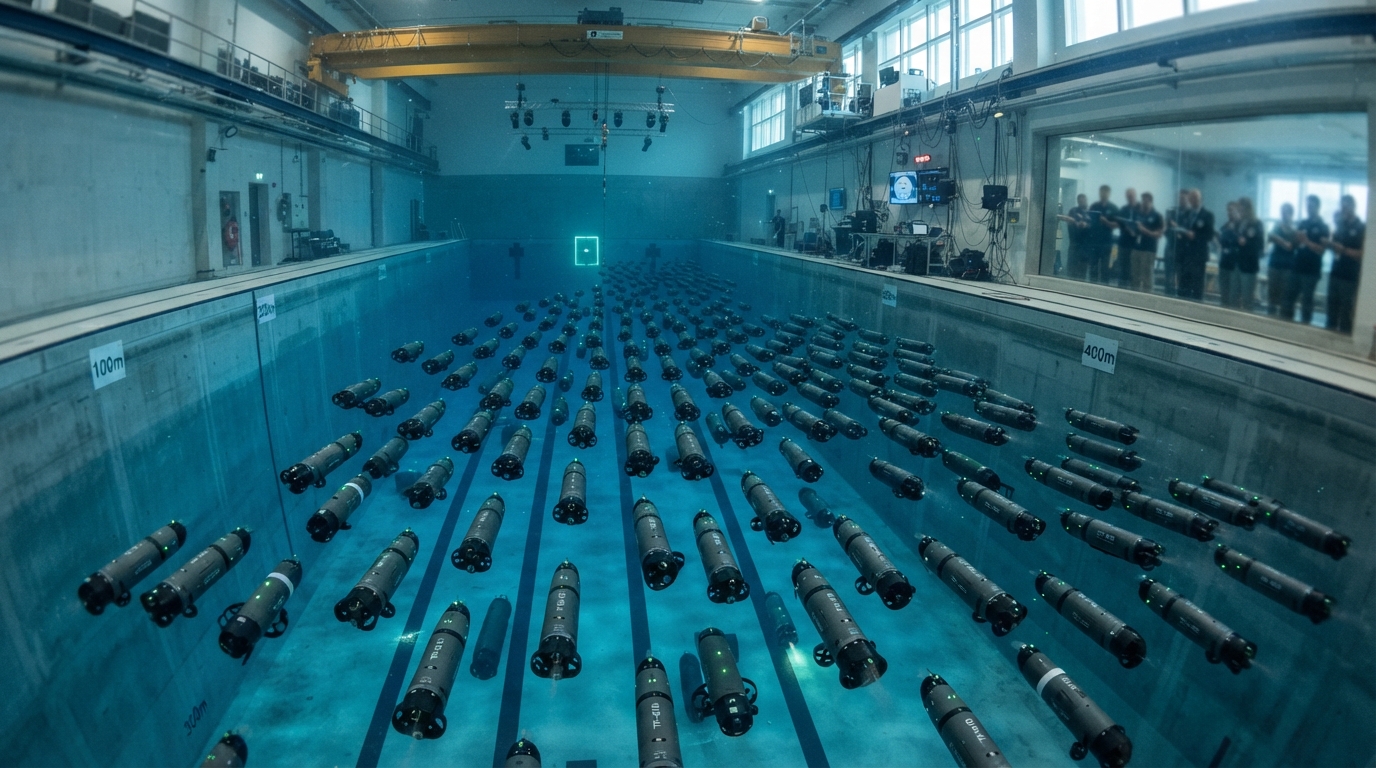
116 drones set a record underwater in China
Autonomous underwater vehicles created by China's Northwestern Polytechnical University and Xi'an Tianhe Maritime Technologies participated in the test. The demonstration was held on August 29 in the presence of representatives from the Guinness Book of World Records.
The drones, named TH-618, operated as a single autonomous group during the test. First, operators launched the vehicles one by one, and then control was handed over to their onboard autonomous navigation systems.
The drones swam along a predetermined route in a pool nearly 500 meters long. They covered a distance of approximately 500 meters over 34 minutes, coordinating their movements with each other.
Each vehicle used real-time data to stay on the designated route. In cases where external influences drifted a drone off course, the system allowed it to independently correct its direction of movement.
Ensuring the simultaneous coordinated movement of dozens of underwater vehicles is considered a more complex task than setting an individual route for each drone. Radio signals propagate differently underwater than in the air. Therefore, ensuring reliable communication between the vehicles remains a serious engineering challenge.
Northwestern Polytechnical University assessed the test result as a step forward toward creating even larger autonomous underwater systems. The university has been working on underwater sensing, acoustic communication, and camera-based environmental perception technologies for more than twenty years.
To further increase the number of drones in the system, each vehicle must be able to account for the positions of neighboring drones, even in conditions of limited communication and poor visibility.
The TH-618 vehicle is approximately 61 centimeters long, 20 centimeters wide, and weighs 5.1 kilograms. The compact dimensions make them convenient to use as part of a large group.
According to reports, the drones can cover a distance of up to 30 kilometers and operate for more than eight hours. A camera-based system is used for navigation: it helps the vehicle analyze the surroundings and correct its direction of movement.
The vehicles can also respond to environmental changes that cause deviations from the route. This is particularly important underwater: currents and other external influences can gradually push a drone off its designated path.