

In Bukhara, fragments of a ganch panel dating back to the Samanid period have been discovered
In the Shahriston monument in Bukhara, remnants of a ganch (gypsum) panel from a Friday mosque dating back to the Samanid period (9th-10th centuries) have been discovered. The panel, which is incomplete and not well-preserved, is currently undergoing restoration and conservation. It is considered an important scientific source for studying the architecture of the Samanid period.
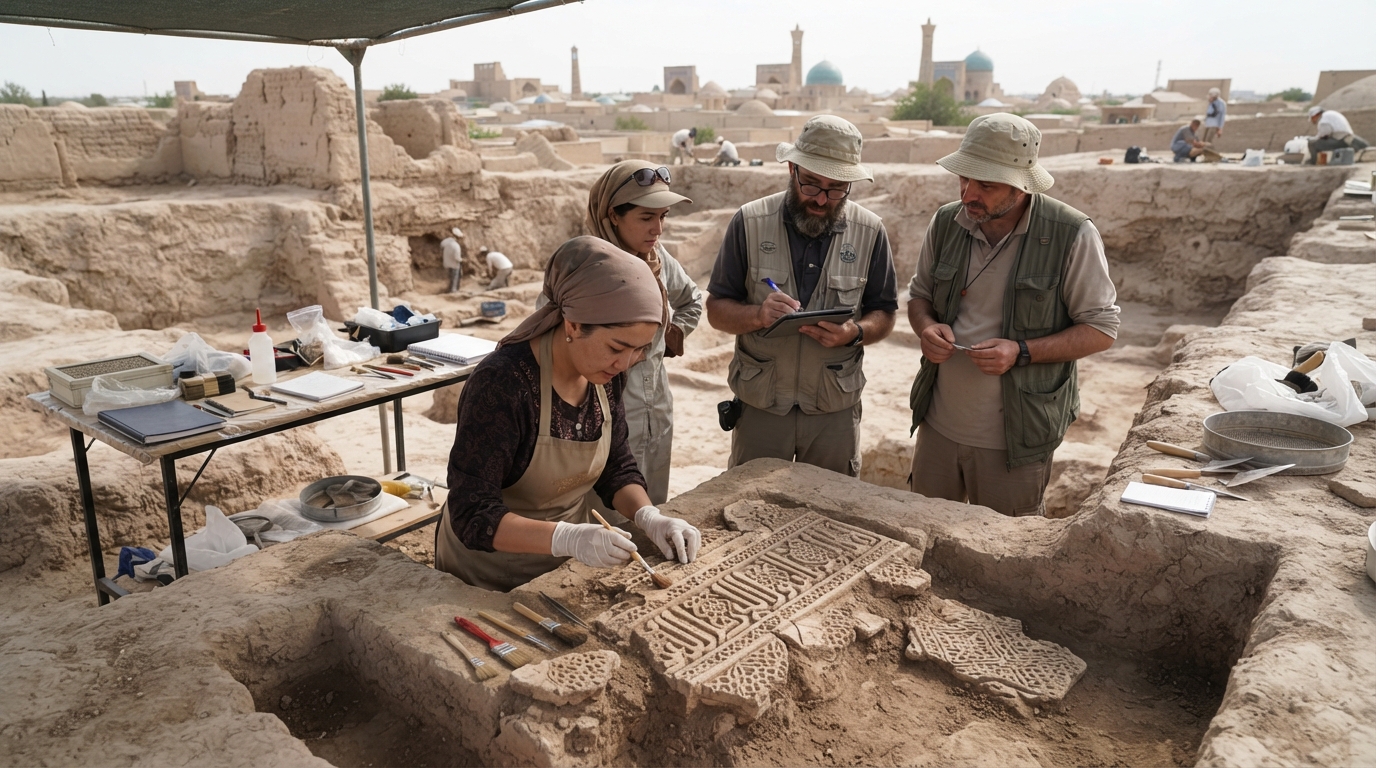
Remnants of a ganch panel dating back to the Samanid period found in Bukhara
At the Shahriston archaeological site in the city of Bukhara, remnants of a ganch panel inscribed with Kufic script, which was part of the architectural decoration of a Friday mosque dating back to the Samanid period (9th-10th centuries), have been discovered.
This find was made during research conducted by the Uzbekistan-USA international archaeological expedition. Along with Uzbek and US specialists, archaeologists, artists, and draftsmen from Russia and Iran, as well as staff members of the "Bukhara" State Museum-Reserve, are also participating in the archaeological research.
According to the head of the expedition, Jamoliddin Mirzahmedov, the discovered remnants of the ganch panel have not survived in a complete and well-preserved state. Therefore, in order to preserve the find, restoration and conservation work is being carried out by specialists.
According to the agency, this find is considered an important scientific source for studying the architecture of Bukhara during the Samanid period, especially the traditions of ganch carving and epigraphic decoration.
Currently, along with archaeological research at the Shahriston archaeological site, work on strengthening, conserving, and scientifically studying the discovered architectural ganch decorations is also continuing.