

IATA suggested changing the rules for inadmissible passengers
IATA has called for a fairer distribution between airlines and states of the costs and responsibility for passengers who have been denied entry.
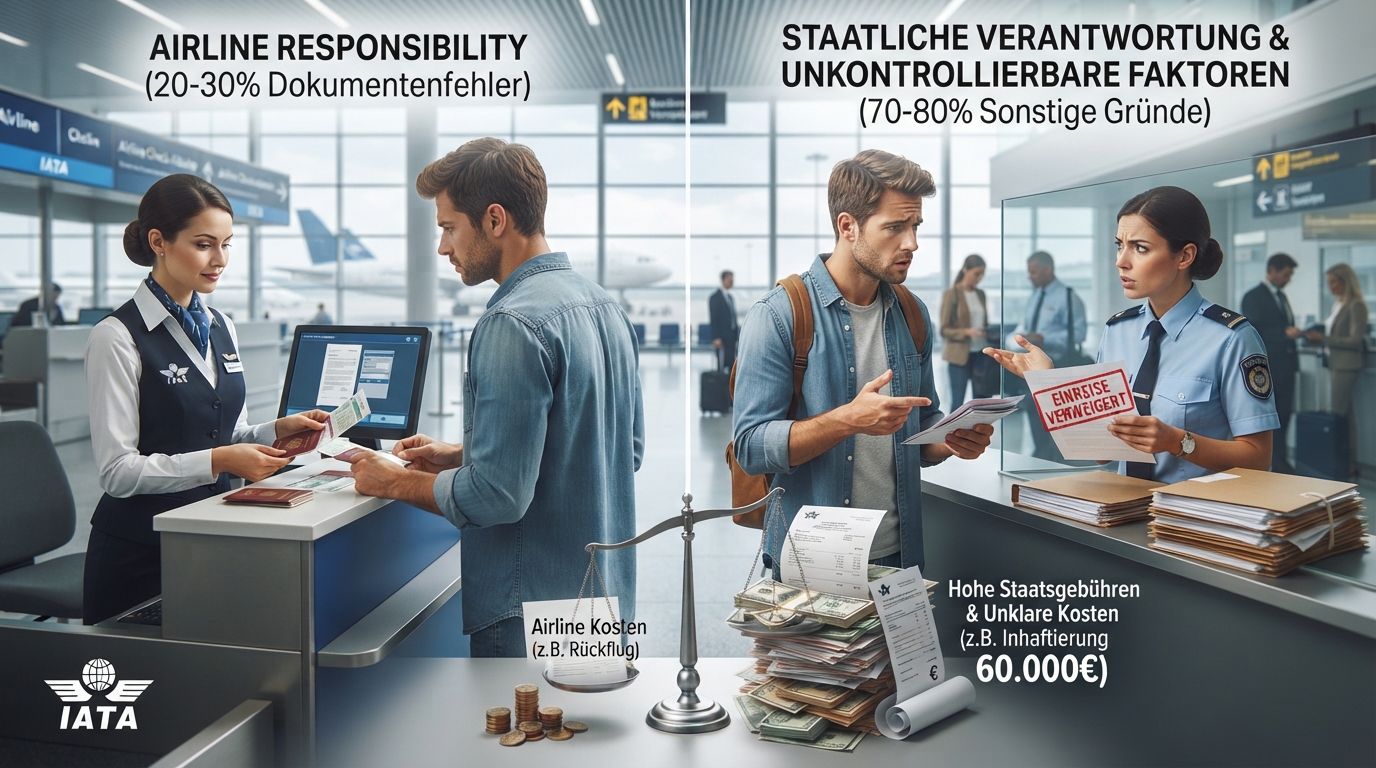
IATA Proposed Revising Rules for Passengers Inadmitted at Destinations
The International Air Transport Association (IATA) has called for updating the allocation of responsibilities and costs between airlines and governments in situations where passengers are denied entry upon arrival.
According to the association, the financial obligations of carriers should depend on the reasons for inadmissibility and the extent to which the airline could influence the development of the situation. This was stated in an IATA press release published on October 30, 2026, in Macao.
Airlines help prevent such cases by checking travel documents in advance prior to departure. However, as IATA notes, carriers are not always able to identify all grounds for entry refusal. Among the factors beyond their control, the association names the lack of complete information, sophisticated fraud schemes, changing migration trends, as well as decisions by state immigration and security authorities.
Under rules agreed upon by states within the International Civil Aviation Organization (ICAO), airlines pay for the maintenance and care of passengers who were denied entry due to improper documentation. If the refusal is related to other circumstances, the expenses should be borne by state authorities. At the same time, IATA points to a lack of transparency in decisions by immigration authorities and a deficit of information required by carriers prior to departure.
Nick Careen, IATA's Senior Vice President for Operations, Safety and Security, stated that even when documents are checked by airlines, passengers may still be denied entry to the destination country. In such cases, carriers incur additional costs, including fines. According to him, airlines often receive invoices or fine notices without any explanation of the reasons for inadmissibility. A more open exchange of information, Careen believes, would help prevent the repetition of such situations and distribute the financial burden more fairly.
The IATA report is based on a survey of 49 airlines and 22 border agencies. The majority of the surveyed carriers reported that errors in documents and their processing account for approximately 20–30% of passenger inadmissibility cases.
Furthermore, 40 out of 49 airlines faced situations where immigration authorities did not disclose the reasons for refusal, forcing carriers to arrange the passengers' return without understanding the grounds for the decision taken.
More than 90% of the surveyed airlines stated that they had paid at least a portion of the expenses that, according to ICAO rules, should be covered by states. Inadmissible passengers can lead to flight delays, ticket rebookings, disruptions to aircraft utilization and crew schedules, as well as the need for escorting and prolonged coordination with authorities.
According to the study, average expenses per inadmissible passenger were around $4,000 in North Asia and $14,000 in Europe. Terms of liability, scope of provided services, timeframes for passenger return, and fine amounts vary significantly between countries, and in some cases, even between airports within the same state.
All airlines participating in the survey reported operational delays associated with such passengers.
The report also cites a case where an airline received a bill for nearly 60,000 euros for the detention and maintenance of a passenger denied entry. The passenger was held in state custody for six months awaiting embassy assistance. The cost of maintenance was 300 euros per day.
Careen called this case exceptional and stressed that airlines are willing to be responsible for their own mistakes, but should not bear heavy costs indefinitely when circumstances are beyond their control.
IATA proposes that governments clearly differentiate between cases where the carrier failed to meet necessary document verification requirements and situations it could not influence.
The association also advocates that fines and cost allocation be determined taking into account the airline's due diligence, the degree of control over the situation, and the specific reasons for entry refusal. Meanwhile, carriers should be provided with information on the grounds for inadmissibility within the limits permitted by law.
To reduce the number of such cases, IATA recommends wider use of interactive Advance Passenger Information (iAPI) systems, digital document verification tools, mechanisms for interaction with Airline Liaison Officers, and operational escalation channels. According to the association, these tools will help identify issues prior to departure and resolve disputed situations faster.
A separate proposal concerns the organization of the return of passengers who have been denied entry. IATA considers it necessary to establish timely notification and more effective interaction between state authorities and airlines.
According to Careen, both sides are interested in ensuring border security and hassle-free travel.
To achieve this, he noted, it is necessary to determine as early as possible whether a passenger can enter the destination country and, in case of refusal, allocate responsibility and costs based on each party's real ability to control the situation.