

"I am going with my eyes tightly shut..." or the dreams and desires that prolonged migration
Almost half of my interlocutors answered "I will host a wedding", while the rest said "I will buy a house in Uzbekistan", "I will buy a car"
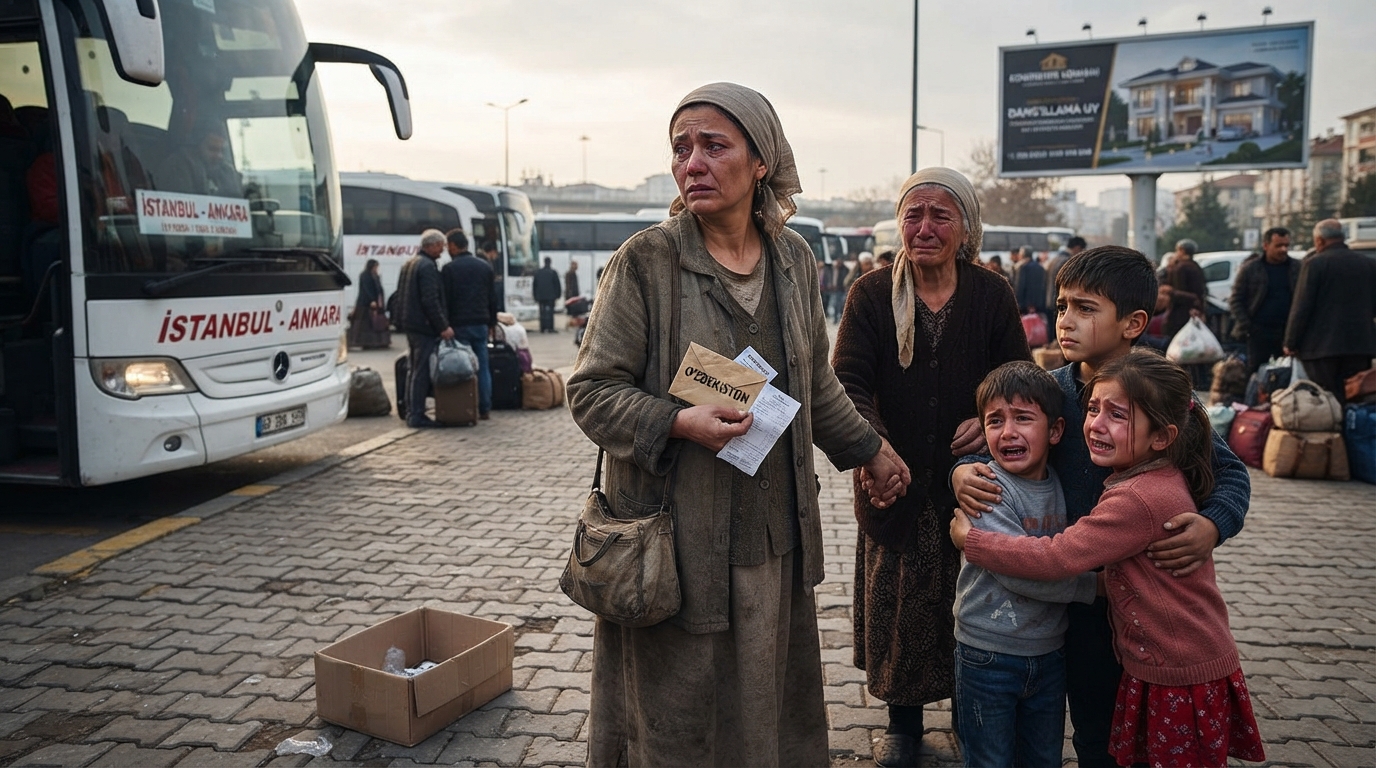
“I am closing my eyes tight and leaving...” or the dreams and desires that prolonged migration
By a twist of fate, I lived in Turkey for 8 months and spoke with more than 100 of my compatriots working in this country on the topic of migration. I asked each of them the question: “What is your purpose in coming here to work?” Almost half of my interlocutors answered “to hold a wedding,” while the rest gave answers such as “I will buy a house in Uzbekistan,” “I need to buy a car,” “everyone is building magnificent houses, if I work for another 5 years, I will demolish my old house and build a palace in its place,” “I will buy a house and a car in the city center, open a shop, and that's it, I will live in pleasure.”
I spoke with Samira, who returned from Turkey in May to marry off her son. In order to marry off her son, who works as a craftsman in Andijan, she saved money in Istanbul for 3 years without eating or drinking, and barely even bought clothes. The wedding took place a month ago.
— The money I saved for three years went to the wedding. On top of that, I also spent the wedding gifts. We had 10 cars for the registry office procession, and we paid $200 for 2 of them. We invited 2 famous singers to the evening party, and set tables for 150 guests. It cost 200,000 soums per person. We held all the post-wedding ceremonies the next day: “Kuyov qochdi” (the groom's escape), “Quda chaqiruv” (inviting the in-laws), “Yo‘qlandi” (visiting), “Ko‘rdi” (viewing). Clothes, food, and travel expenses for the in-laws' side, and so on. Now I have almost no money left. My son hasn't gone back to work yet. We are sitting here waiting for the food sent by the bride's side. I want to tell them not to bring it, but then I wonder how we will survive.
— You could have held a simpler wedding, couldn't you? What forced you to make such expenses?
— Dreams and desires. I thought, “money can be found”...
At this point, I asked Demirbey, a resident of Istanbul who married off his eldest daughter 4 months ago, about his wedding expenses:
— With us, guests come to the wedding not to eat food, but mainly to have fun. I booked a wedding hall 2 months in advance for $300. On the table, we put 2-3 types of cheap sweets like kurabiye and 2 types of water or juice. The expenses at the wedding are low, meaning we do not like to treat guests to various dishes. Of course, the rich can do so. But an ordinary Turkish family does not make extra expenses, in exchange for the wedding gift of around 100-150 liras they receive from each person.
Indeed, when we watch Turkish movies, the guests at the wedding ceremony gather around almost empty tables and talk. On some tables, there is nothing but flowers. When I was in Turkey, I attended the wedding of an acquaintance. To tell the truth, I hadn't even had lunch that day, and when I went to the wedding hall, there was nothing on the table except a glass of water and a pastry the size of a fingernail. No one even cared about what was on the table. Throughout the wedding, the Turks did not stop dancing. When I returned home hungry after 3 hours, the wedding was just reaching its peak...
According to the Central Bank, the volume of remittances sent to Uzbekistan from abroad in January-June 2026 amounted to $9.3 billion. Of course, migrants in Turkey also have a share in this. Samira, who spent more than $32,000 earned with difficulty over three years on the wedding and related ceremonies, is today preparing to go to Turkey again. Because she has two more children who study at school. If Samira goes to work, the children will remain in the care of their brother and sister-in-law. If her brother earns money, they will have money for food; if not, they won't. If Samira had used half of the money she spent on the wedding to start a business for her son and daughter-in-law, today they would not be dependent on the food coming from the new bride's family. Perhaps Samira would not have gone to Turkey either.
Ahmetbey, a scarf seller at the Grand Bazaar (Kapali carsi) in the Fatih district of Istanbul, says:
— You Uzbeks are a people who love to live “chic”. They come here, do hard work, save money without eating or drinking, and then return to their homeland, hold luxurious weddings, build 5-10 room houses, and buy cars. Uzbeks live not for themselves or their children, but to impress others...
— From now on, I will work for the future of my younger children, — says Samira. — Instead of saving money over the years, I will send money every month for the expenses and studies of my little ones. Until I find a job and settle down in 1-2 months, my children are entrusted to their brother. I am closing my eyes tight and leaving...
Squandering funds earned at the cost of health and life in a foreign land, like Samira, on a one-night or several-day royal feast is not only wastefulness, but also means putting the future of our children at risk with our own hands.
As long as the peace of the family and the future of the children are not placed above life-consuming stereotypes like “What will people say?” and “Let's not be less than others,” the caravan of migration will continue to lengthen. In fact, true happiness and prosperity are embodied not in palaces built for show, but in the bosom of the family, in harmony, and in the wise use of every opportunity found. Samira's closing her eyes tight and heading back into migration is a painful truth that should wake up our society.