

How to increase hemoglobin and why is it necessary?
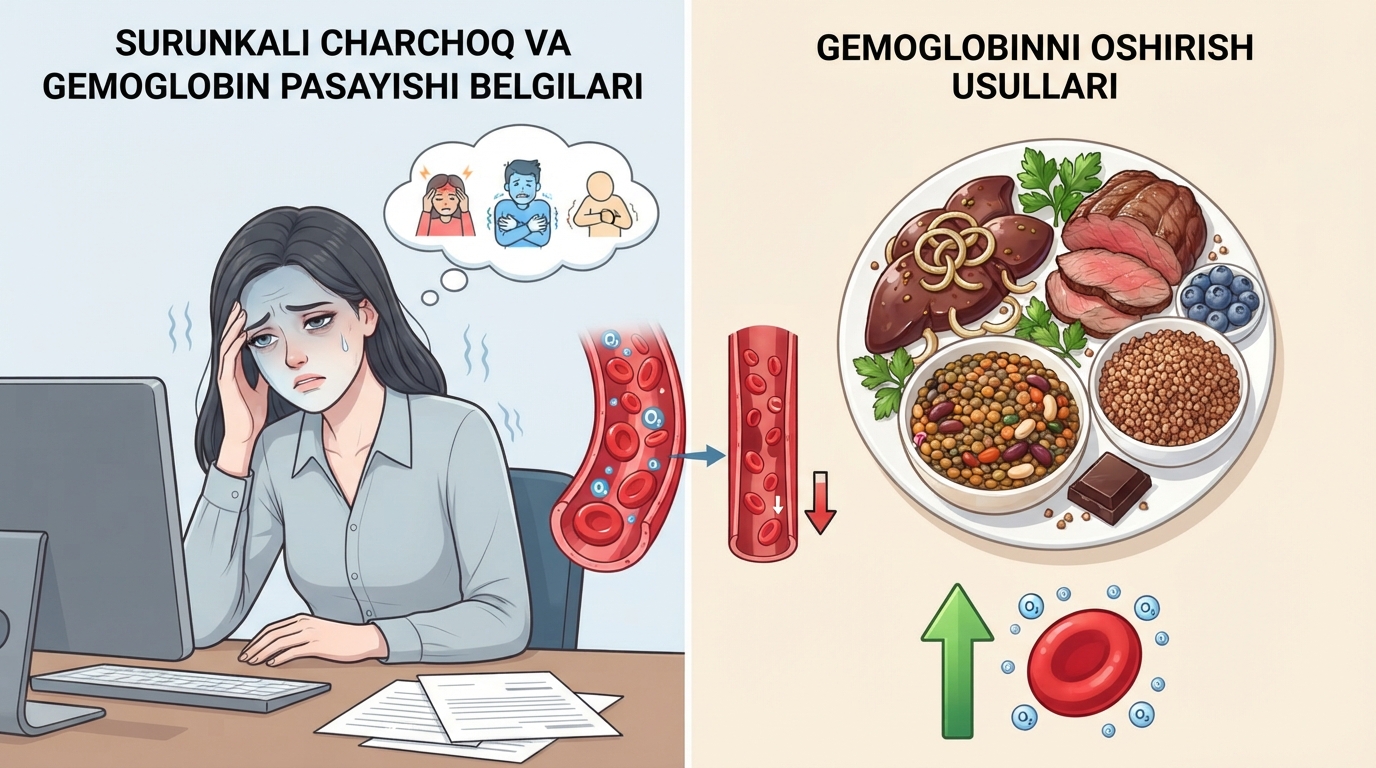
How to increase hemoglobin and why is it important?
A decrease in hemoglobin levels leads to conditions such as chronic fatigue, frequent colds, and general weakness. To prevent such unpleasant symptoms and illnesses, it is recommended to increase the amount of hemoglobin.
Hemoglobin is the main protein in red blood cells, which performs the function of transporting oxygen throughout the body. Up to 80% of its composition consists of iron. Oxygen helps all tissues and organs in the body function well through the bloodstream.
Symptoms of low hemoglobin levels
The symptoms of anemia and low hemoglobin are very similar to the signs of chronic fatigue. Working tirelessly every day, days passing by too quickly, not finding time to think about health — all of this, unfortunately, is familiar to many of us. However, constant fatigue may not be due to the negative impact of city life, but rather a sign of a sharp drop in hemoglobin in the blood.
Constant headaches are also associated with a decrease in red blood cells. In such a situation, painkillers do not work well, migraines worsen, and blood pressure drops. When hemoglobin drops, hands and feet feel cold, the face turns pale, and the skin begins to dry.
Causes of decreased hemoglobin levels
During illnesses such as colds or flu, hemoglobin levels naturally decrease, but after recovery, all indicators in the body return to their previous state. However, the opposite is observed in individuals with chronic diseases, and hemoglobin does not return to normal even after a cold. Especially in women, elderly people, and individuals with kidney, lung, and liver diseases, the probability of developing anemia is very high.
In addition, various diets and restricting foods rich in iron and protein also cause a decrease in hemoglobin. Anemia is a particularly common condition among vegetarians.
Another, but less common, cause of anemia and decreased hemoglobin is stress, where excessive strain on the nervous system can lead to the development of anemia.
Ways to increase hemoglobin
Iron is highly present in products such as liver, kidney, or tongue, as well as in buckwheat, chickpeas, beans, blueberries, chocolate, and porcini mushrooms. There is 4 mg of iron in 100 grams of these products.
Also, 100 grams of rabbit, beef, mutton, and horse meat contain 2-4 mg of iron. Iron is also present in grain products such as barley, semolina, pearl barley, and rice.
However, the daily iron requirement cannot be fully met by changing the menu alone. To do this, it is necessary to limit calcium — a substance that prevents the absorption of iron. For example, it will be necessary to temporarily give up milk and various dairy products, strong black tea, and coffee. In addition, the consumption of flour products should be reduced, because wheat does not allow iron to be absorbed in the body.