

How Harvey Nichols shaped noughties Leeds shopping - and what comes next
Iconic department store is likely to be rebranded as Flannels after 30 years in Leeds.
How Harvey Nichols helped define noughties Leeds shopping — and what may follow
The Leeds branch was the first Harvey Nichols to open beyond London
1996 was the year the Spice Girls dominated the charts, Gazza was scoring for England — and Harvey Nichols opened in Leeds.
The arrival of the department store in Yorkshire was a major moment. It marked the brand’s first move outside London and reflected confidence in the city as a luxury-shopping destination that was described as the “Knightsbridge of the North”.
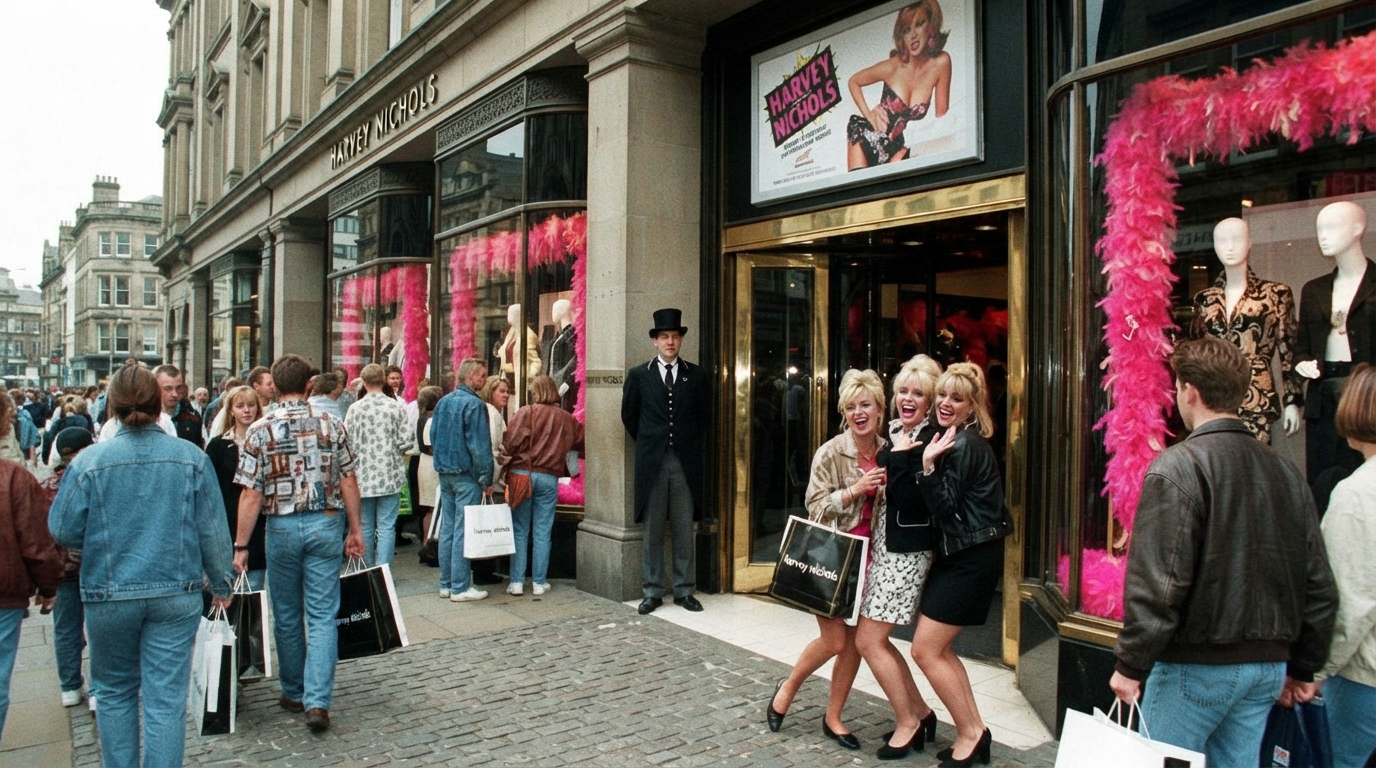
Its cultural importance was so great that it was frequently referenced in the sitcom Absolutely Fabulous, and when it opened on Briggate, crowds arrived dressed as Edina and Patsy.
Now that golden period has ended, and the store is due for a rebrand following a buy-out by Frasers Group, with rumours that it will become the city’s second branch of designer retailer Flannels.
Retail expert Jonathan De Mello says Leeds still has strong appeal, but Harvey Nichols has not kept up with shifts in the luxury retail market.
“Leeds remains a very strong retail city and it is very attractive for the retailers that I work with who want to be there.
“Harvey Nichols is closing most of its stores, but the fact that the Leeds one will remain under a different name shows that Leeds still remains a priority for Frasers Group,” he says.
Harvey Nichols in Leeds traditionally drew a middle-aged female customer base, while newer competitors such as Flannels actively court Gen Z shoppers.
“There is an evolution of luxury in general where it is becoming more youth-oriented, harnessing the power of social media,” De Mello adds.
“I think we are seeing a shorter shelf life for luxury in general but it is still there and Leeds remains a key city on the map for luxury shopping.”
Uniformed door staff were a defining feature of Harvey Nichols in Leeds
Frasers Group has owned Flannels since 2017, and the chain has expanded quickly to more than 60 stores. In 2023, the group’s chief executive, Michael Murray, told the BBC that Flannels’ target audience was “aspirational” customers aged 18-30, many of whom still live at home and spend their money on health, fitness and clothing.
De Mello agrees that Flannels has succeeded where Harvey Nichols did not because it is aimed at younger shoppers with more disposable income.
“In Harvey Nichols, the average age of customers these days is probably in their 40s but I would say Flannels is more positioned to those who are more like late 20s, early 30s.
“They are usually renting, and many don’t yet have kids. They want to spend on fashion as well.”
He points to Harvey Nichols’ emphasis on occasionwear as one reason it failed to attract this group of older shoppers, who are squeezed by household bills, while Flannels sells everyday streetwear.
De Mello also suggests that the existing Flannels store in the former Debenhams building could close so Frasers Group can concentrate on the “more iconic” Harvey Nichols site.
Shoppers react to Harvey Nichols arriving in Leeds 30 years ago
Yiannis Zardis was among the staff working on Harvey Nichols’ first day in Leeds, after moving from Topman to join the menswear department.
He recalls the window dressed with bright pink feathers, door staff in top hat and tails, and a risqué advertising campaign displayed on billboards across the city.
“It was a great time,” he says. “The 90s was a golden era.
“The customers who would come in, I had never served people like that before.
“At the beginning it was very rich people who would come in and then gradually it would be normal everyday people, they would save up and come to buy a pair of Versace jeans.”
He later worked for Selfridges in London, but believes the regional Harvey Nichols stores “always carried” the London flagship.
On the disappearance of the name from Leeds high street, he says: “The majority of shops in Trinity Centre are high street and John Lewis is more in the middle.
“There are a few boutiques in the Victoria Quarter but they don’t cover anything like what Harvey Nichols has.
“Also it is the experience in store - it is not just about buying luxury clothing, and that is so important in retail.
“It will be a void that can’t be filled.”
Ruth Clapton remembers visiting the store regularly as a young teenager
When the BBC speaks to shoppers who remember the 1990s heyday, they talk about the arrival of London styles and fashions that were not previously as accessible in the north.
That contrasts with Flannels’ strategy, which has focused on regional cities for its biggest stores because customers now discover major designer brands through social media and London’s influence has become less significant.
Ruth Clapton, a fashion content creator from York, remembers going to Harvey Nichols as a “treat”.
“When I was first going in there, I used to like Miu Miu, Missoni, and I mean having these kind of brands in the north was a big deal - especially in the 90s and the 2000s.
“I like actually that there’s a bit of a range of price point. It was not just tailored to people who can afford the more expensive brands, it was also going mid-range as well, which I thought was a really great move.”
Jenn Jordan was 16 when the store opened and has shopped there ever since
Another regular customer, Jenn Jordan, remembers how excited she was when the store opened.
“It felt so exciting that a bit of London was coming to Leeds. I was so impressed by it.”
The 44-year-old, who was 16 when it opened, recalls her first Harvey Nichols purchase: a pair of Calvin Klein knickers.
Jordan, who lives in Kippax, has kept shopping at the department store over the years and is “very sad” that the brand will disappear.
“Flannels has a much more sporty feel to it and I think and it’s geared towards younger shoppers.
“At Harvey Nichols in the 90s, if you got the Calvin Klein pants and the CK One fragrance, it felt like you were almost Kate Moss.”