

How are vouchers for free medical treatment issued to privileged categories of citizens?
If inpatient treatment is necessary, the patient, on the basis of an electronic referral through the DMED system, is admitted to a district or city multi-
**How is a referral for free medical treatment issued to privileged categories of citizens?**
Citizens belonging to a privileged category must apply to their attached primary health care institution to receive medical care funded by the state budget. This was announced by the Ministry of Health.
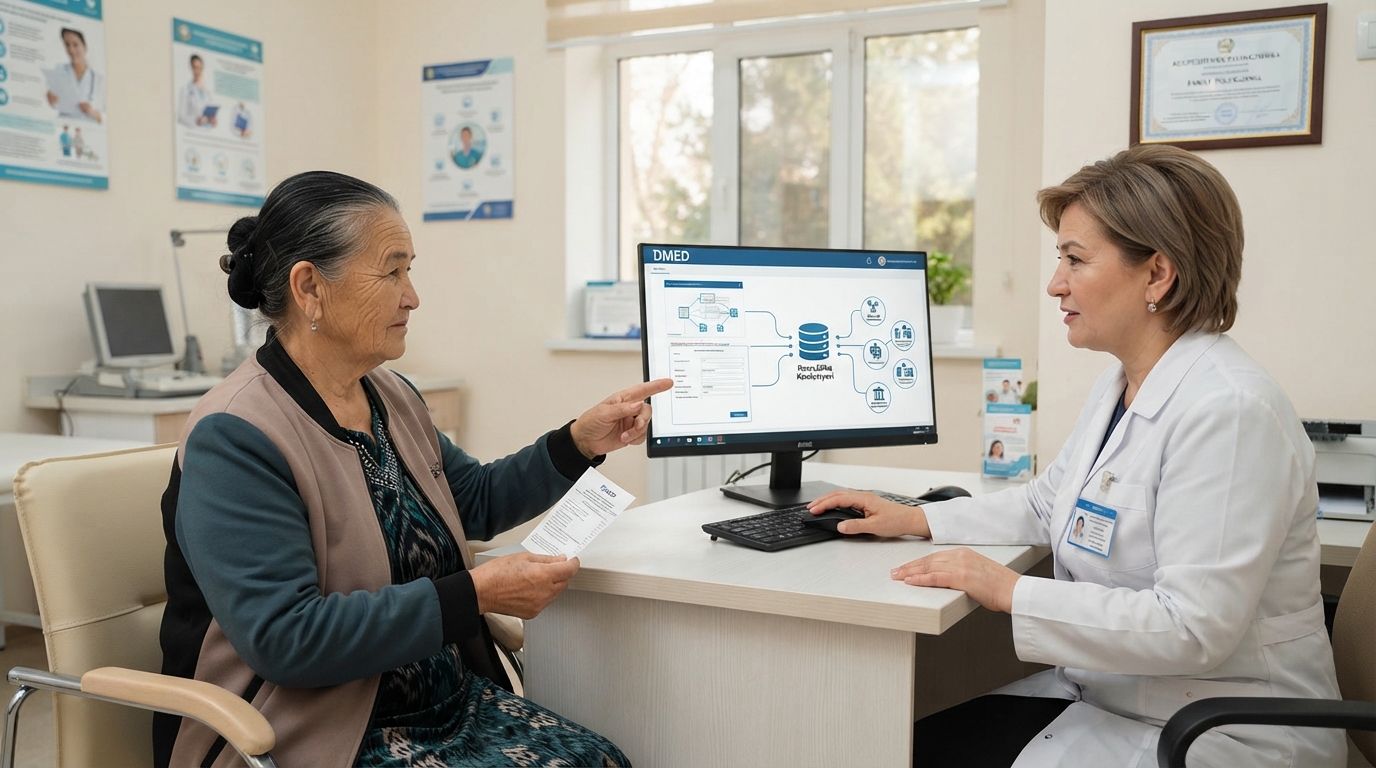
According to the current procedure, the family doctor examines the patient and determines whether they need outpatient or inpatient treatment. If inpatient treatment is deemed necessary, the patient is referred to a specialist at the district or city multi-profile central polyclinic via an electronic referral through the DMED system.
The specialist prescribes additional laboratory and instrumental examinations as necessary. If it is determined that the patient needs to be treated in a hospital, the examination results and the relevant conclusion are entered into the DMED system. The patient's eligibility for the privileged category is verified through the integration of information systems.
Then, the patient's documents are forwarded to the regional medical selection commission. The commission determines the necessary type of treatment and the level of the medical institution (district-city, regional, or republican) where it is appropriate to treat the patient.
If it is determined that treatment is required at the republican level, the documents, rather than the patient themselves, are sent to the republican commission through the DMED system. The commission may approve the treatment or issue a conclusion stating that the patient can be treated at the regional level.
Once treatment at the republican level is approved, the patient has the right to choose a medical institution. The choice is made by the patient themselves or, at their request, by the family doctor through the DMED system.
The system generates a list of public and non-public medical institutions authorized to provide services based on the patient's diagnosis and the required medical procedure. The patient must select their preferred institution from this list within 30 days and confirm the referral.
After this, the patient is placed on an electronic waiting list for the relevant specialty. When their turn comes, the referral is automatically confirmed, and the medical institution notifies the patient.
The patient must apply to the medical institution within 10 days from the date the referral is confirmed. Otherwise, the referral expires, and the patient will have to queue again.
Treatment and diagnostics are carried out based on established standards, clinical protocols, and medical indications. Medicines, expensive medical devices, and other related expenses necessary for the procedure are covered by the state budget. Therefore, no additional payment is charged to the patient within the framework of this treatment.