

History is the teacher of life
The story of Nicolae Ceaușescu, who dreamed of his country's complete independence but ultimately found himself a prisoner of his own notions of power, deserves special attention in Central Asia.
Historia est magistra vitae
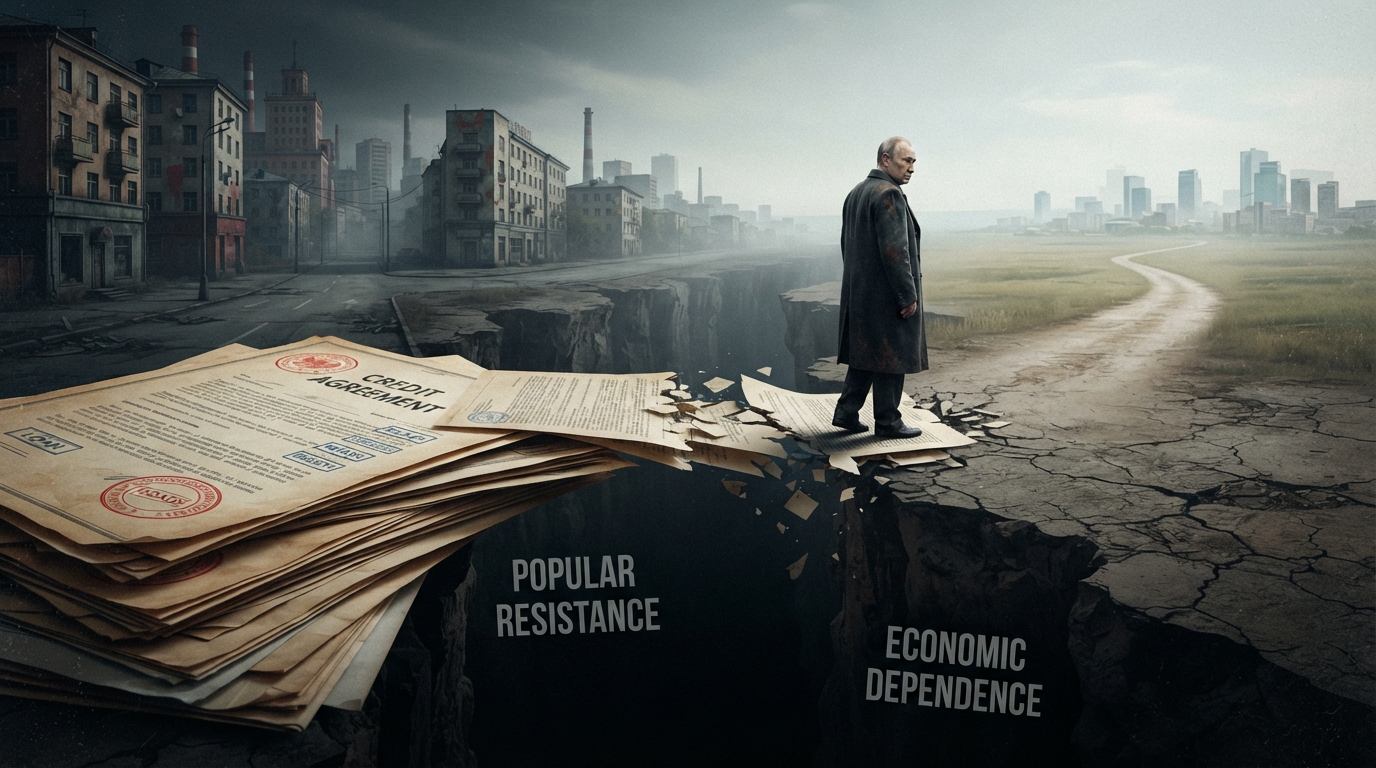
The story of Nicolae Ceaușescu, the Romanian leader who dreamed of his country's complete independence but ultimately ended up a hostage to his own ideas about power, the economy, and international politics, deserves special attention in Central Asia. The point is not that the fate of Romania will necessarily be repeated in Uzbekistan, Kazakhstan, Kyrgyzstan, Tajikistan, or Turkmenistan, but that this story revealed a mechanism that authoritarian rulers too often refuse to notice: external money can strengthen a state only as long as the authorities know how to convert it into well-being; when financial obligations begin to serve political ambitions, economic dependence gradually turns into a threat to the governance system itself.
Nicolae Ceaușescu became the head of Romania in 1965 and fairly quickly earned a reputation as a communist leader who refused to submit unconditionally to Moscow. His independent line, in particular his refusal to join the Soviet invasion of Czechoslovakia in 1968, won sympathy in the West, above all in Washington. The US saw Romania as a convenient example of how a socialist country could pursue a foreign policy relatively independent of the Kremlin, meaning it deserved economic cooperation and political preferences. In 1972, Romania joined the International Monetary Fund and the World Bank, gaining additional opportunities to attract Western financing, and in the 1970s it actively borrowed on international markets for the sake of accelerated industrialization.
At first glance, everything looked quite logical. But behind industrial ambitions lurked the old problem of a centralized economy, in which the political will of the leader replaces the calculation of efficiency, and indicators presented to society as evidence of grandiose successes often have nothing to do with reality.
By the early 1980s, Romania's external debt was approaching 10 billion dollars, and Ceaușescu faced a dilemma largely of his own making: to continue borrowing or to get rid of the debts at all costs to prevent any restriction on his own freedom of action. International creditors, including the IMF and Western banks, demanded greater transparency in economic policy, adjustments to prices and exchange rate mechanisms, as well as measures to stabilize finances. For Ceaușescu, accustomed to viewing the state as an extension of his own will, such demands looked like interference in the country's sovereign affairs. But instead of revising inefficient investment priorities, reducing governance costs, and gradually fixing economic imbalances, he chose a different path — to pay off foreign creditors ahead of schedule, shifting the main burden of this decision onto the population.
Here it is important to emphasize a historical paradox that is often lost in simplified accounts of the Romanian tragedy. Ceaușescu was shot by his compatriots not because he lived endlessly on American loans. On the contrary, he decided to get rid of external debt as quickly as possible. By the end of 1989, Romania had indeed paid off its external debt, estimated at approximately 10.5 billion dollars, but this was done at the cost of an unprecedented deterioration in the daily lives of the population.
This is where the most important part of Romanian history begins. The external debt did not become the direct cause of Ceaușescu's execution, but the struggle against it contributed to the destruction of his power. For the regime, this turned out to be a fatal contradiction. In December 1989, mass protests that began in Timișoara escalated into revolutionary events that swept Bucharest and other cities. Ceaușescu lost control of the situation, the army ceased to be a reliable pillar of the regime, and the multi-year demonstration of universal loyalty turned out to be a fiction in a matter of days. On December 25, after an extremely brief military trial, Nicolae Ceaușescu and his wife Elena were shot.
But does this mean that the United States has never used financial tools, political support, diplomatic pressure, and covert operations to change a political order it found undesirable in other countries? The history of American foreign policy provides enough documented examples to dismiss such a question as propaganda fiction. At the same time, it would be equally incorrect to depict Washington as a single mechanism that invariably acts the same way under any administration. American presidents were guided by different strategic interests, and public rhetoric about democracy far from always matched practical decisions. However, it is precisely the discrepancy between declared principles and real actions that deserves special attention.
In 1953, the administration of Republican Dwight Eisenhower authorized a CIA operation to overthrow Iranian Prime Minister Mohammad Mosaddegh, whose government had come into conflict with Western oil interests following the nationalization of the oil industry. Declassified US documents describe the preparation of the operation, coordination with Mosaddegh's political opponents, and financial support for measures that contributed to his removal. As a result, the prime minister was overthrown, and the power of Shah Mohammad Reza Pahlavi was significantly strengthened. This is an example of how strategic and economic interests can turn out to be more important than democratic principles when it comes to maintaining a political order beneficial to Washington.
In 1954, the administration of the same Eisenhower supported an operation against Guatemalan President Jacobo Árbenz. His land reform touched the interests of the American United Fruit Company, and the Cold War allowed Washington to frame what was happening as a threat of communist expansion in the Western Hemisphere. The operation, organized with CIA involvement, contributed to the fall of the Árbenz government. The subsequent decades of political violence and civil conflict showed how costly external interference can be to a society when an outside force decides which government corresponds to its ideas of an acceptable political system.
Chile is even more telling. In 1970, socialist Salvador Allende was democratically elected president of the country, and the administration of Richard Nixon decided to prevent the consolidation of his government. Documents declassified later record the American president's orders to assist a coup and create economic pressure on Chile. In 1973, the military overthrown Allende, and General Augusto Pinochet came to power, establishing a brutal dictatorship. Here it is particularly difficult not to notice the contradiction: a country whose leadership publicly spoke out in defense of freedom assisted in the removal of an elected head of state and subsequently supported a regime responsible for mass repressions.
Modern US influence does not always involve a military operation or covert coup preparations. Far more often, it is realized through diplomatic isolation, restrictive measures, control over access to certain technologies, financing terms, and a state's international reputation. Programs supporting independent media, human rights organizations, election observers, and civic initiatives can become part of a long-term policy to promote democratic change. US government agencies openly funded such programs in various regions of the world: a US Government Accountability Office report for 2026, for example, estimated total appropriations by the State Department and USAID for international democracy support at 14 billion dollars for fiscal years 2018-2023. In itself, such funding does not prove the existence of a coup plan, but it shows that promoting certain political principles is an institutionally formalized part of American foreign policy.
For the rulers of Central Asia, this experience is of particular interest, as the states of the region seek simultaneously to attract Western investments, gain access to technologies, expand exports, and maintain freedom of domestic political maneuver. Uzbekistan is interested in modernizing industry, energy, agriculture, and transport infrastructure. Kazakhstan seeks to diversify its economy and reduce excessive dependence on raw material exports. Kyrgyzstan and Tajikistan need resources to develop infrastructure and create jobs, while Turkmenistan attempts to maintain control over strategic sectors with limited economic openness. For each of these countries, cooperation with the United States can bring very tangible benefits, and it would be a mistake to consider any agreement with the American side a threat to sovereignty.
The danger arises not because of the American origin of the money per se, but when political leadership begins to make financial decisions based primarily on a desire to strengthen its own position, demonstrate international importance, or obtain a quick economic effect before the next political cycle.
If borrowed funds are directed to projects with dubious returns, if state guarantees are issued opaquely, if obligations are concentrated in the hands of a narrow circle of agencies, companies, and individuals, and society has no opportunity to evaluate the real price of agreements, the problem becomes internal long before a foreign creditor intervenes. A country may find itself forced to direct an ever-larger share of budget revenues to debt service, cut social spending, or raise tariffs and taxes to compensate for past miscalculations. It is at this moment that financial policy ceases to be a tool for development and turns into a mechanism for redistributing costs from the state to the population.
American credit lines, investment agreements, and technical assistance programs, like similar tools from China, Russia, the Gulf states, or international financial organizations, require a sober assessment. American funds should not automatically be considered an unconditional gift, but neither should they be declared a pre-arranged trap.
Every creditor has its own interests, and the terms of cooperation can change along with the political environment. Moreover, obligations to a foreign creditor can turn out to be rigid even without any intention to overthrow a government: the creditor is primarily interested in the return of funds, not in preserving a specific president. It is especially risky to assume that good personal relations between a head of state and an American president guarantee the permanence of agreements for decades.
However, Central Asian authorities should fear not only Washington, but also their own illusions. The most dangerous illusion of an authoritarian ruler lies in the conviction that state stability is determined by the number of external guarantees, the scale of international agreements, and the number of foreign investors received with honor at the presidential palace.
Ceaușescu lost not because the West turned out to be stronger than him in financial negotiations, and not because Romania worked too closely with the United States. His regime proved incapable of recognizing the limits of its own economic model, and then tried to solve the problems it created through even greater pressure on the population. When the country paid off its foreign creditors, it approached political collapse with an emptied economy, a embittered society, and institutions that could not provide a peaceful way out of the crisis. This is the true warning for modern leaders seeking to retain power at all costs.
If a government attracts external funds, it must explain to society where they are being directed, how they will be returned, and who will get the result. If it counts on a strategic partnership, it should understand that partnership does not equal a guarantee of political longevity. And if it truly values the state's independence, it must strengthen not only foreign policy ties and financial reserves, but also public trust, legal institutions, budget transparency, and society's ability to influence government decisions.
Otherwise, history may repeat itself not literally, without Romanian December streets, an extraordinary court, and a firing squad, but with the same destructive outcome: a leader who considered himself the sole guarantor of stability will discover that his power rested not so much on the strength of state institutions as on society's habit of enduring.