

Hawk changes tactics
Trump orders strangulation of Iran: White House prepares economic noose for Tehran
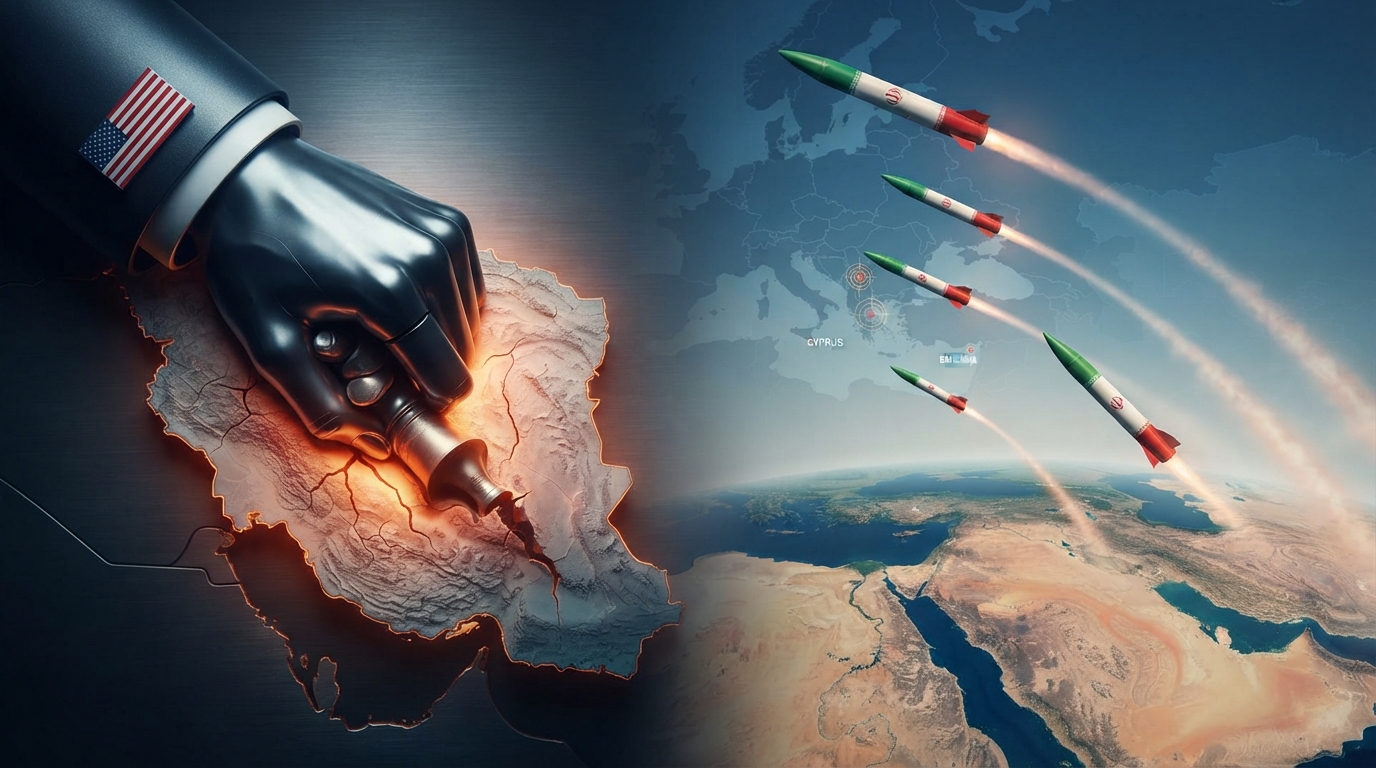
Washington's Hawkish Strategy: From Blitzkrieg to Slow Strangulation
Washington has shifted its strategy toward Tehran, moving from a rapid defeat to a gradual "strangulation" strategy. Donald Trump has completely cut off all communication channels with Iran, initiating a mechanism of exhausting pressure. In response, Iran has unequivocally warned that if sanctions are tightened excessively, strikes could extend far beyond the Middle East.
From "Defeat" to "Strangle"
Just a week ago, Trump was declaring an imminent deal with Iran. Now he has barred his representatives, including Vice President J.D. Vance, Special Envoy Steve Witkoff, and son-in-law Jared Kushner, from taking calls from Tehran. The reason is simple: the Iranians have refused to make concessions.
"No negotiations or contacts with the Islamic Republic of Iran are underway or planned." "The naval blockade remains in full force and effect. The Strait of Hormuz is open and operational. All naval mines have been removed or destroyed," Trump wrote on Truth Social, as if passing judgment.
According to CNN, the White House has definitively abandoned the idea of "crushing" Iran as quickly as possible. The new doctrine is far more bleak: slowly and methodically strangling it until the regime collapses or agrees to American terms. Treasury Secretary Scott Bessent has already promised "unprecedented" pressure measures that will affect buyers of Iranian oil. Reuters clarifies that Chinese refineries and banks will be targeted. This move could be suicidal for the global energy market, but Washington appears willing to risk the money of others and the well-being of its own citizens.
Trump also didn't hesitate to threaten Oman, which dared to conduct its own negotiations with Tehran regarding shipping in the Strait. In response to Fox News journalist Trey Yingst's question about the parallel Omani track, the president responded exhaustively: "If they interfere, we'll bomb the hell out of them." Thus, Muscat's neutrality is now guaranteed solely by the American president's patience.
Tehran doesn't ask—Tehran dictates.
The Iranian side responds with the icy calm of a man with nothing to lose. Parliament Speaker Mohammad Bagher Ghalibaf, who arrived in Baghdad and first visited the memorial to General Qasem Soleimani, assassinated by the Americans, laid out his position with extreme severity: "Until the blockade is lifted, frozen assets are released, oil sanctions are lifted, threats and military operations on all fronts cease, and other conditions of the memorandum of understanding are met, the Strait of Hormuz will not be opened."
Foreign Minister Abbas Araghchi went further, declaring that the US is "begging" Iran for negotiations on Iran's terms. According to him, 13 of the 14 points of the June memorandum were dictated by Tehran. Deputy Foreign Minister Kazem Gharib-Abadi added venom: "Just as Trump correctly spelled the name of the eternal Persian Gulf, soon his misconception about the Strait of Hormuz will either be corrected, or we ourselves will correct the misconceptions of this misguided man."
Iranian President Masoud Pezeshkian called on the nation to endure: "Patience, solidarity, and hope are the key to Iran's resilience in the face of growing external pressure and threats." And advisor to the IRGC Commander-in-Chief Mohammad Reza Naghdi stated that Tehran views prolonging the conflict until the end of Trump's presidential term as a viable survival strategy.
Europe in the crosshairs: missiles will reach Cyprus and Bulgaria
The most alarming aspect of this story is the geography of the possible response. The Financial Times, citing sources close to the Iranian leadership, revealed Tehran's plans in the event of a new escalation. Potential targets include the Bezmer airbase in Bulgaria, a British base in Cyprus, and undersea fiber-optic cables in the Strait of Hormuz. "If the US goes too far, Iran will defend itself at all costs, expand beyond the region, and strike Europe," one of the sources said.
The July strike on an American base in Jordan, which killed three service members, was, according to the same sources, a demonstration of precision. "It was also a warning to Europe: it could become a target for missiles, so it must understand its position in this war. A very serious mistake, such as striking our infrastructure, could lead to the war spreading beyond the region and reaching Europe," the FT source added. The IRGC previously formulated its principle even more simply: "Any base from which an attack on Iranian territory is launched will be considered a legitimate target."
Sidharth Kaushal of the Royal United Services Institute for Defence and Security Studies calls the threat "real but limited": at ranges of over two thousand kilometers, Iranian missiles lose accuracy, and their warheads are small. However, this is more than enough for the energy market and the nerves of ordinary Europeans. Britain is already feeling the impact: inflation is creeping toward three percent, wages are stagnating, and the Bank of England is preparing to raise rates. "Small businesses, the backbone of the UK economy, are buckling under the pressure of rising costs," notes Danny Hewson of AJ Bell.
Since 2018, the US has imposed around 2,200 sanctions against Iran. None of them have forced Tehran to curtail its nuclear program or cede control of the Strait. Now Washington is betting on "strangulation." But a country that has lived under sanctions for over forty years has learned to breathe through a straw.
And judging by Gharib-Abadi's tone, the Iranians have no intention of bending to foreigners. The Iranian Deputy Foreign Minister stated: "A country that places its fate in the hands of foreigners will pay a heavy price. However, today's Iran determines its own destiny. Our people will not back down under pressure and are taking an even firmer stance in the face of threats and dictates."