

Grain is piling up in Ukraine: Poland and Romania refused to help
Ukraine is attempting to increase its grain exports through Europe following Russian attacks on ports and ships. However, Poland and Romania do not intend to help expand transit. Kyiv warns that farmers who are unable to sell their products will not have the funds to plant crops for the next season.
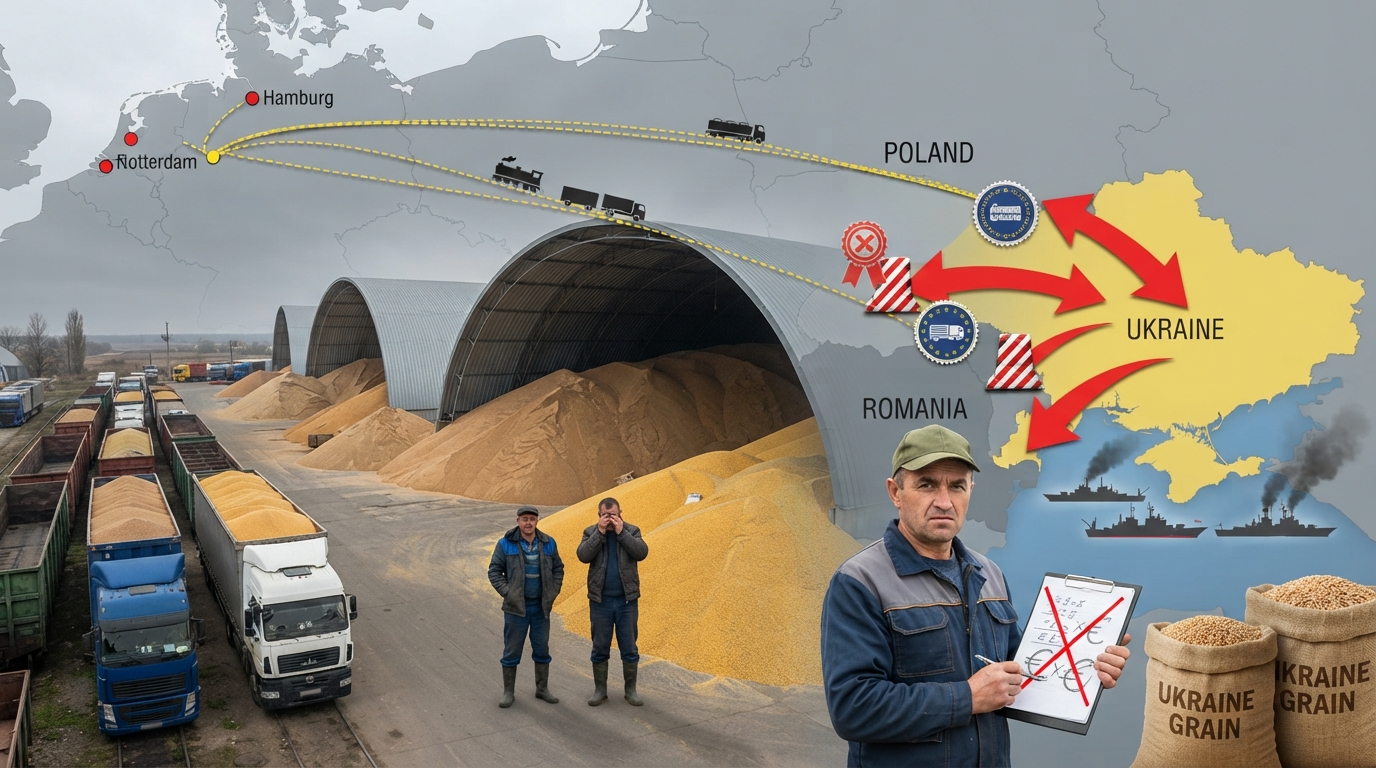
Grain stocks are accumulating in Ukraine: Poland and Romania refused to help
According to DW, citing Politico, 1.1 billion euros are needed to help export millions of tons of grain from Ukraine and to cover increased transport costs.
It is reported that shipping through the Black Sea has practically fallen into a state of blockade due to continuous attacks by Russian troops on ports and ships. Therefore, Kyiv is asking to expand the possibilities of alternative routes passing through the territory of the European Union.
The Minister of Agrarian Policy and Food of Ukraine, Taras Vysotskyi, discussed this issue with his European colleagues during his visit to Brussels. He assessed the situation as extremely serious.
However, the two countries with the largest infrastructure capacity to increase transit volume — Poland and Romania — have indicated that they are not ready to take additional measures.
The Romanian Ministry of Agriculture emphasized that the interests of the country's farmers remain a priority. According to Bucharest, the abundance of Ukrainian grain and low water levels in the Danube are putting an excessive load on the ports. This, in turn, prevents Romanian farmers from selling their own products.
The Polish Ministry of Infrastructure also announced that it does not plan to make changes aimed at increasing the transit of Ukrainian agricultural products.
Vysotskyi said that harvested grain and oilseed products are accumulating in Ukraine. Farmers who are unable to sell them have less opportunity to finance autumn sowing for next year's harvest.
The minister warned that if the situation does not change by spring, the sown areas could be reduced by up to 35–40 percent. According to his information, railway, road, and river routes passing through Europe are currently capable of transporting less than half of Ukraine's exports. If the blockade continues, up to 35 million tons of cargo may remain unexported in the country over the year.
Kyiv has asked the European Commission for 1.1 billion euros to cover additional costs in transporting up to 22 million tons of agricultural products through EU territory. According to the Ukrainian side's calculations, alternative routes could increase logistics costs by up to 50 euros per ton of product.
Ukraine is proposing to extend alternative export routes, known as "solidarity lanes," beyond neighboring countries. In particular, the possibility of shipping products through German and Dutch ports is being considered. However, longer routes make delivery more expensive and could result in heavy losses for farmers.