

Golden epaulets do not flatter
In Turkmenistan, enrollment in military universities fails for the second year in a row
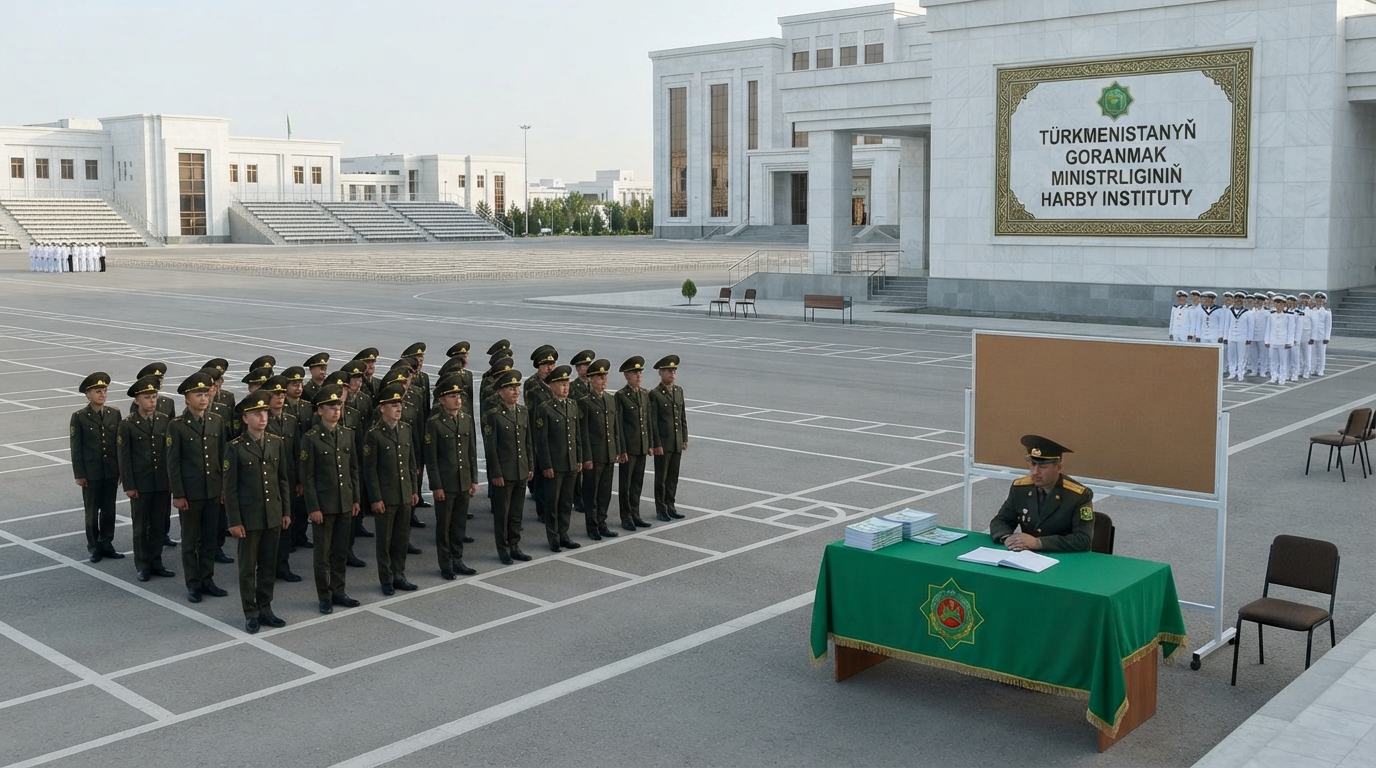
Golden shoulder straps do not attract
The Military and Naval Institutes of the Ministry of Defense of Turkmenistan have faced a new serious under-enrollment. According to the independent publication turkmen.news, the Naval Institute expected to admit about 100 cadets in the 2026/27 academic year, but actually enrolled only around 30. In the Military Institute, only about a third of the planned places were filled.
If this information is correct, the situation has noticeably worsened over the year. At the beginning of the 2025/26 academic year, both military universities, according to the same publication, were short of almost half of their first-year students. At that time, the authorities tried to direct graduates of specialized military schools there, but even this did not allow them to fulfill the admission plan.
Before the new academic year, admissions committees, as claimed by a turkmen.news source in the armed forces, expanded their search for applicants. In the spring, representatives of the universities visited military units and offered admission to soldiers finishing their conscript service, and also reached out to graduates of specialized schools and their families.
Despite such a campaign, there were not enough applicants. The publication claims that there was virtually no full-fledged competition and all candidates who submitted the necessary documents were enrolled. No official data from the Ministry of Defense regarding the admission plan and results could be found in the public domain.
The situation looks particularly notable against the background of the training conditions. The Military and Naval Institutes are state educational institutions where cadets can receive professional education at the expense of the state. Turkmenistan's legislation also provides for scholarships for students of state professional institutions studying under the state admission plan.
It is claimed that education in military institutes is completely free, cadets are provided with a dormitory and paid a scholarship. A few years ago, these advantages made admission to law enforcement universities economically more attractive than many civilian options.
However, the problem, judging by the publications of the independent outlet, is no longer so much the cost of education as the subsequent career. Over the past few years, the publication has regularly reported on the mass resignation of officers from the armed forces. In 2024, the publication's sources estimated the usual financial allowance of officers at about 3–4 thousand manats per month and linked the departure of military personnel to low incomes and unsatisfactory social conditions.
An additional blow to the attractiveness of service was the change in housing benefits. In February 2024, Minister of Defense Begench Gundogdyev abolished the practice of transferring service apartments into the ownership of military personnel after long service. Previously, such a right was provided for some officers after ten or more years of service.
The problem of staff outflow persisted later as well. In March 2026, turkmen.news reported that the Ministry of Defense was trying to retain officers by offering them the opportunity to serve closer to their home regions. In July, the publication wrote about difficulties with the official discharge of military personnel and cases of unauthorized absence from units.
Against this background, a negative attitude of potential cadets towards their future profession is also forming. Back in 2025, it was reported that many graduates of specialized military schools preferred civilian universities or studying abroad, despite the free education at the institutes of the Ministry of Defense.
Restrictions after completion of service were also added to the problems. In September 2026, the publication reported, citing its own sources, that certain former military personnel had begun to have their travel outside Turkmenistan restricted. At the same time, as claimed in the publication, some of those who faced the ban did not have access to state or military secrets. Officially, this information was not commented on by the authorities.
State sources, on the contrary, traditionally present military educational institutions as a crucial part of training personnel for the country's defense and security. In June 2026, President Serdar Berdimuhamedov congratulated graduates of the Military Academy and other law enforcement universities on receiving higher professional education and their first officer ranks.