

Global food prices have risen to their highest level since the end of 2022
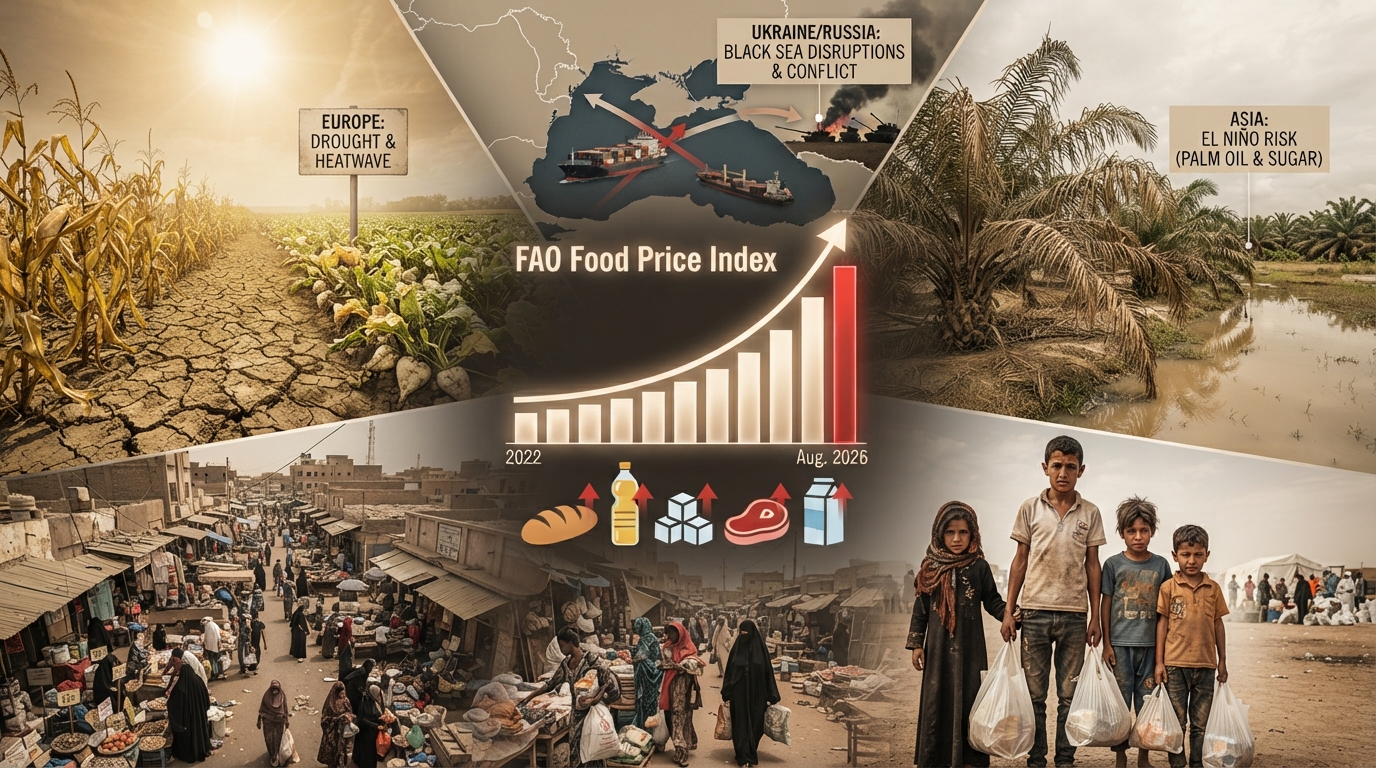
Global food prices have reached their highest level since the end of 2022
In August 2026, global food prices rose to their highest level since the end of 2022. This was reported by the Food and Agriculture Organization of the United Nations (FAO).
It is noted that this is being caused by severe heat and drought in Europe, the potential emergence of the El Niño phenomenon in Asia, as well as the war in Ukraine and Iran, and disruptions in trade routes.
The FAO Food Price Index averaged 133.3 points in August. This is higher than the revised figure of 130.8 points in July. Although the index is nearly 17 percent below its record level in March 2022, it recorded its highest result since November.
In August, price indices for cereals, vegetable oil, sugar, meat, and dairy products all increased. The cereal price index rose by 2.2 percent over the month, reaching its highest level since May 2024. Vegetable oil prices increased by 0.6 percent, recording the highest figure since June 2022. Sugar prices rose by 11.9 percent, reaching the highest level since June 2025.
The FAO stated that extreme weather in Europe is negatively affecting forecasts for corn and sugar beet harvests, as well as livestock products. Meanwhile, the expected strong El Niño in Asia poses a threat to palm oil and sugar production. The escalation of attacks in the Black Sea has reduced grain exports from Russia and Ukraine, while the US–Iran conflict has increased pressure on the supply of fertilizers necessary for agriculture.
The FAO reduced its global grain production forecast for 2026 by 3.4 million tons compared to the July estimate, bringing it down to 2.98 billion tons. This is 2 percent less than in 2025 and is expected to be the largest annual decline since 2018. Nevertheless, the projected production volume remains the second highest in history.
The organization forecasts that global grain stocks at the end of the 2026/2027 season will amount to 947.2 million tons. This is 1.1 percent less than the previous forecast and slightly higher than the figure from the previous season.
According to an analysis of 45 countries regarding the negative impact of El Niño, the number of people facing acute food insecurity could increase by nearly 49 million, reaching a total of 274 million people. This represents a 22 percent increase compared to the population experiencing crisis-level food shortages.