

Ginseng, a tennis racket, and a tea service: What gifts did the leader of South Korea give to the presidents of Central Asia?
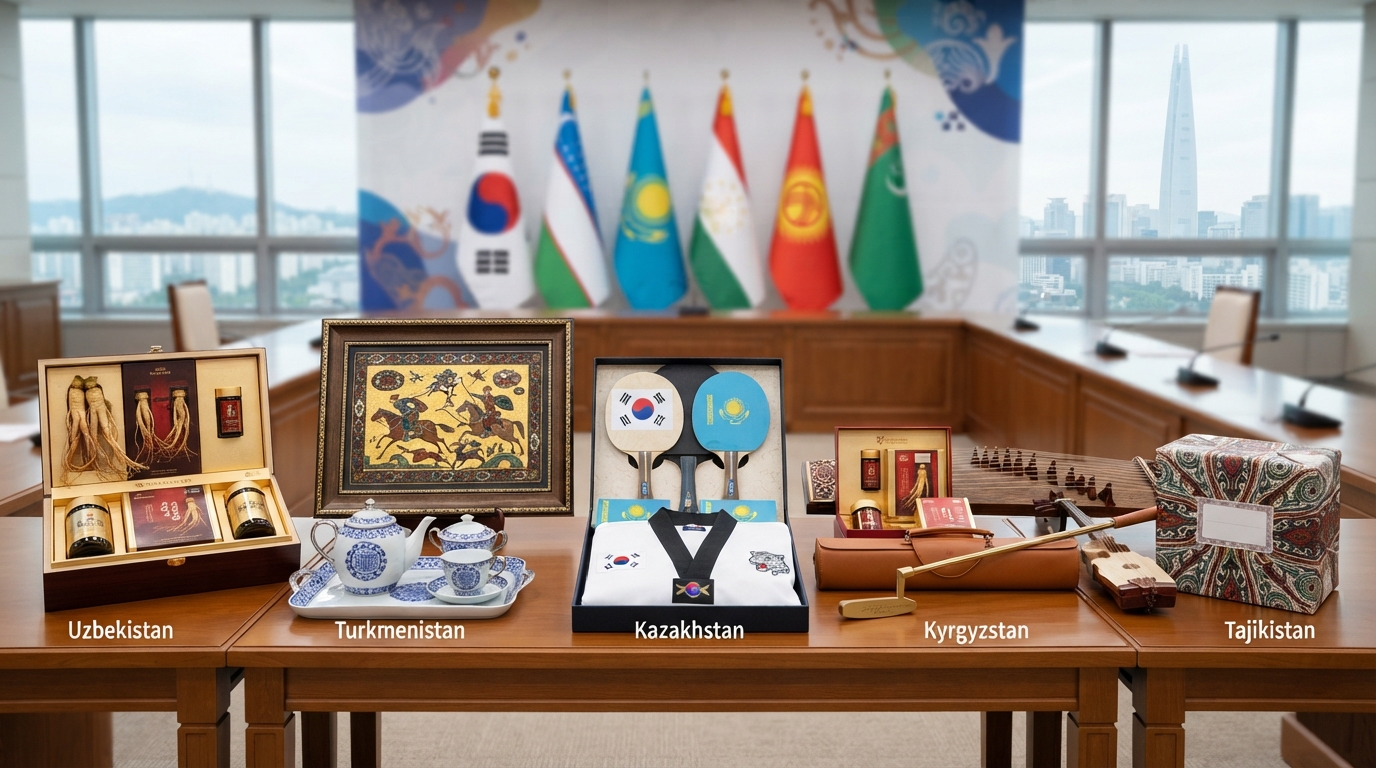
Ginseng, a tennis racket, and a tea service: What gifts did the South Korean leader give to the Central Asian presidents?
South Korean President Lee Jae-myung met with the presidents of Central Asian countries in Seoul on September 14–16 and presented them with various friendly gifts.
The regional leaders will participate in the first South Korea–Central Asia summit, to be held on September 16–17. On the eve of the summit, the host country's leader held separate bilateral meetings with his foreign counterparts.
The initial meeting took place on September 14 with the President of Uzbekistan, Shavkat Mirziyoyev, and the head of state was presented with red ginseng products.
"Leader Lee presented red ginseng, a premium South Korean health product, to President Mirziyoyev, wishing him robust health and prosperity," the South Korean presidential office said in a statement.
First Lady Ziroat Mirziyoyeva, taking into account her interest in collectible and antique ceramics, was gifted a silver-trimmed white porcelain tea service reflecting traditional Korean aesthetics, along with a matching tray.
In addition, the South Korean presidential office included respect-and-honor events in Mirziyoyev's state visit program that reflect Uzbek culture, demonstrating South Korea's hospitality and the friendly relations between the two countries. As a symbol of hospitality, the flags of South Korea and Uzbekistan were displayed on the Lotte World Tower. Also, a display outside the Seoul government complex featured welcoming messages in Korean and Uzbek.
At the state banquet, attended by about 50 representatives from various sectors of the two countries, Korean national dishes were served to the President of Uzbekistan, taking into account the harmony of the dining cultures and ingredients of both countries. The menu included seafood salads, meat (Hanwoo beef and marinated lamb ribs), and main dishes made from Icheon rice. Persimmon-based desserts and traditional drinks were served for dessert.
The South Korean president also held meetings with the leaders of Turkmenistan and Kazakhstan on September 15. President Serdar Berdimuhamedov, who is interested in equestrian sports, was presented with a framed artwork made in the traditional chilbo technique, depicting the famous hunting scene from the Muyongchong tomb of the Goguryeo period.
Considering that Kazakh President Kassym-Jomart Tokayev's favorite sport is table tennis and that Kazakhstan will host the World Taekwondo Championships next year, President Lee gave him premium table tennis rackets featuring the flags of the two countries and Tokayev's name, as well as a taekwondo uniform. The racket was placed in a special case made of traditional Korean hanji paper. The uniform features the flags of the two countries and an image of a snow leopard, one of Kazakhstan's well-known symbols.
During a meeting with Kyrgyz President Sadyr Japarov on September 16, he was presented with an engraved golf putter from Korea's premium Gold Five brand as a gift. The choice of gift took into account the opening of the first international-standard golf course in Kyrgyzstan in July 2026. The South Korean leader also wished Sadyr Japarov robust health, like the President of Uzbekistan, and gifted him red ginseng.
First Lady Aigul Japarova was presented with a decorative item in the shape of a traditional Korean stringed musical instrument. The presidential administration explained that the choice took into account Kyrgyzstan's tradition of presenting national musical instruments to foreign leaders.
Taking into account the cultural characteristics of Central Asia, Lee Jae-myung also prepared a special gift for Tajik President Emomali Rahmon. However, what was inside the gift wrap was not disclosed, as the Tajik side requested not to reveal the contents of the exchanged gifts to the press. No official information was provided regarding what exact gifts the presidents of the Central Asian states gave to their South Korean counterpart in return.