

Games come in all shapes and sizes
The Kazakh authorities' "games" around the introduction of a fee for an electronic travel authorization (QazETA)
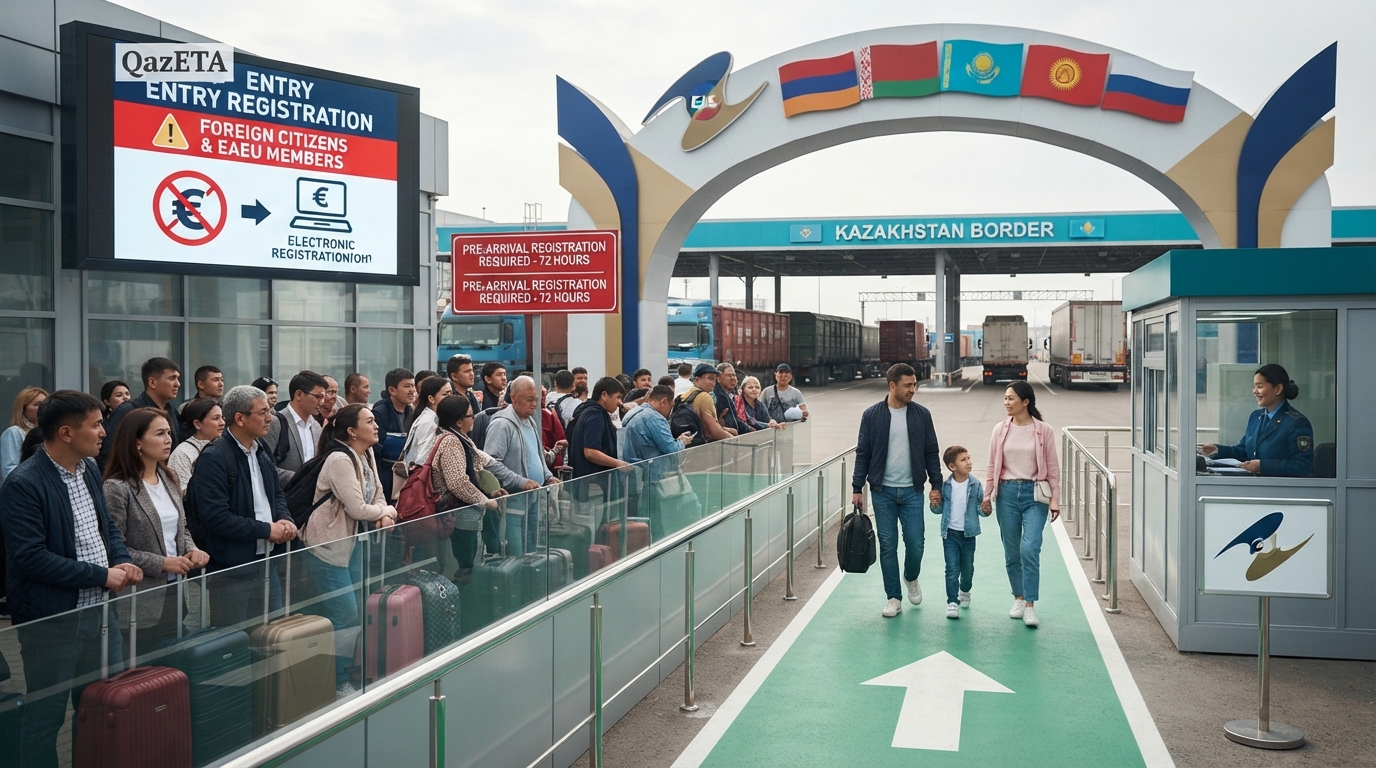
Games Can Be Different
Recently, a discussion has unfolded in the media space around an initiative by Kazakhstan: introducing a certain "mandatory payment" upon entry for foreigners, including citizens of the EAEU countries. The authorities of the republic explained this as a concern for tourism, whereas everyone else saw it as an undermining of the foundations of the Eurasian Economic Union.
The Union That Cannot Be Seen
To begin with, for citizens of the EAEU countries, membership in the union provides—at least as officially stated—quite specific and tangible benefits that can be broken down into several key areas. The main one is the freedom of movement of labor, which in practice means simplified access to the labor market of the participating countries across its entire territory. In other words, citizens of the EAEU member states can freely move and work wherever they want within its borders.
If the principles of good-neighborliness were followed to the end, it would be worth introducing complete freedom of movement for all citizens, as in the Schengen Area. Or at least organizing separate lanes for EAEU citizens at airports so that they do not stand in general queues and feel like members of an association that made such a loud statement about itself in its time. But for some reason, not all states of the union wanted this. Why is a very interesting question that requires a separate discussion.
Although in some countries, primarily in Russia, such a rule exists.
"In some airports in Russia, Belarus, and Armenia, this is practiced for citizens of the Eurasian Economic Union. They do not stand in line behind passport control. That is, there is a green line there. And they either quickly pass through it or along with the citizens of the country of arrival," Grigor Balasanyan, Associate Professor of the Department of International Relations and Diplomacy at Yerevan State University, said on this matter.
The expert agreed with our opinion that it would not hurt to hang the appropriate symbols in such places.
"There is actually a very big problem here. And it concerns, first of all, the youth. In my opinion, these symbols should always be before their eyes. First of all, they should be at airports. So that, for example, a citizen of a third state who comes to Kazakhstan, Armenia, Belarus, or Kyrgyzstan understands that he has arrived in an economic union, that is, an association that includes this country. This in no way infringes on the sovereignty of the state. And in no way goes against independence. This is a normal phenomenon that should exist. Because the Eurasian Economic Union and the topic of Eurasia can be effective if it becomes popular and fashionable among young people. Caps, T-shirts, vests, and other symbols of the Eurasian Economic Union—they are nowhere to be found. I have not met this anywhere," Grigor Balasanyan said further.
Astana Said They Were Joking
Against this background, the initiative of the Kazakh authorities, who were going to charge an entry fee to their territory from all foreigners, including citizens of the EAEU countries, looks particularly strange.
According to official statements, we are talking about the phased introduction of an electronic travel authorization (QazETA). From August 25, 2026, it operates in a test mode, and from December 30, it extends to land borders with the EAEU countries. And from July 2027—to airports.
The media sounded the alarm about the actual introduction of a visa regime and a step toward the destruction of the union. After all, Kazakhstan's introduction of a financial barrier for EAEU citizens actually calls into question the freedom of movement of labor and the visa-free regime—the cornerstones of the EAEU treaty. And, what is even more serious, the rest of the countries of the association will have full moral right to follow this example. What kind of union can we talk about then?
The Ministry of Economic Development of Russia in September 2026 sent a letter to the EEC stating that the introduction of a fee could create obstacles to the implementation of rights under the treaty. Official representative of the Russian Foreign Ministry Maria Zakharova stated that Moscow expects to receive additional clarifications from Astana. The new rules, according to her, affect, among others, citizens of the EAEU member states, and it was important for the Russian side to understand exactly how the norms would be applied in practice. Kazakhstan responded that detailed information had already been sent through diplomatic channels, and also scheduled a briefing for diplomats.
In short, Astana, after a whole series of outcries not only from the media, but also from very serious official figures, backtracked. Clarifications appeared that in the initial draft there really was a fee—about 3.9 thousand tenge for online registration and 7.6 thousand at the border—but in the final government decree, they abandoned the money. The amount of the fee for issuing a permit now, as stated in Kazakhstan, is zero tenge.
The Ministry of Foreign Affairs of the Republic stated that when the fee became zero, and the procedure itself was reduced to a free online application 72 hours before the trip, there is no question of a "visa regime." A visa regime, they say, implies refusal of entry in the absence of a permit and, as a rule, financial costs. Here, supposedly, we are talking about exceptional technical registration caused by the need for "transparency, efficiency, and completeness of tracking migration flows." This, the agency added, is rather an analogue of systems operating in many countries, for example, electronic authorizations in the USA or South Korea, and has nothing to do with the "destruction of the union."
In short, as Astana made clear, the innovation should not be considered an unfriendly step, since the goal was to replenish the budget. They have now changed their mind about replenishing it in this way. But a bitter aftertaste remains.