

Fuel production in Uzbekistan goes into the red: authorities rely on RES and gas savings
Over the eight months of 2026, natural gas production decreased by 16.3%, and coal production fell by 10.2%. Against this background, the output of metal ores is growing, but it was unable to compensate for the decline in the fuel sector. The authorities expect to reduce the demand for traditional energy resources through alternative energy and energy conservation. According to the National Statistics Committee, in January–August 2026, the volume […]
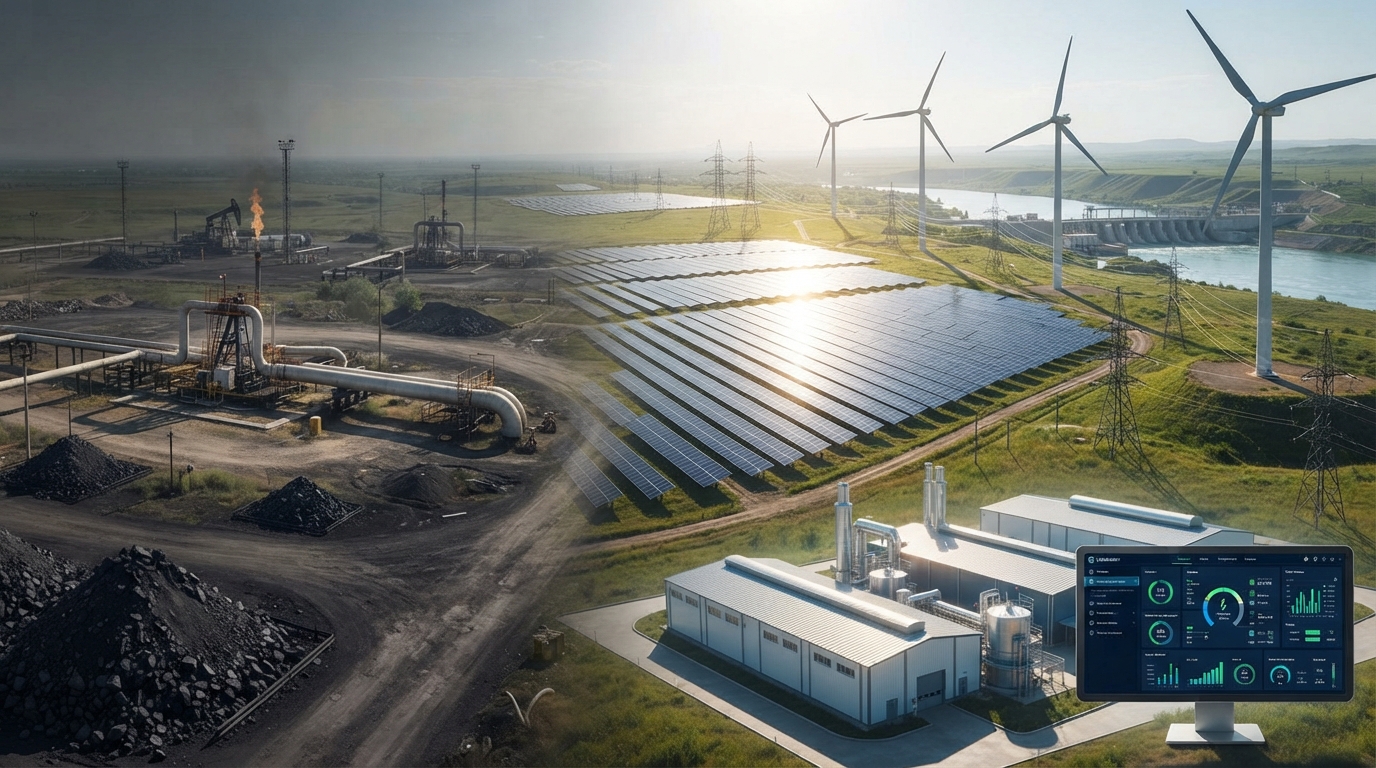
Fuel extraction in Uzbekistan goes into the red: authorities rely on RES and gas savings
In the eight months of 2026, natural gas production decreased by 16.3%, and coal production fell by 10.2%. Against this backdrop, metal ore production is increasing; however, it failed to offset the decline in the fuel sector. The authorities expect to reduce the demand for traditional energy resources through alternative energy and energy conservation.
According to the National Statistics Committee, in January–August 2026, the volume of production in the category of fuel and energy minerals amounted to 27.1 trillion soums — 86.5% of the figure for the same period last year. In other words, the value decreased by 13.5%.
The decline affected almost all key types of extracted fuel. In eight months, 24.2 billion cubic meters of natural gas were extracted in the country — 16.3% less than a year earlier. Oil production decreased by 2.2% to 425 thousand tons, and gas condensate production fell by 14.8% to 648.3 thousand tons.
Coal extraction decreased by 10.2% — from 4.9 million to 4.4 million tons.
Against the backdrop of the fall in the fuel sector, metal ore extraction is growing. In eight months, the volume of production in this category reached 22.8 trillion soums, increasing by 19.5% year-on-year. However, this growth could not offset the decline in the fuel and energy segment.
As a result, the mining industry and quarrying as a whole showed 97.6% compared to the level of January–August 2025, that is, it contracted by 2.4%.
The reduction in hydrocarbon production reinforces the importance of measures to reduce gas consumption and develop alternative energy sources.
In February 2026, at a meeting chaired by President Shavkat Mirziyoyev, it was reported that the total installed capacity of Uzbekistan's power plants reached 25.8 thousand MW. About 8 thousand MW, or 31% of the total capacity, came from solar, wind, and hydropower.
For 2026, the task has been set to save 2.84 billion cubic meters of natural gas and 4.378 billion kWh of electricity. Large enterprises must reduce energy consumption by at least 10% without reducing production volumes.
Thus, against the backdrop of falling extraction of traditional energy carriers, the authorities are relying on two directions: expanding alternative generation and improving energy efficiency.