

From medicines to chips: what Uzbekistan wants to learn from India
Uzbekistan intends to more actively utilize Indian experience in pharmaceuticals, the medical industry, semiconductor manufacturing, and startup development. These areas became some of the key topics of the meeting between the Minister of Economy and Finance of Uzbekistan, Jamshid Kuchkarov, and the Minister of Finance of India, Nirmala Sitharaman, on the sidelines of the BRICS events, the press service of the department reported. One of the main areas of the negotiations was pharmaceuticals and the medical industry. Uzbekistan […]
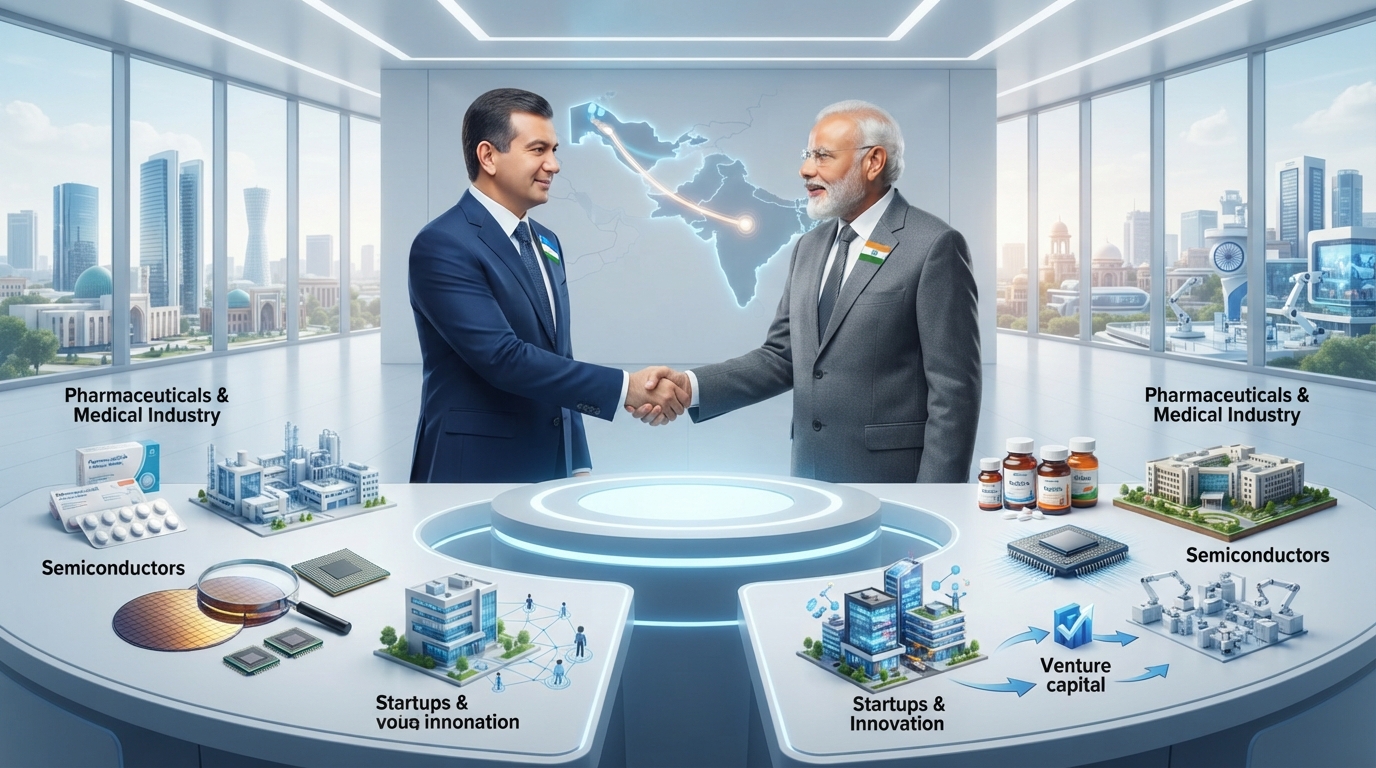
From Medicines to Chips: What Uzbekistan Hopes to Learn from India
Uzbekistan plans to more actively utilize Indian experience in pharmaceuticals, the medical industry, semiconductor manufacturing, and startup development.
One of the key topics of the negotiations was pharmaceuticals and the medical industry. Uzbekistan is interested not only in increasing imports of Indian medicines but also in applying the technologies and competencies of Indian companies to develop its own production.
Indian experience could be useful in creating new production capacities, localizing technologies, and expanding technological cooperation. For Uzbekistan, this opens up an opportunity to gradually move away from the model of supplying finished products toward deeper cooperation — involving investments, technology transfer, and the creation of new jobs.
The parties paid special attention to another strategic sector — semiconductor manufacturing.
The sides discussed opportunities for utilizing Indian experience and potential in this field, as well as prospects for technological cooperation in Uzbekistan.
For the country, this direction is of particular interest. The development of the semiconductor industry could become one of the elements of the strategy to attract investment into high-tech manufacturing, develop engineering competencies, and train specialists for the new economy.
At the same time, for now, this refers specifically to opportunities for cooperation rather than the launch of a specific chip manufacturing project in Uzbekistan. However, the very fact that semiconductors have appeared on the negotiation agenda shows that economic relations between the two countries are gradually expanding beyond traditional areas.
Another potential point of growth was innovative entrepreneurship.
Representatives of the two countries discussed the development of ties between startup ecosystems, support for promising innovative projects, and the formation of new areas of cooperation.
For Uzbek tech companies, this could open up access to Indian expertise, business partners, technological solutions, and investment opportunities. In turn, Indian business gains additional access to the rapidly growing market of Central Asia.
Thus, cooperation with India is gradually acquiring a more technological character. The agenda now includes not only trade and supplies of finished products, but also production localization, technology transfer, semiconductors, innovations, and personnel training.
The talks between Kuchkarov and Sitharaman took place shortly after Indian Prime Minister Narendra Modi's visit to Uzbekistan in August. One of the outcomes of that visit was the signing of a memorandum of understanding between the ministries of finance of the two countries.
If the agreements receive practical follow-up, Indian experience could become for Uzbekistan not just a source of imported technologies, but a tool for creating new industries and entering more complex segments of the global economy.