

From early diagnosis to inclusive education. How children with disabilities are supported in Beijing
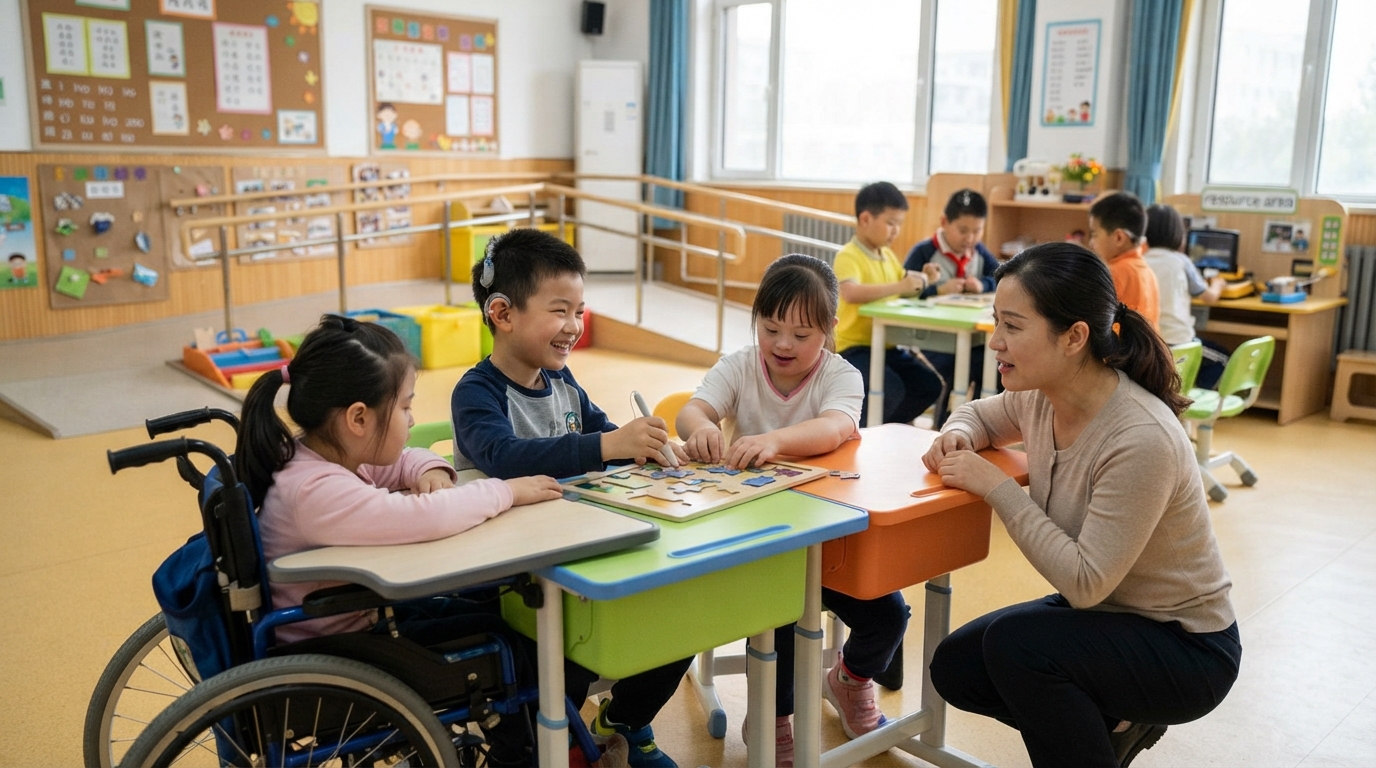
From early diagnosis to inclusive education. How Beijing supports children with disabilities
Beijing has built a system of assistance for children with developmental disorders — from pre-birth screening and early detection of problems to rehabilitation, financial support, and inclusive education. A Podrobno.uz correspondent learned how it works at the World Summit "Investing in Children's Wellbeing" in Samarkand, where Li Yan, Chairman of the Beijing Disabled Persons' Federation of the PRC, presented a report.
From screenings to early diagnosis
As Li Yan noted, in Beijing, prevention and rehabilitation are viewed as elements of a single system of child assistance at different stages of life. It covers pre-birth measures, newborn screening, early childhood screening, and referring those with identified potential disorders for additional diagnosis.
Prenatal screening is conducted in the city, and newborns are tested for free for 12 types of congenital metabolic disorders. According to the data provided by Li Yan, prenatal screening coverage stands at 98.24%, while genetic screening for hereditary metabolic diseases, hearing impairments, and deafness exceeds 99.6%.
For children from birth to six years old, screening is provided in five areas: vision, hearing, motor functions, intellectual development, and autism. Li Yan also reported that 99.39% of children under the age of seven are covered by medical services.
Early detection of disorders makes it possible to refer a child for additional examination in a timely manner and determine what medical care or rehabilitation they need.
Rehabilitation and financial support
A separate area of the system is assisting children who have already been diagnosed with a disability. According to Li Yan, the age of rehabilitation assistance recipients in Beijing has been increased up to 17 years old inclusive.
Children with disabilities can receive up to 36,000 yuan per year for rehabilitation. In addition, living and care subsidies are provided, as well as basic social support for families that meet the established conditions.
City authorities are also developing a network of institutions providing medical and rehabilitation assistance. According to Li Yan, 207 such institutions operate in Beijing.
Another area is providing children with technical means of rehabilitation. As Li Yan reported, the city operates a system of full subsidies for basic assistive devices for children with disabilities under 17 years old. Among high-tech solutions, he named cochlear implants and bionic eyes.
The installation of bilateral cochlear implants for children under seven years old, according to him, is fully paid for.
Support is not limited to medicine
In addition to medical care and rehabilitation, Beijing is developing a system of special and inclusive education. According to Li Yan, a four-level resource support network has been created for this purpose — at the city, district, educational zone, and school levels.
The authorities also promote the education of children with disabilities in regular schools and implement a separate support program for children with autism.
Thus, the assistance system in Beijing covers several stages: from prevention and early detection of potential disorders to rehabilitation, provision of technical means, and support in obtaining an education.
Speaking in Samarkand, Li Yan also expressed readiness to exchange experience with other countries in the field of early screening, disability prevention, and the organization of rehabilitation services.