

France relaxes strict cheese-making rules after prolonged drought
Makers of some of France's most famous cheeses get waivers on where herds graze due to the lack of grass.
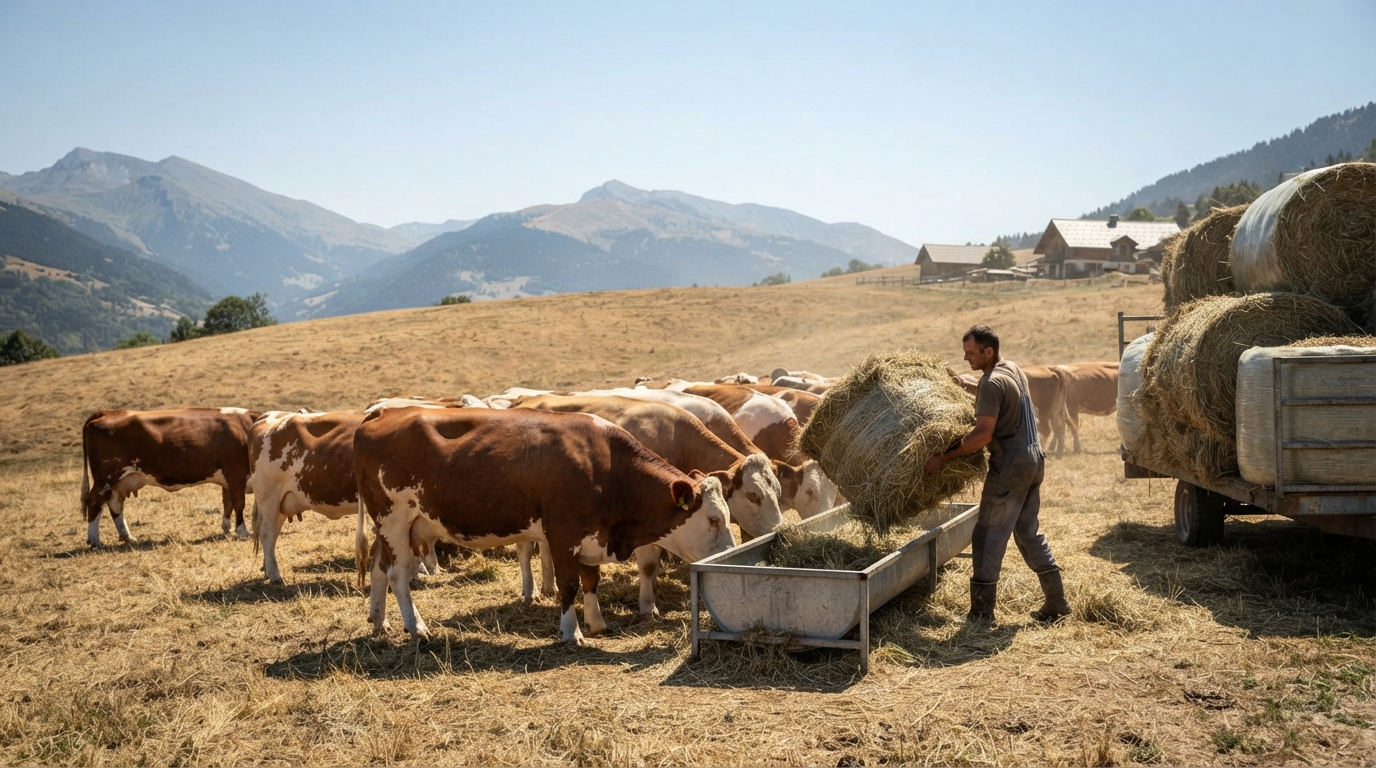
France has eased its stringent cheese-making regulations in the wake of a prolonged drought.
Among the French cheeses temporarily affected by these relaxed rules is Beaufort.
The temporary relaxation of rules for producing some of France's most renowned cheeses comes after a summer drought severely diminished the available grass for dairy herds.
Government decrees, published on Wednesday, grant dispensations to manufacturers of Abondance, Beaufort, and Comté cheeses, all originating from the mountains of eastern France.
Several other cheeses are anticipated to receive similar waivers, permitting farmers to feed their livestock with grass and hay sourced from outside their designated geographical zones.
These include Cantal, Bleu d'Auvergne, Fourme d'Ambert, Bleu du Vercors-Sassenage, Reblochon, and the goat's cheese Rocamadour.
This summer's drought has left a significant portion of France's pastures parched.
The National Institute for Origin and Quality (INAO), responsible for regulating France's labels of origin, has also approved temporary modifications to the rules for other protected products due to the summer heat's impact.
Products set to benefit include certain types of Calvados and cider from Normandy, Crémant d'Alsace sparkling wine, lamb from Poitou-Charentes, and Reine-Claude plums.
Certificates of origin enable farmers to command premium prices, but they are accompanied by strict regulations governing production location and methods.
The objective is to safeguard the distinct identity of cheeses, wines, and other foodstuffs, which is purportedly linked to their specific *terroir*—a French concept connecting locality and tradition.
Due to a 2026 drought, which the INAO now characterizes as "historic," farmers are being permitted to deviate from the rules for a brief period.
For instance, makers of Abondance cheese in the Alps will be authorized to reduce the proportion of pastured grass in their animals' diet from 50% to 15%. They will also be allowed to import forage from outside their zone and utilize some supplements.
Comté cheese producers in the Jura mountains will be able to substitute the local green maize typically fed to their cattle with maize from other regions.
Such derogations are permissible under French and European law during periods of exceptional weather. Similar measures were implemented following the dry summer of 2022.
It remains to be seen whether these changes will result in any discernible alteration to the taste or quality of the cheeses, or to the quantity produced and its pricing.
In the longer term, these measures raise questions about the viability of existing labels of origin in France and elsewhere.
If a changing climate means that certain foodstuffs can no longer be produced in their traditional localities, the concept of *terroir* will be pushed to its limits.