

Around 550,000 French people are facing water shortages amid heat and drought.
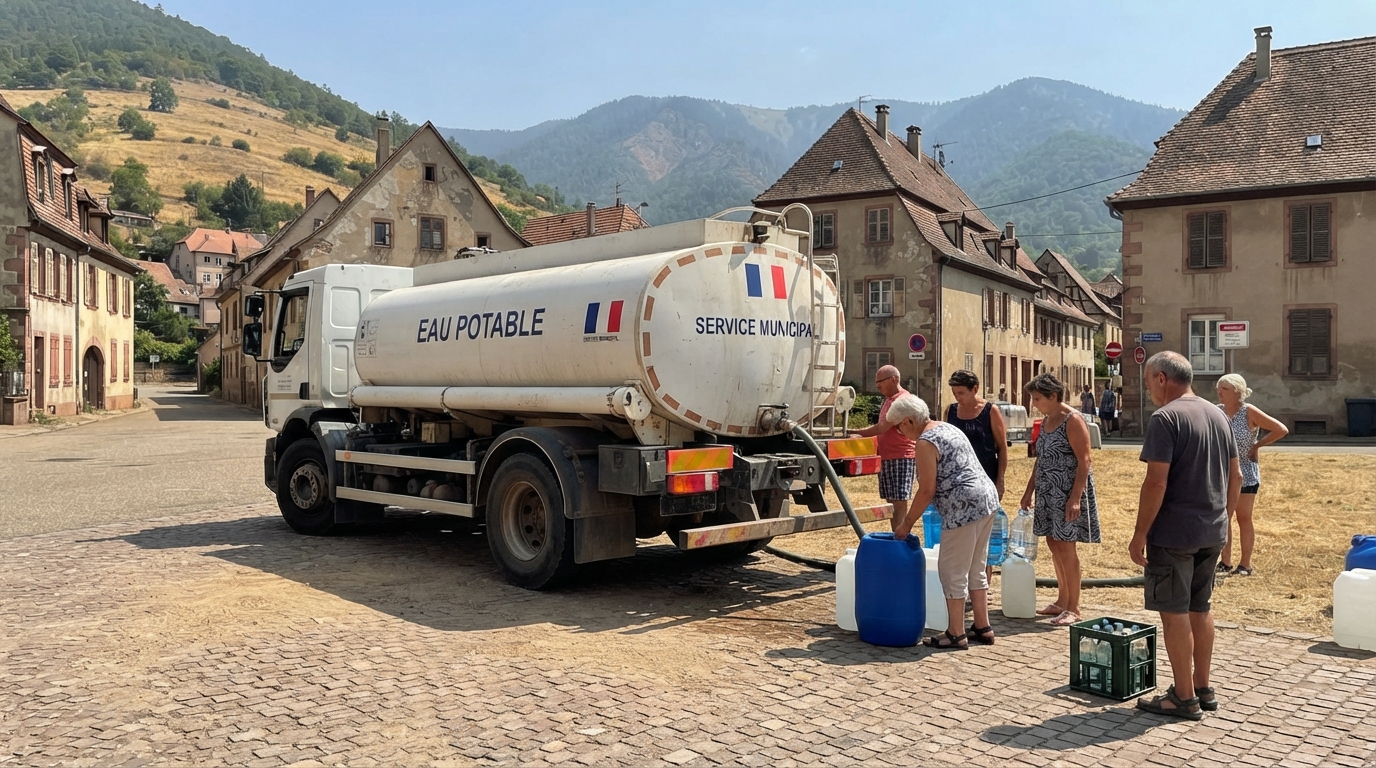
Approximately 550,000 residents of France are experiencing water shortages amid abnormal heat and drought. More than 40,000 people are experiencing interruptions or a complete lack of drinking water, which in some communities is delivered by tanker trucks.
One such case is in the town of Sainte-Marie-aux-Mines in Alsace, where water tankers have been arriving twice a week since the beginning of August from the neighboring commune of Lièvres. Sainte-Marie-aux-Mines, home to approximately 5,000 people, receives water from approximately 20 springs, which have become insufficient after several weeks of heat and lack of rain.
Lièvres, however, has sufficient water, as the commune is connected to a larger water supply system. However, there is no reliable, permanent connection between the two systems, so tankers are effectively replacing the mains supply.
More than two-thirds of France is affected by water restrictions. The problem is not only due to the drought but also to the state of the infrastructure.
In rural areas, just over 79% of the water entering the system reaches consumers on average, compared to around 84% nationwide. Moreover, only about 0.6% of water networks are renewed annually.
France has already faced a similar crisis. During the 2022 drought, more than 500 municipalities temporarily provided residents with water via tanker trucks or bottled water deliveries.
Following this, the authorities launched a program to modernize the water supply. Approximately €1.4 billion has been allocated for measures under the "Water Plan" since 2023. The program, among other things, aims to reduce water consumption in France by 10% by 2030.
Drought also causes significant economic losses. French Environment Minister Monique Barbut estimates that direct and indirect damage from heatwaves in 2026 will amount to between €10 and €15 billion.
The problem extends beyond France. According to the European Environment Agency, approximately 30% of the European Union's territory and approximately a third of its population face water shortages annually.
In Germany, approximately 12,500 people died from heat waves between April 6 and August 2, 2026. This is the highest number since data collection began in 2016.