

Fountains, street cleaning, and emission reductions. How Uzbekistan decided to combat air pollution
Fountains, street cleaning, and emission reductions. How Uzbekistan decided to combat air pollution
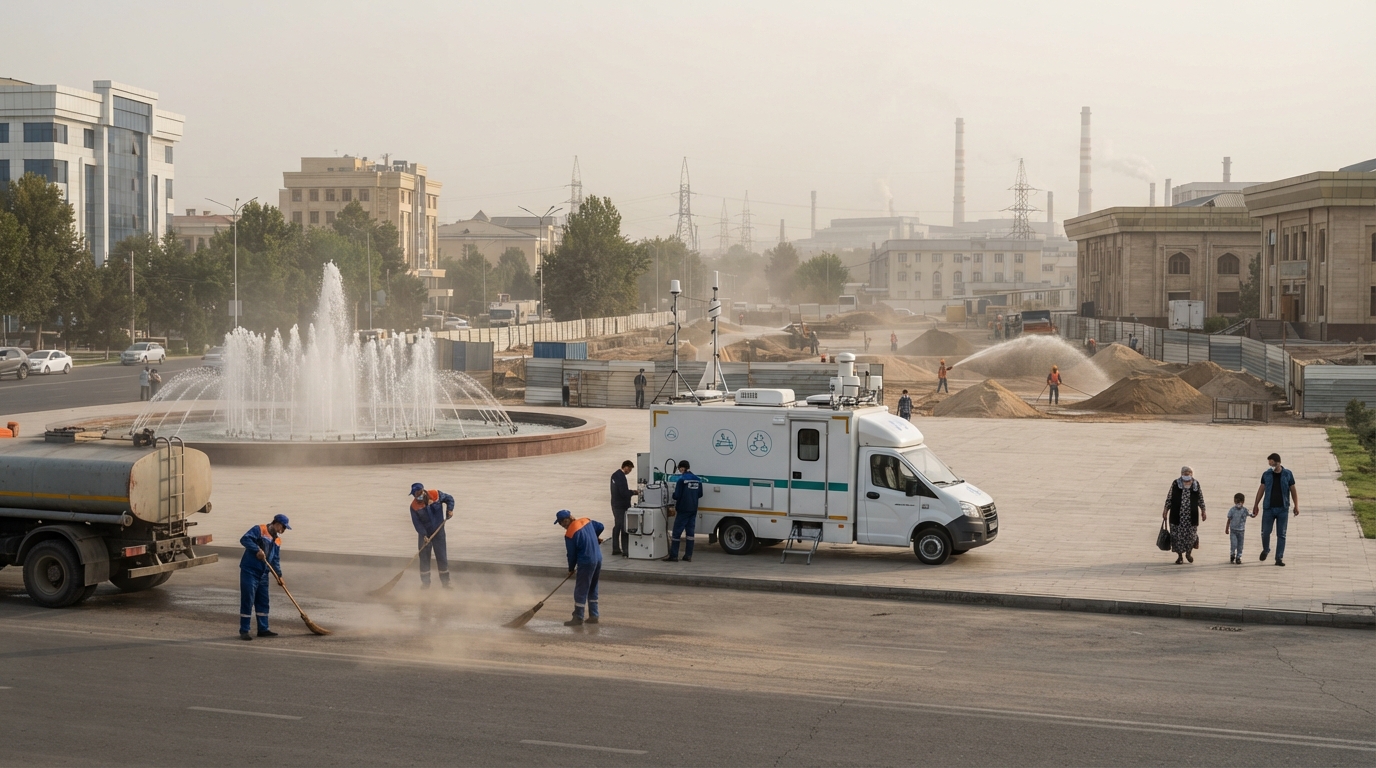
In Tashkent and the regions, a special commission instructed that streets be cleaned of sand and dust, and that city fountains be kept operational. This decision comes in response to deteriorating air quality: on the evening of October 28, the state of the air in the capital was assessed as "unhealthy."
According to the commission, the pollution is influenced by nighttime temperature inversion, dry air, lack of precipitation, and weak winds, which cause emissions to accumulate over the city.
In addition, 30 major construction organizations received warnings. They have been instructed to take measures to reduce the rising of dust and sand particles. Seven thermal power plants in Tashkent and adjacent areas, as well as 131 major enterprises, were ordered to cut their emissions in half.
Pollution control is being conducted by a special mobile laboratory, which checks the volume of harmful substances released into the atmosphere by enterprises.
During periods of deteriorating air quality, children, the elderly, pregnant and breastfeeding women, as well as people with heart and respiratory conditions, are advised to avoid prolonged outdoor exposure, limit physical activity, and wear protective masks.
Furthermore, a specialized atmospheric laboratory is operating in Tashkent, studying the composition of the air and identifying the main sources of pollution. This will help determine which factors influence the accumulation of harmful impurities and how to combat them.