

Forgotten by God, forgotten by the authorities
Farewell to the Sudochye lake system in Karakalpakstan
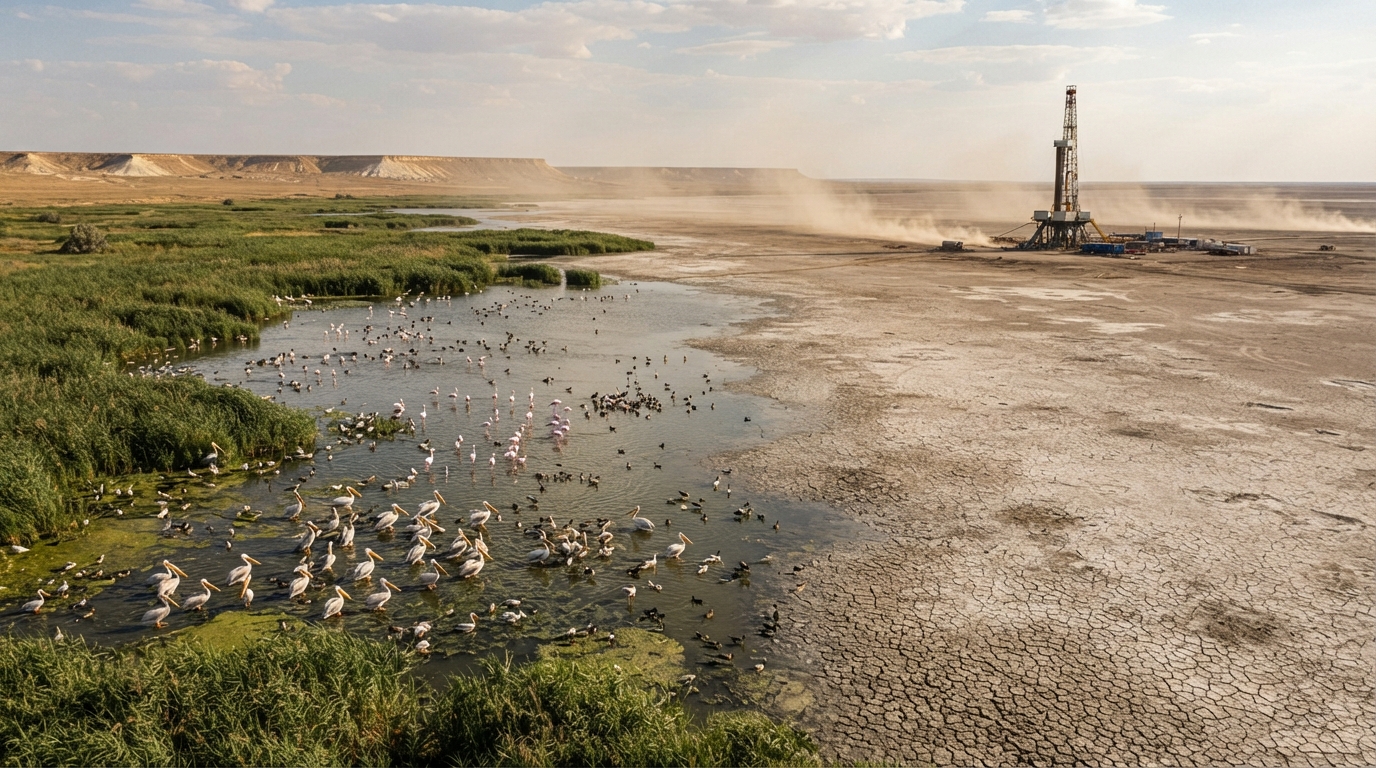
Forgotten by God, Forgotten by the Authorities
This publication features expressive photographs by Azamat Matkarimov and a text that voices extreme alarm for the Sudochye lake system in Karakalpakstan.
2013. Next is the view from Ustyurt.
This photo was taken in 2018.
May 2026. Dust storms on the dried-up lake bed.
May 2026.
September 2026 — the bed is heavily exposed.
September 2026 — compare with 2018, the pictures were taken in the exact same place.
Save Lake Sudochye! Right now, it is drying up very quickly. Yet Sudochye is not just a body of water, but a home for many thousands of birds and an important stopover on their migration route. Among them are rare and endangered species. If the water surface disappears, the birds will disappear too... Therefore, Lake Sudochye and the entire lake system (wetlands) are of immense importance not only for the region, but for the whole world.
Against the backdrop of rapid drying, we also see the development of economic activity and drilling rigs in the lake's water area. Questions arise: what volume of water is currently entering Sudochye, and is the reduction in water supply linked to the interests of gas extraction projects? If there are restrictions on the water supply, who established them and on what grounds?
After all, we have seen the history of the drying Aral Sea. We saw how, along with the water, fish, birds, plants, and entire settlements disappear, and the way of life of the people changes completely. And we know that it is impossible to restore a destroyed ecosystem. But it is still possible to save what is left!
Previously, Sudochye was flooded by the waters of the Aral Sea. After the Aral receded, a system of lakes was formed — a habitat and migration site for waterfowl and near-water birds in the Aral Sea region. The lake system includes several large bodies of water, including Bolshoye Sudochye (5,100 ha), Akkushpa (11,600 ha), Begdulla-Aydyn (1,850 ha), Lake Karateren (475 ha), as well as many small lakes. It has the status of the "Sudochye" State Ornithological Zakaznik (Reserve).
In 2022, the Sudochye lake system was included in the Ramsar Convention's List of Wetlands of International Importance as site No. 2522. The area of these wetlands is specified as 84,000 hectares. It was fed by Amu Darya water through collectors. No water — it dries up.
Here is the June information from the Scientific Information Center of the Interstate Commission for Water Coordination (SIC ICWC):
"As a result of monitoring, the following was obtained:
1. As of the end of June 2026, a significant reduction in wetland areas and a simultaneous increase in dried-up territories are observed in the water bodies of the Southern Aral Sea region. Compared to May 2026, the total wetland area decreased from 30.0 thousand ha to 8.5 thousand ha, while the area of dried-up sections increased from 284.4 thousand ha to 328.8 thousand ha. At the same time, the open water surface areas shrank from 39.1 thousand ha to 16.2 thousand ha. The most pronounced changes in May were noted in the Sudochye, Jiltyrbas, and Muynak systems, where an increase in dried-up areas and a reduction in wetlands are observed, which may be associated with a seasonal decrease in water inflow and increased evaporation during the spring period.
2. In May 2026, an increase in the total water inflow to the Southern Aral Sea region was noted, the volume of which reached 289.7 million m³ after lower values in previous months. The main contribution is formed by the flow of the Amu Darya River, with additional supply provided by canals and the collector-drainage system."
Obviously, by September 2026, the situation had worsened. We do not yet have the monitoring data for September.