

Flower deliveries cut as firms battle fuel costs
East Yorkshire and Lincolnshire business owners say they are battling to keep costs from customers.
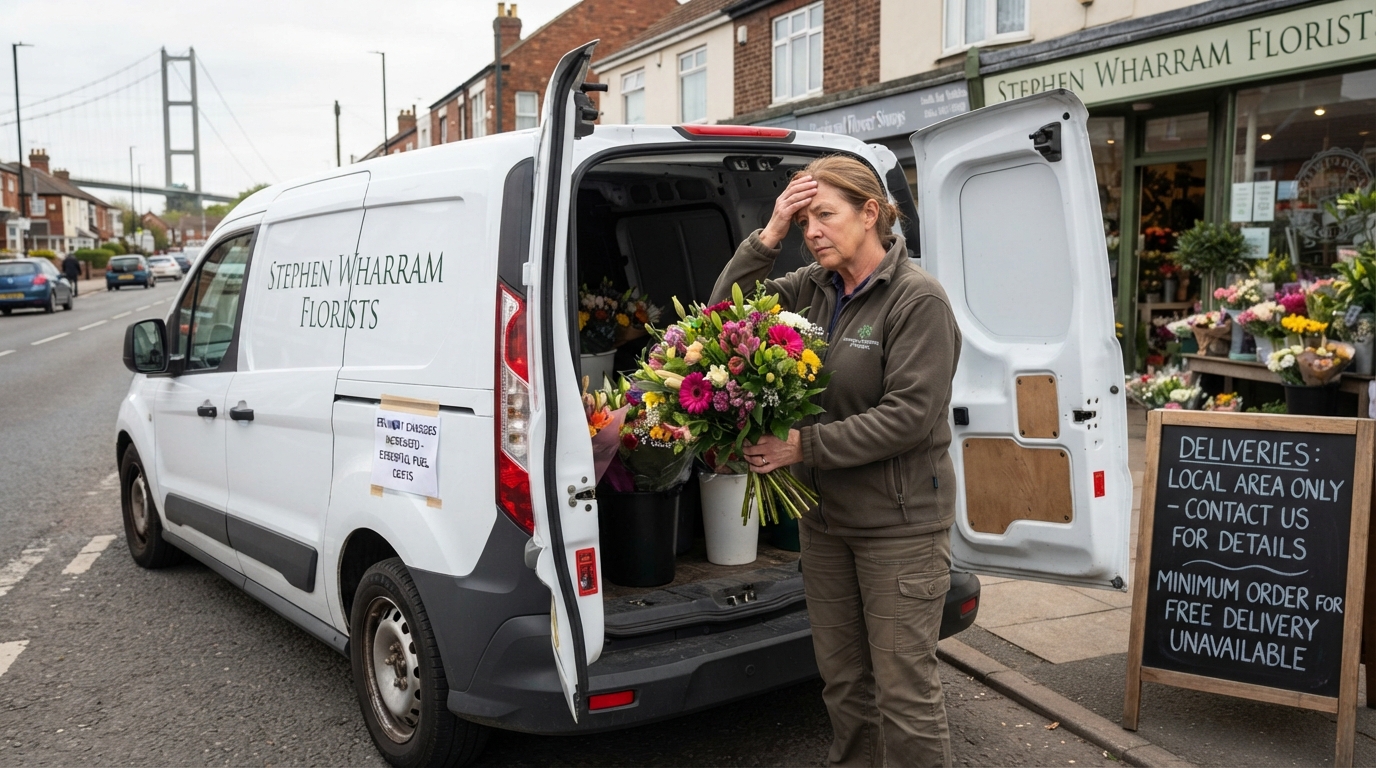
Flower delivery services are being scaled back as businesses grapple with escalating fuel expenses.
Six months into the US-Iran conflict, companies are striving to prevent the burden of increasing fuel costs from falling on their customers. Stephen Wharram Florists, located in Hessle, has ceased deliveries to certain areas and has been compelled to raise its delivery fees due to persistently high fuel prices.
Sally Wharram, from Stephen Wharram Florists, noted that the cost to fill their delivery van has surged to £125 every two weeks, a significant jump from the previous cost of approximately £90. "We used to offer free delivery, but that's no longer an option," she stated.
Fuel prices have remained elevated since the onset of the US-Iran conflict, which began in late February and has led to fluctuating oil prices. The Strait of Hormuz has been a key point in discussions between the two nations; prior to the conflict, this waterway facilitated about one-fifth of the world's daily oil and liquefied natural gas supplies.
At the conflict's outset, oil prices experienced a sharp increase, reaching over $126 (£92) a barrel, their highest point since 2022. While prices returned to pre-war levels of around $70 (£51) in June, they have continued to fluctuate.
Wharram explained that the florist previously delivered further into East Yorkshire, but longer trips for individual orders are now often financially unfeasible. "We would have gone to Goole at one time, but for a single delivery, that's no longer practical," she said.
The unpredictable nature of fuel prices makes budgeting challenging, Wharram added. With flower prices also having risen by about 40% over the past couple of years, the business cannot continually pass on all additional costs to customers. "We have to absorb some of it. People will go elsewhere if it's cheaper. We're a family business, we've been here many years, and we fight everything."
Sam Kavanagh, who operates Unlock Auto Locksmith and Vehicle Transportation, is finding it harder to maintain profit margins due to high fuel costs.
According to the RAC, their research indicates that eight out of ten drivers would struggle without access to a car, leaving many with no alternative but to pay more at the pumps. Simon Williams, the company's head of policy, believes that businesses reliant on transport are unlikely to see any immediate relief.
He stated, "The price of oil, which largely dictates what we pay, is currently around $90 (£66) a barrel, meaning we won't see petrol prices drop anytime soon." He further predicted, "In fact, diesel is likely to increase by a couple of pence a litre in the coming weeks unless there's a significant change or a deal is reached between Iran and the US."
For business owners like Sam Kavanagh, this means that maintaining profitability could become increasingly difficult. He spends approximately £1,000 monthly on fuel for locksmithing, a figure that escalates to between £2,000 and £3,000 when transporting vehicles.
"You try to be competitive, but at the same time, someone else will do it much cheaper," he remarked. "It's hard to compete with that while also considering your profit margins and striving to offer the best price to the customer. It's quite a difficult balance."
Graham Kent, who runs Anderby Driving Centre in Grimsby, is making every effort to avoid passing these additional costs on to his customers. "We're just absorbing it for now and not passing it on to our clients because we're aware of the cost of living crisis," he explained. "Petrol is obviously our biggest variable overhead. Most of our instructors use fuel-efficient cars, like hybrids, so we're trying to keep costs as low as possible by teaching good driving techniques."
Gordon Balmer, executive director of the Petrol Retailers Association, noted that high fuel prices continue to exert pressure on businesses and motorists. However, given the instability in global oil markets, predicting when this pressure might ease remains challenging.
Related news includes reports of oil giants achieving record profits as the Iran conflict drives up prices, emergency charities being impacted by rising fuel costs, haulage firms struggling with soaring fuel expenses, and UK petrol prices reaching their highest levels since the start of the Iran conflict.