

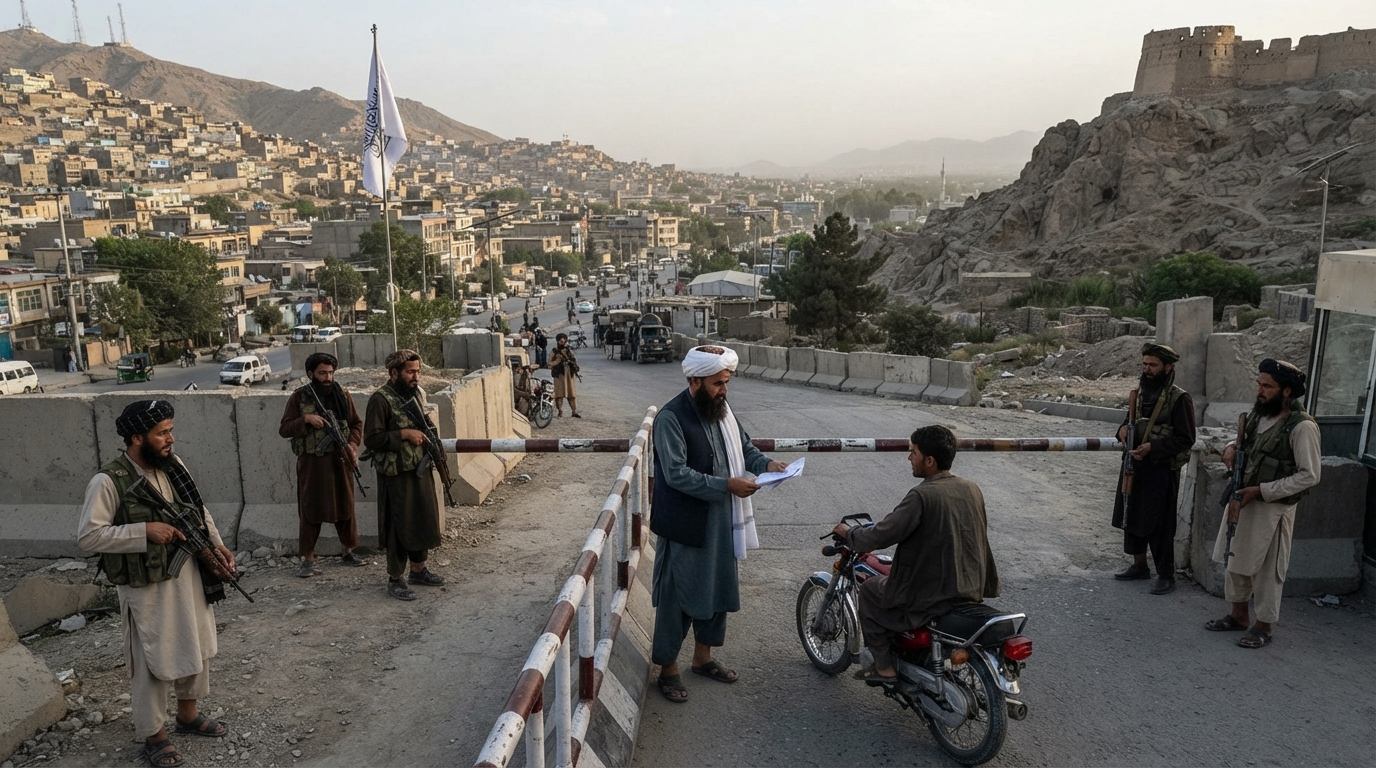
Five Years: The Taliban's Rule in Afghanistan
August 15th of this year marked five years since the Taliban movement returned to power in Afghanistan. On this day in 2021, the Taliban entered Kabul after the rapid collapse of the Western-backed Afghan government, and President Ashraf Ghani fled the country. Five years later, it has become clear that what happened in August 2021 was not a short-term political crisis or a transitional period.
During this time, the Taliban have managed to consolidate their position as the de facto government and establish a system of governance. Despite international isolation, severe economic problems, and a lack of broad international recognition, the movement continues to control virtually the entire country.
The paradox of modern Afghanistan is that several seemingly contradictory realities coexist simultaneously. On the one hand, the country has ceased to be the scene of the large-scale military conflicts it had been before 2021, and the central government has established much more complete control over the territory. On the other hand, the political system has become significantly more repressive, particularly against women and girls. The economy remains extremely vulnerable, humanitarian dependence persists, and the regime has yet to achieve full international legitimacy.
In other words, over the past five years, the Taliban authorities have achieved political and territorial consolidation, but not international legitimacy or sustainable socioeconomic development.
From Victory over the Republic to the Creation of a New State
The main result of the past five years is that the Taliban have been able to transform their military victory in 2021 into sustainable political control. Following the withdrawal of American troops and the collapse of the Afghan National Army, many expected either a rapid disintegration of the Taliban movement itself or the emergence of a new large-scale armed resistance. However, neither scenario has fully materialized.
By August 2026, armed opposition groups have failed to alter the strategic balance of power (despite a certain level of crisis in the north of the country in recent weeks). The Taliban controls state institutions, key economic resources, and the country's territory, while armed opponents lack the capacity to create an alternative center of power on a national scale. This is crucial for understanding the current situation.
In 2021, the Taliban returned to power as a victorious insurgency, and by 2026, it already represents a de facto state authority, possessing a vertical administrative structure, security forces, a tax collection system, and border control.
At the same time, the current Taliban system is fundamentally different from the Islamic republic that existed before 2021. The Taliban are not attempting to restore the previous constitutional model, a multi-party system, or a Western-style political representation. They are building their own model of an "Islamic Emirate" based on a religiously conservative understanding of governance. Therefore, the main political question today is no longer whether the Taliban can retain power, but what the Afghan state will be like under their long-term rule.
Security: The Taliban's Main Argument
If we look at the situation solely from the perspective of ending the large-scale civil war, the Taliban can indeed demonstrate certain results. Until 2021, Afghanistan was in a state of protracted armed conflict between government forces, the Taliban, the Islamic State of Khorasan, and other armed groups.
After seizing power, the intensity of the previous war decreased sharply, allowing the Taliban to formulate a political narrative claiming to have ended the decades-long war and restored security. On August 15 of this year, the movement's representatives emphasized precisely this aspect: the end of foreign military occupation, the cessation of large-scale internal conflict, and the restoration of order.
But claims of a complete restoration of security would be an exaggeration. Threats to the regime remain. The Taliban's current opponents include the National Resistance Front and the Afghanistan Freedom Front, which are currently attempting to undermine their hold on power in the north of the country, as well as the Islamic State of Khorasan, which continues to carry out terrorist attacks. Furthermore, the Taliban's relations with Pakistan have seriously deteriorated in recent years due to the activities of the Tehreek-e-Taliban Pakistan, which Islamabad accuses of exploiting Afghan territory.
The crisis in relations between Afghanistan and Pakistan has become particularly serious since late 2025. Following a cross-border escalation, the two sides have experienced the largest clashes since the Taliban came to power, while diplomatic efforts by Turkey, Qatar, and Saudi Arabia to achieve a lasting settlement have yet to resolve the fundamental differences. This is one of the most significant paradoxes of the Taliban's five-year rule. The movement has managed to significantly reduce the level of internal warfare, but at the same time, a new, large-scale cross-border conflict with Pakistan has emerged.