

First come, first served
The visit of President of Kazakhstan K-J. Tokayev to South Korea demonstrated the possibilities of Seoul's influence on the region
**First come, first served**
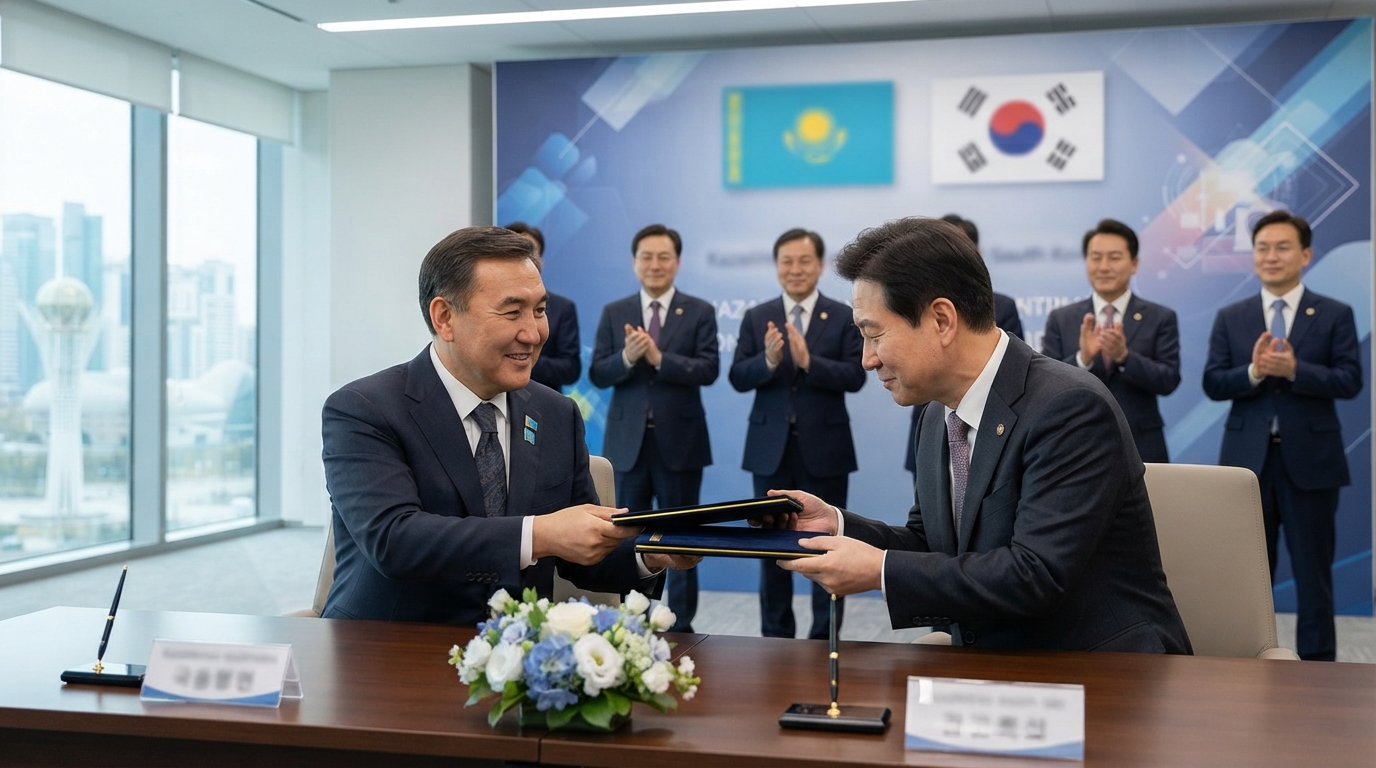
The President of Kazakhstan, Kassym-Jomart Tokayev, who was on a state visit to South Korea from September 14 to 16, brought to Seoul not only a proposal to purchase Korean cars and equipment. Astana suggested that Korean businesses scale up production in Kazakhstan and jointly enter the markets of neighboring countries. Meetings with business circles demonstrated mutual interest: Kazakhstan requires technology and raw material processing, while South Korea needs reliable suppliers and new business platforms. This opens up an opportunity for Seoul to strengthen its position throughout Central Asia.
"The task on the agenda is to double bilateral trade," Tokayev said at a meeting with Prime Minister Han Duck-soo. But the point of the initiative was not just to increase sales. The President of the Republic of Kazakhstan called for "qualitatively changing the structure of trade" and proposed preparing a cooperation program for 2027–2030. Exporting raw materials brings in foreign exchange earnings, while processing them domestically also provides jobs, engineering competencies, and orders for local enterprises.
The business portion of the visit showed where this approach could yield results. Hyundai Motor Company and Astana Motors agreed to produce a new model. QazaqGaz, together with Hyundai Engineering and SICIM Kazakhstan, embarked on a gas processing plant project in Western Kazakhstan. Lotte announced plans to build the country's first hotel under its brand in Almaty and to participate in the development of the Alatau "smart city." In addition, the development of the ports of Aktau and Kuryk was discussed.
A joint investment fund could become the financial foundation for the new initiatives. During negotiations between the Baiterek holding and the company KIND, a starting capital of $200 million was discussed: $100 million each from the Korean corporation and the Kazakhstani Qazaqstan Investment Corporation. In the future, the fund's volume could increase to one billion. Logistics, digital infrastructure, urban development, and renewable energy were named among the target areas. Potential projects worth approximately $7 billion were presented to the partners.
A billion is the possible future size of the fund, and 7 billion is the cost of the proposed projects that have yet to find financing. The point of the fund is different: once launched, the parties will have joint capital to select and support projects. The Korean participant will be able to earn income from their long-term success, while Kazakhstan will gain a partner interested in bringing construction to an operating business.
For Seoul, such a model offers a chance to establish a foothold in several sectors at once. A built enterprise requires maintenance, spare parts, equipment upgrades, and trained personnel for many years. Suppliers form around it, who also master technologies and work standards. With a sufficient share of local production, such ties make the Korean presence more sustainable, while helping Kazakhstan expand its own industrial base.
The base for this already exists. According to Tokayev, more than a thousand enterprises with Korean capital operate in Kazakhstan. The Kia Qazaqstan plant in Kostanay, with investments of $310 million, is designed to produce up to 70,000 cars per year. The next stage is the development of component production: Baiterek reported that it is working on financing for the Seoyon E-Hwa project. Assembling cars from imported kits and manufacturing parts independently have different effects on the economy.
Alatau occupied a special place in the negotiations. "Korea can become a very good partner for Kazakhstan in the development project of the new city Alatau City," Han Duck-soo stated. For Korean companies, this city is interesting for its opportunity to combine construction with digital services, energy, and transport management. But success will depend on demand: the city needs enterprises and residents who can use the created infrastructure and pay for its maintenance.
Another shared interest relates to critical minerals. Korean industry needs stable supplies of materials for batteries and electronics, while Kazakhstan hopes to attract technologies for their processing. Difficult negotiations lie ahead regarding what portion of production will remain in the country. The mere existence of a deposit does not yet guarantee the emergence of a high-tech enterprise. Affordable energy, specialists, and buyers of finished products will be required.
Compared to the visit of Uzbek President Shavkat Mirziyoyev, which took place shortly before and brought Uzbekistan 13 agreements and memorandums, including cooperation in critical minerals, biotechnology, and the defense industry, the Kazakhstani program stood out for its discussion of a joint investment fund and the development of already operating production facilities.
The regional scale of this work was highlighted by the preparation for the first "Central Asia – Republic of Korea" summit. Seoul received an opportunity to discuss its interests with five countries at once. However, a unified production platform does not automatically emerge from the region. Differences in regulations, transport costs, and the sizes of national markets will have to be factored into every project. The promise of entering neighboring markets will convince an investor only when calculations show that local products are capable of withstand competition.
Therefore, Korea's prospects look particularly strong primarily in specific sectors. Geography gives China and Russia advantages that are difficult to compensate for even with large investments: shared borders, land connections, and proximity of markets. Seoul will have to achieve success through the quality of technology, financing terms, and the reliability of contract execution. Meanwhile, Astana gains an additional choice of partners.
Tokayev's visit showed that Korea is capable of significantly strengthening its position in Central Asia. The scale of its influence will be determined by the share of local components, the volume of processing, and the ability of joint ventures to export products. If the agreements are followed by money, equipment, and personnel training, Seoul will gain a solid position in the region's industry. For Kazakhstan, the main gain will be the emergence of production facilities that can develop even after the completion of the next cooperation program.