

Finland completed the construction of a 200-kilometer barrier on the border with Russia
It is being emphasized that the purpose of building the barrier is to prevent illegal entry into Finland and the phenomenon known as "directed migration."
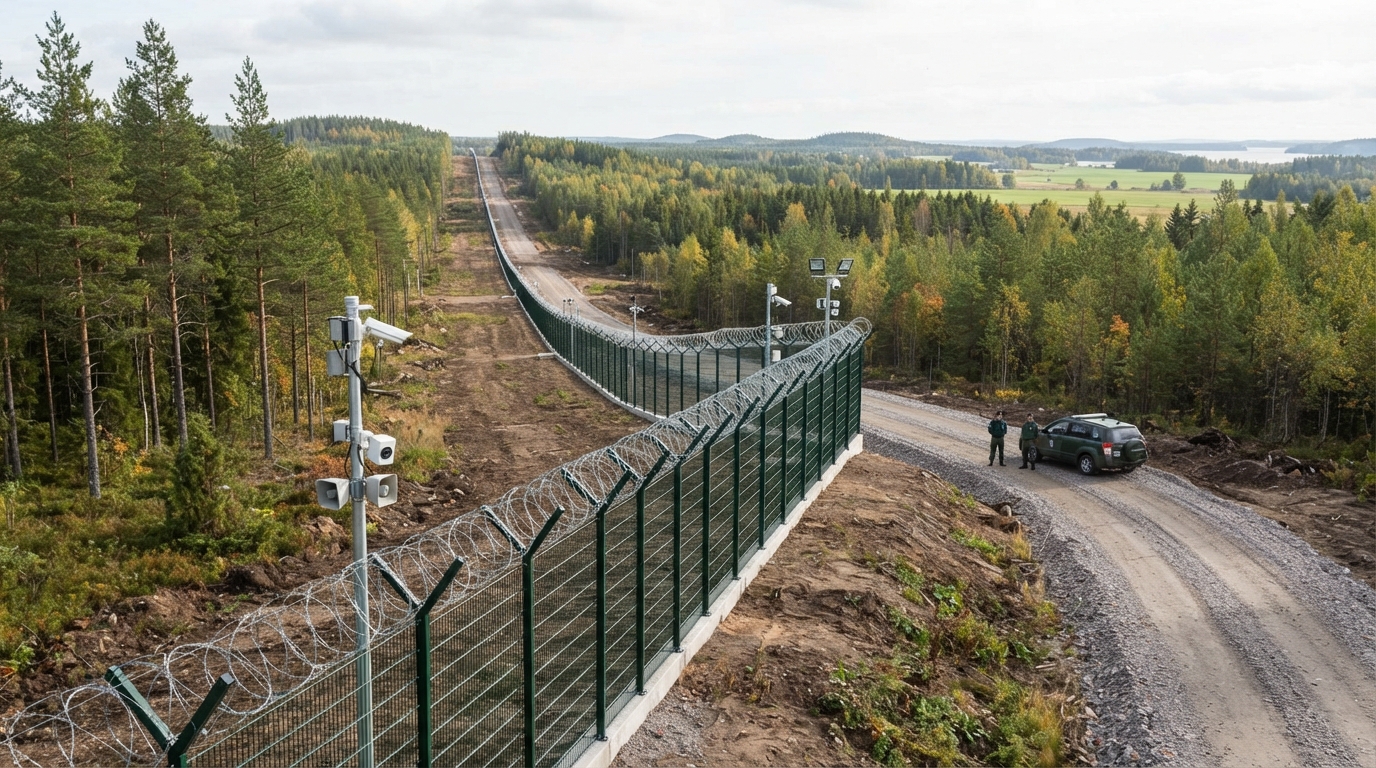
Finland completed the construction of a 200-kilometer-long barrier on the border with Russia, YLE News reported.
The border barrier consists of a metal fence, a road running alongside it, and a cleared forest area. Surveillance cameras, lights, and loudspeakers are installed on the fence.
The construction cost Finland 356 million euros. The maintenance costs of the barrier are expected to amount to 1.5 million euros per year.
The barrier was built on the territory of 17 municipalities of the country — from Lapland to the shores of the Gulf of Finland. It was laid through lands belonging to about a thousand landowners. The state paid them a total of nearly three million euros in compensation.
One of the landowners — Raimo Jokela, a resident of the Virolahti area in southern Finland, went to court. He was dissatisfied with the decrease in income from renting out fields due to the border barrier. Jokela and his relatives demanded to change the route of the barrier construction, but the court rejected their complaint.
The purpose of building the barrier is to prevent illegal entry into Finland and the phenomenon known as "instrumentalized migration," YLE News wrote.
Initial proposals for building the barrier began to be discussed in the country in the fall of 2022. At that time, after Vladimir Putin announced mobilization, about 17,000 Russians entered the territory of the European Union country in just one weekend. The construction itself began in the spring of 2023.
The total length of the Russian-Finnish border is about 1,300 kilometers. The constructed sections of the barrier are located in various areas along the border.
In the fall of 2023, the Finnish government closed the border with Russia amid a sharp increase in the number of foreigners trying to enter the country. According to Reuters, between August and December, 1,300 asylum seekers, mostly citizens of Syria, Somalia, and Yemen, crossed the Russian border. Helsinki believes that Moscow deliberately created a migration crisis by directing migrants to the border in an organized manner. The Russian government denied these allegations.
The Baltic countries — Latvia, Lithuania, and Estonia — are also building or have already built barriers on their borders with Russia.