

Fergana and Kokand have joined the Sustainable Cities Coalition in Central Asia
Fergana and Kokand have also joined the sustainable cities coalition in Central Asia. The cities of the association, whose membership has reached 10, will jointly search for and implement solutions for better disaster preparedness in long-term development planning. The initiative is supported by UNDP, Japan, and GIZ.
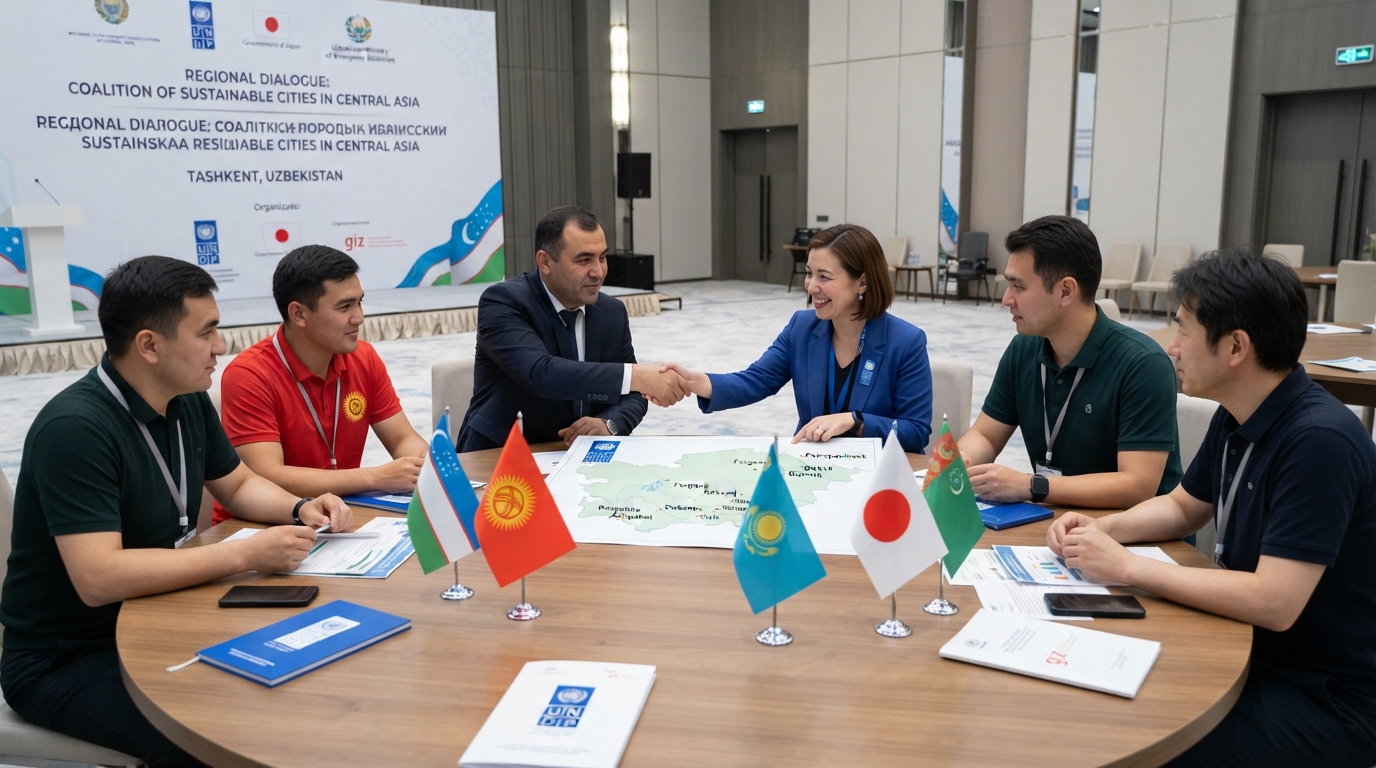
Fergana and Kokand have joined the coalition of resilient cities in Central Asia
Fergana and Kokand have joined the ranks of participants in the coalition of resilient cities in Central Asia. Established in 2025, the number of cities in the coalition has reached 10. The network, which previously included Petropavlovsk (Kazakhstan), Osh (Kyrgyzstan), Dushanbe (Tajikistan), Ashgabat (Turkmenistan), and Namangan (Uzbekistan), has now accepted Bishkek and Manas (Kyrgyzstan), Isfara (Tajikistan), as well as Fergana and Kokand (Uzbekistan).
This was announced during the second regional dialogue on urban resilience, held in Tashkent on October 19−20. The purpose of the event was to strengthen cooperation on enhancing preparedness for climate threats and disaster risks, as well as to discuss issues related to supporting local communities.
The dialogue was organized by the Ministry of Emergency Situations of Uzbekistan, the Center for Emergency Situations and Disaster Risk Reduction, and the United Nations Development Programme (UNDP). It took place with the support of the Government of Japan within the framework of two regional projects titled "Strengthening Disaster Risk and Climate Resilience of Cities in Central Asia" and "Strengthening Regional Systems for Disaster Risk Reduction in Central Asia".
The coalition allows cities to exchange experience, learn from each other, and find practical solutions to better prepare for floods, earthquakes, and other hazards, as well as to incorporate climate risks into their long-term development planning, reported.
Within the framework of the coalition, the cities of Osh, Manas, Isfara, Fergana, and Kokand are supported by GIZ (Deutsche Gesellschaft für Internationale Zusammenarbeit).
In addition, the national seismological institutes of the region's countries agreed to strengthen mutual cooperation in earthquake preparedness. The new memorandum signed at the event creates a basis for sharing scientific knowledge, improving coordination, and assisting countries in assessing and preventing the risks of seismic activity.
"Our common goal is safe and resilient cities and communities," said Khurshid Sotiyev, Deputy Minister of Emergency Situations of Uzbekistan. He emphasized readiness to cooperate in this direction with governments, development partners, UN agencies, the scientific community, and non-governmental organizations.
"Urban development must be carried out taking into account potential risks. Every investment made in prevention, preparedness, and resilient infrastructure saves human lives and protects the development gains achieved," noted Akiko Fujii, UNDP Resident Representative in Uzbekistan.
"The challenges we face are very serious. Structural vulnerabilities in housing stock and infrastructure persist, rapid urbanization outpaces risk management capacity, and the impacts of climate change are accelerating. That is why sustainable international partnership is of decisive importance. Japan continues to share its experience, knowledge, and resources to support regional and global cooperation in disaster risk reduction and management," said Kenji Hirata, Ambassador of Japan to Uzbekistan.
Participants in the dialogue studied the experience of pilot cities supported by UNDP and practical tools for disaster preparedness, and also familiarized themselves with Japan's advanced experience in building safer and more resilient cities.