

F-22 commanded a combat drone in the air
In the US, an F-22 Raptor fighter pilot issued tactical commands from the cockpit to an YFQ-44A Fury combat drone during flight. In this first test of its kind, the pilot set general tasks, while the drone's autonomous software interpreted and executed them in real time.
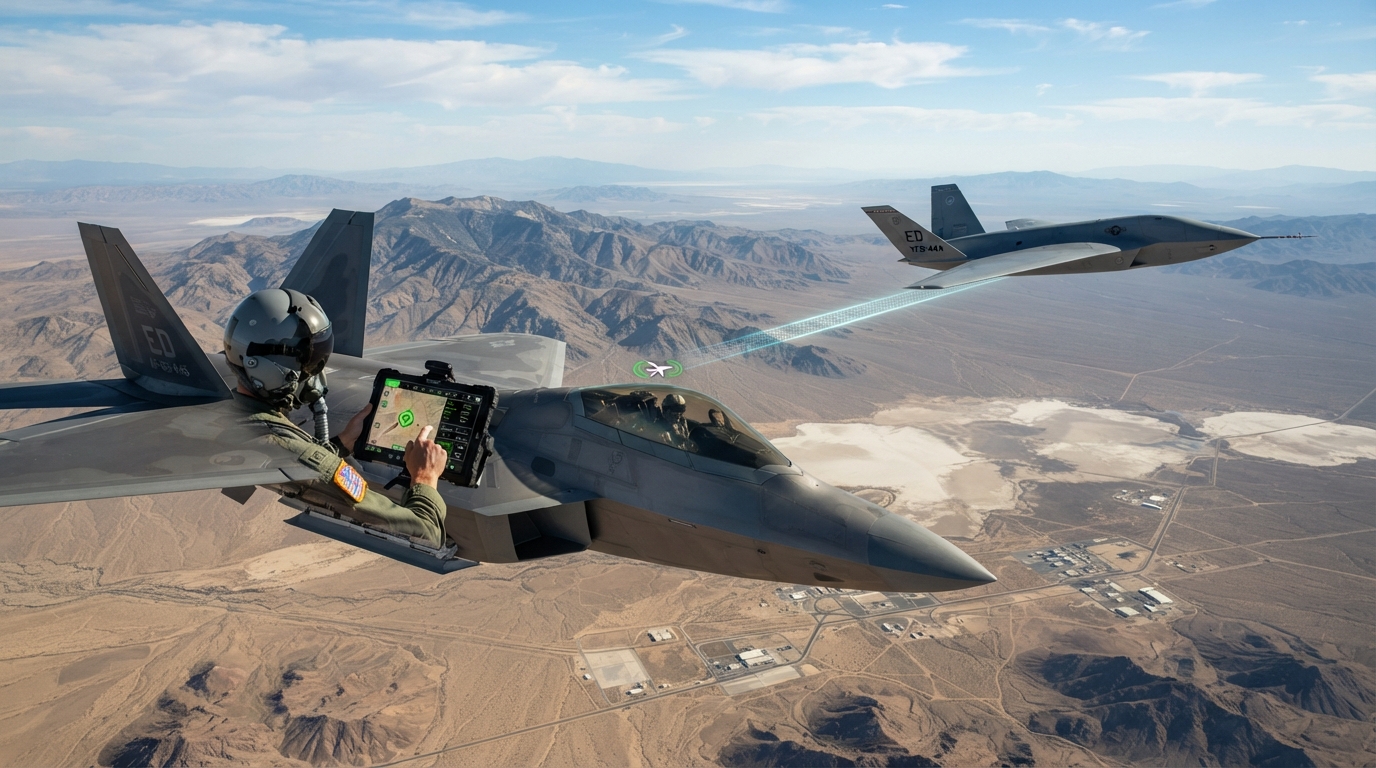
F-22 commanded a combat drone in mid-air
The US Air Force and Anduril, the developer of the Fury aircraft, announced a demonstration of airborne tactical control.
The YFQ-44A Fury is being developed under the Collaborative Combat Aircraft (CCA) program, which aims to create combat drones that operate alongside manned aviation.
According to Anduril, the F-22 and Fury took off from Edwards Air Force Base in California and met in mid-air. During the flight, the fighter pilot sent an updated mission plan to the drone via a tactical data link and issued commands to perform maneuvers.
According to the US Air Force's explanation, the pilot acted as an airborne commander in the test. He did not manually control every movement of the Fury: the drone's onboard software independently interpreted and executed the general tactical instructions. Maneuvers and simulations of combat missions were conducted during the demonstration.
The test involved several military test units, software engineers, the F-22 program office, and specialists responsible for the autonomous control and interoperability of CCA aircraft.
The Experimental Operations Unit is stationed at Nellis Air Force Base in Nevada. It coordinates preparations for the future employment of CCA drones within the US Air Force.
Neither the military nor Anduril disclosed what additional equipment was installed on the F-22 that participated in the test. Previous budget documents mentioned the need to integrate tablets, cabling, and related components into the fighter to control drones.
In the future, it is envisioned that a single F-22 will coordinate the actions of several CCA aircraft simultaneously. However, only one Fury participated in the current demonstration.
Options for using tablet-like touch devices for such control are being considered. However, concerns have also been raised that additional screens and tasks could increase the pilot's workload, especially in a single-seat fighter.