

EU tariffs aimed at China hitting Ukraine, steel boss says
The boss of one of Ukraine's biggest steel companies says the country has been "bundled together" in measures aimed at curbing cheap imports.
EU tariffs aimed at China hitting Ukraine, steel boss says
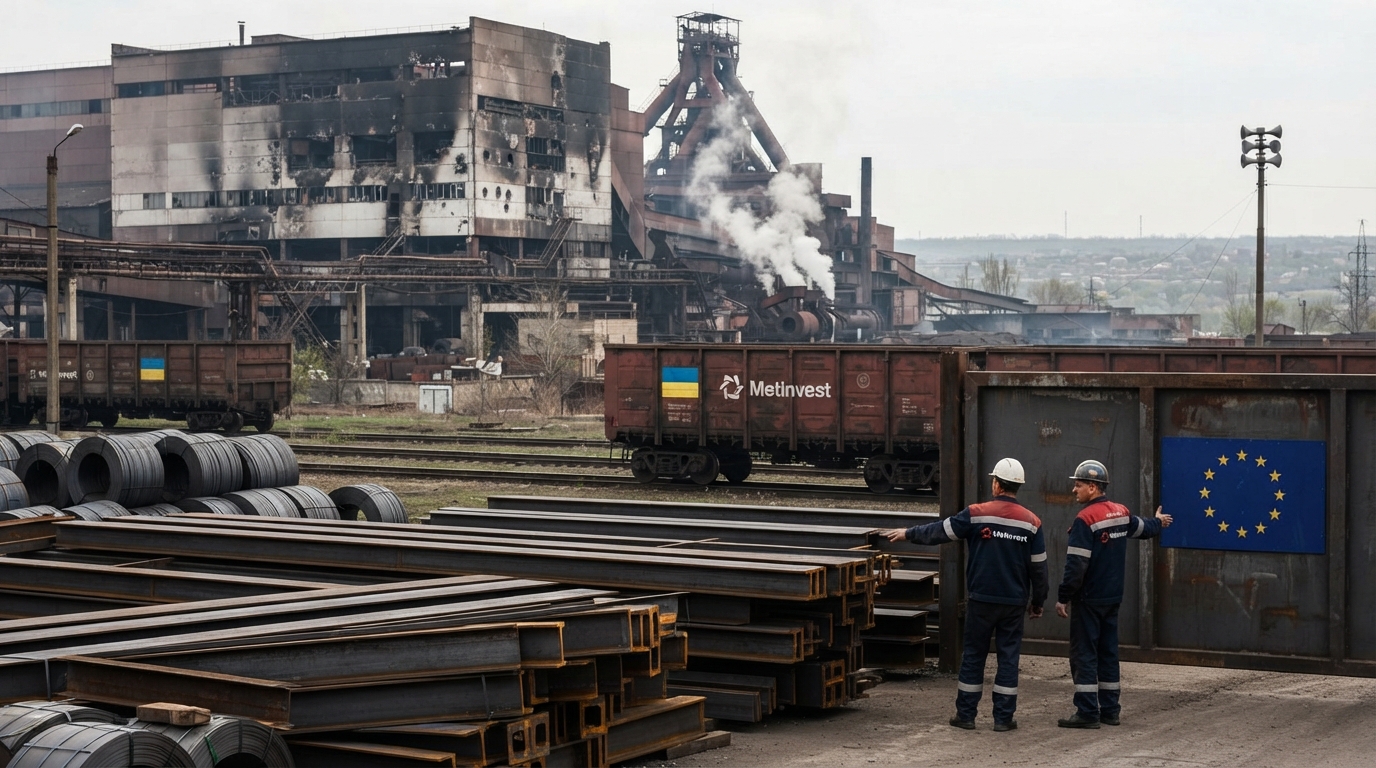
The head of one of Ukraine’s largest steel firms has urged the European Union to remove import limits on goods made in the country, saying Ukraine has been “bundled together” in measures designed to curb cheap imports from places such as China.
Yuriy Ryzhenkov, chief executive of Metinvest, told the BBC that the EU’s recently introduced tariffs on imported steel were “unfair” and had been imposed “without any consideration for the situation Ukraine is in”.
He said he wanted to see “at least a carve out” for Ukraine to access the EU market.
A European Commission spokesperson said the EU “took into account the difficult situation” facing Ukraine when setting its steel policy.
The trading bloc has recently brought in restrictions on steel imports to protect steel producers in member states.
It has limited the amount of steel that can enter the EU duty-free to 18.3 million tonnes a year - a 47% cut from 2024 levels.
The policy includes some country-specific quotas, but its broader goal is to reduce steel imports as member states struggle to compete with low-cost supplies from countries including China and Turkey.
Although there is a free-trade agreement (FTA) between the EU and Ukraine, that agreement does not prevent the EU from introducing separate trade defence measures.
“Ukraine has been bundled together into those measures without any consideration for the situation Ukraine is in,” Ryzhenkov said, referring to the war with Russia.
“Access to the European market is crucial for survival,” he added. “The restrictive measures that have been put in place by the authorities in the European Union, they don't help.
“I think it's unfair that Ukraine has been treated in the same way as all of the other importers into the European Union.”
Ukraine’s steel industry estimates exports of steel to the EU could eventually drop by around 50–60%.
The EU said Ukraine’s dedicated steel quota ensured exports of the metal, but admitted this was at a “level lower than in the past years”.
“Despite the war effort, Ukraine remains an important exporter of steel to the EU,” a spokesperson said, adding that it had “offered compensations” to its biggest suppliers, including Ukraine.
Steel products are a key part of Ukraine’s economy. Before Russia’s full-scale invasion in 2022, metallurgy and mining made up about 10% of Ukraine’s national income and one-third of its exports. The EU is its biggest customer.
But the sector has been hit hard by ongoing Russian bombardment.
All of Ukraine’s steel mills have been struck at various points since the conflict started in 2022, but Ryzhenkov said attacks had “intensified significantly recently”.
At one point in September, there was “no single tonne of steel produced” in Ukraine for the first time in about 150 years, he added.
Nearly 800 Metinvest workers have been killed since the war began.
Ryzhenkov said the company had “improved the covered areas” at its mills where workers can take shelter during air raids.
“The only thing we can do is to design procedures to keep people safe and just obey those procedures and try to minimise the risks.”
“Unfortunately, you cannot cover a whole steel mill to avoid it being damaged.”
Ryzhenkov said he expected the coming winter to be “one of the hardest in our history”.
“We are in a dire situation when we don't have logistics to access any other market apart from the EU and cutting our available market by 60%, that doesn't help for the industry to survive.”