

Because of China, 300 thousand people could lose their jobs by the end of 2026
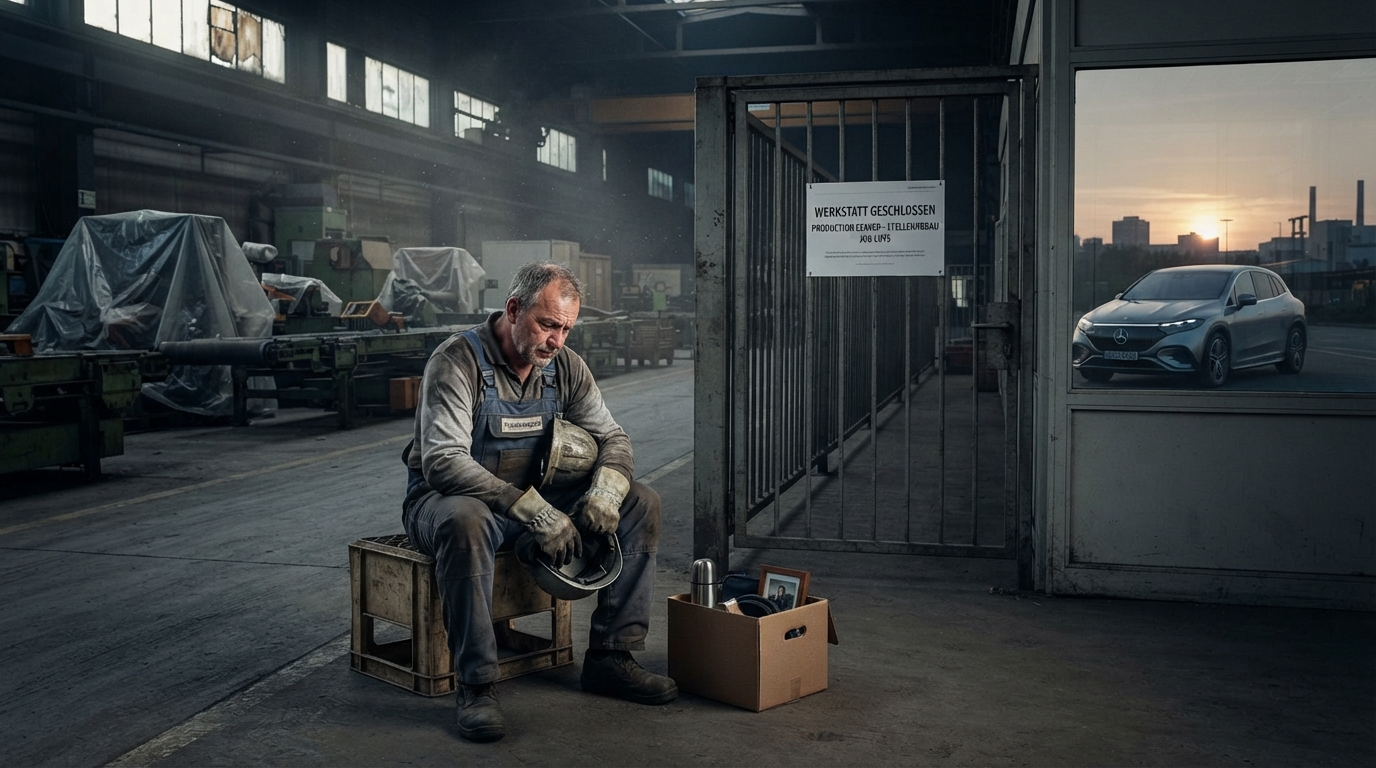
Due to China, 300,000 people could lose their jobs by the end of 2026
There is a possibility that job cuts in the European Union's industry will intensify at a rapid pace. This could happen because Brussels has not stopped the "colonization" of the industry by Chinese component manufacturers. A leading industrial trade union warned about this.
The Eurometal organization estimates that 300,000 jobs could be cut during the remainder of 2026 following increased competition with China. Meanwhile, China's daily trade surplus with the bloc has reached a record level of 1 billion euros.
European manufacturers are concerned that the European Commission does not fully understand the risk. They say China is penetrating supply chains by selling spare parts and "swallowing up" European industry.
"China is not hiding what it is doing. This is in their five-year plan," Eurometal President Alexander Julius told The Guardian.
"China does not want to be a raw material supplier. The country wants to supply finished products. They want to be in the key product chains. Because they know that if they control the supply chain, they own the entire value chain," he added.
He is asking the European Commission to fully understand the impact of Chinese exports at the spare parts level. This includes metals and chemicals used in 90 percent of manufacturing.
The European Union has already taken action on electric vehicles. In 2024, tariffs were introduced on Chinese imports. In June, higher tariffs were imposed on steel imports. The bloc's trade commissioner, Maroš Šefčovič, said the annual 360 billion euro trade imbalance between the EU and China is "unsustainable." The two sides agreed to hold three months of talks, ending in October, to avoid a trade war.
"In other places like Germany, workers are also losing industrial jobs. The media and politicians see the consequence, but they are not fighting the 'virus' that is causing it. They do not understand why this is happening or why companies are moving to China or India and going bankrupt," Julius said.
One of the factors creating conditions for the spread of this "virus" is the increased costs of European metal producers. They pay tariffs on steel imports as well as carbon emissions taxes for energy-intensive sectors.
Spare parts manufactured in China are not subject to such payments. Julius added that this situation and the undervaluation of the Chinese currency, the yuan, make it difficult to compete with Chinese rivals.
Companies must satisfy shareholders. They will continue to buy products from China despite the political opinions coming out of Brussels.
"If manufacturing leaves Europe, the region will lose not only product manufacturing, but also investments, knowledge, and long-term economic stability," Eurometal said ahead of the demonstration.
The European Commission's June analysis estimated that more than 1 million jobs would be lost due to high energy costs and global competition. This includes the plan to cut 100,000 jobs confirmed last week by German automaker Volkswagen.
China has repeatedly accused Europe of protectionism. According to a report by China's Xinhua news agency in early 2026, the country threatened to take firm countermeasures if the EU continues to target Chinese companies or products. Following this, the EU and China reached a three-month agreement.
Just recently, the management of Mercedes-Benz announced that if employees do not agree to cost cuts, they plan to close one of the factories in Germany and move production to Eastern Europe. It is noted that the company's management is demanding the cancellation of certain payments to employees, including holiday pay and part of the Christmas bonuses, as well as a review of the 35-hour work week.
Management believes that high labor costs at German enterprises are negatively affecting the company's competitiveness. This is particularly due to the decline in sales of Mercedes-Benz cars, especially in the Chinese market.