

Employment in Germany's auto industry has fallen to its lowest level since 2005.
The number of workers in Germany's auto industry fell by 5.8% in a year, reaching its lowest level in more than 20 years.
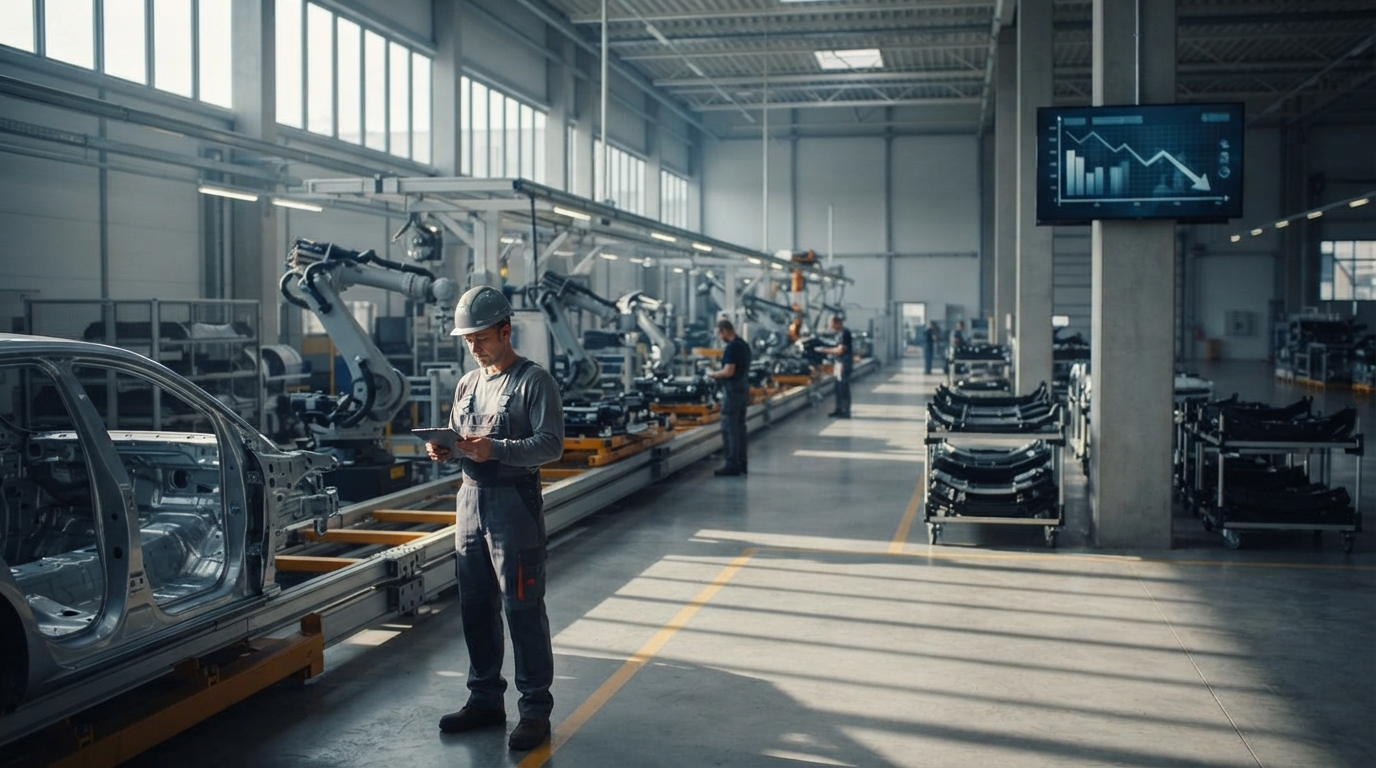
German Automotive Employment Reaches Lowest Since 2005
Tashkent, Uzbekistan (UzDaily.uz) —
In the first half of 2026, employment in the German auto industry fell to its lowest level since 2005. According to the Federal Statistical Office of Germany (Destatis), 691,500 people were employed in this sector by the end of June. This is 42,300 people, or 5.8%, less than the previous year.
Among the country's major industrial sectors, which employ more than 200,000 people, job losses in the automotive industry were the most significant. Despite this, the auto industry retained its second-largest position among German manufacturing employers. Mechanical engineering remains the leader, employing 905,900 people at the end of the first half of the year. At companies specializing in automobile and engine production, the workforce decreased by 6.1% year-on-year, reaching 429,200 people. In the automotive components and accessories segment, employment fell by 7.6%, to 219,500 people.
At the same time, the body, superstructure, and trailer production sector saw a 10% increase in employment, reaching 42,800 people.
The decline in employment was not limited to the automotive industry. Overall, 5.29 million people were employed in Germany's manufacturing sector at the end of the first half of the year. Over the year, this number decreased by 144,100 people, or 2.7%.
Headcount declines were also recorded in other major industrial segments. Employment in metal products manufacturing fell by 3.8%, in ferrous and non-ferrous metallurgy by 3.7%, in the chemical industry by 3.6%, and in electrical equipment manufacturing by 3.4%.
In mechanical engineering, Germany's largest industrial sector by employment, employment fell by 2.7% year-on-year.
More moderate declines were observed in plastics manufacturing, food processing, and the computer, electronics, and optical goods sectors.