

Elephants use medicinal plants to treat themselves, researchers find
African elephants use dozens of different medicinal plants to treat themselves and their families when they are sick, research reveals.
Elephants use medicinal plants to treat themselves, researchers find
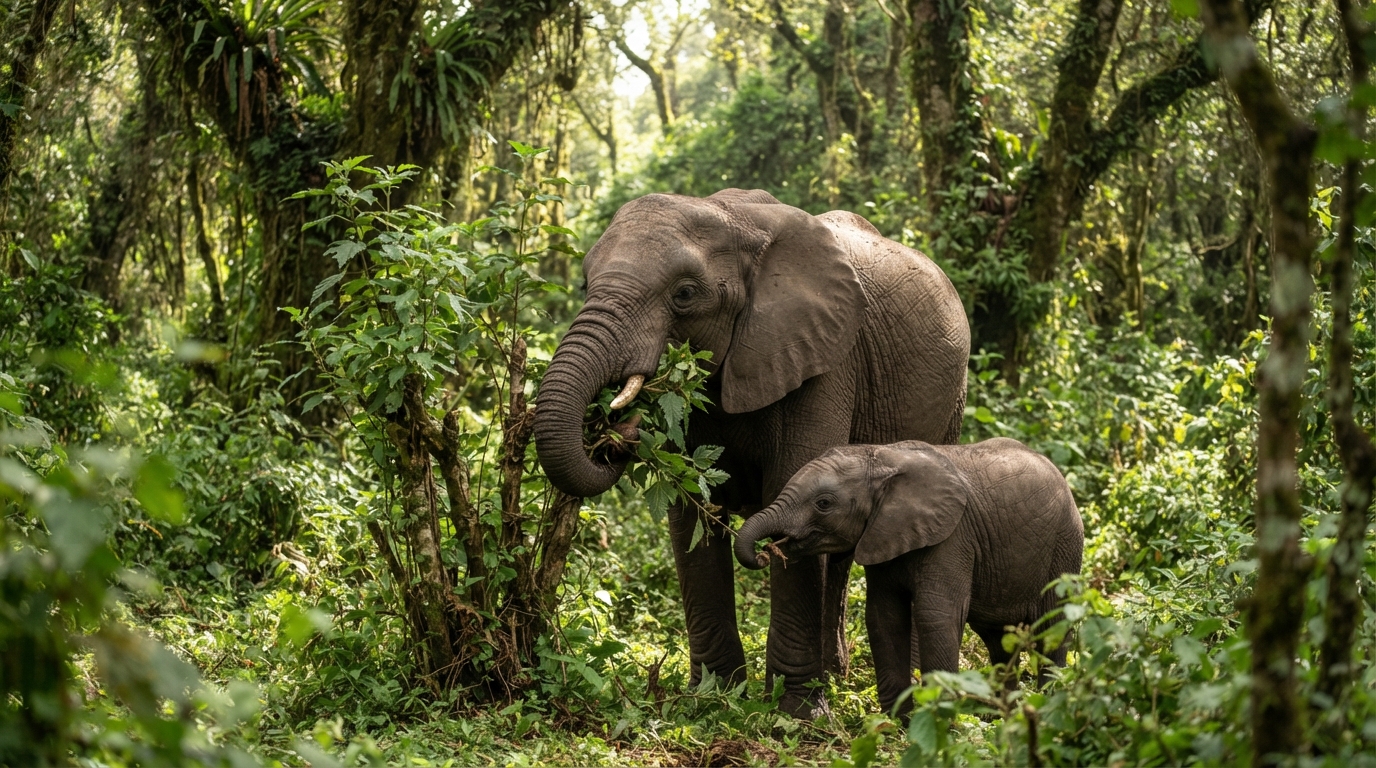
Accounts from local experts revealed that wild elephants used more than 35 plants, many of which have known medicinal uses
African elephants use dozens of different medicinal plants to treat themselves and their families when they are sick.
That is the conclusion of a study based on interviews with people who live and work alongside the elephants in Kenya’s Mount Elgon region.
These animals have long fascinated scientists because of their unusual behaviour. They are known as salt-mining elephants because they enter caves and scrape rock with their tusks to obtain minerals for their diet.
The newly published research suggests that the same elephants also use several plant species in the forest for medicinal purposes.
Camera traps installed by the Mount Elgon Foundation captured the elephants “mining” for salt in caves to supplement their diet.
One of the lead researchers, Dr Elodie Freymann of Brown University in the US, said the study raised the question of whether the destruction of forest habitat deprives animals — and humans — of the medicines they need to thrive.
“This shows just how entangled our medicines are with the non-human world,” Dr Freymann told BBC News.
The researchers say the forests are “natural pharmacies” for the elephants.
They interviewed local people, including wildlife scouts and community elders.
Their accounts described elephants choosing specific plants when they appeared to be unwell, and mothers reportedly giving medicinal plant material to their calves.
From this, the researchers concluded that the elephants use 35 different plant species, and that 25 of those are known locally to have medicinal uses.
The testimonies included some striking details. In one account, a wildlife scout said he saw elephants using a plant called Angurweet “as medicine to give to babies”.
Angurweet is used as a remedy for conditions including stomach ache. The scout described elephant mothers mixing it in their mouths — “removing the leaves and chewing it until smooth, along with the roots of some other trees”.
He also said he had seen mothers mix the plant material with their own milk. “They give it to the babies, who chew on it themselves and spit out the solids”.
Professor Michael Huffman, a primatologist based in Japan and currently at Nagasaki University, said this account was “tantalising”, but that more evidence would be needed to show elephants were giving tailored medical treatment to their calves.
The scientists have already begun collecting that evidence by giving the local wildlife experts they worked with cameras to record the behaviour they observe.
They are also analysing the plants the elephants use, searching for new medicines that the elephants themselves may have discovered.
Another lead researcher on the project, Dr Fabien Schultz of the Bernhard Nocht Institute for Tropical Medicine in Hamburg, told BBC News: “Local knowledge has given us a map”.
“We [now] want to follow the elephants and investigate whether they select particular plants in particular health contexts, and whether those plants have relevant biological activity.”
The study identified 35 different plant species that the animals use.
Many animals treat themselves with plants and other natural remedies.
The earliest scientific accounts of elephants practising “self-medication” date to the early third century.
Roman author Claudius Aelian, in his text De Natura Animalium (On the Nature of Animals), described an elephant that, after being wounded by spears and arrows, ate flowers and oil from an olive tree. The elephant made a full recovery.
Centuries later, these scientists are exploring what wildlife can teach us about the properties of plants in the forest habitats where they evolved.
“There are medicine-producing organisms on this planet that have this incredible capability,” Dr Freymann told BBC News. “Medicine factories that exist all around us.”
Researchers worked with local experts to identify plants the elephants use.
Prof Huffman, who was not involved in the study, added: “We now know that mosquitoes and drosophila (flies) self-medicate, bees self-medicate, as do many other species all the way up the evolutionary ladder to the great apes of Africa and Asia.
“With each new species studied, we have gained a greater understanding of our medicinal past.”
For Dr Freymann, the findings also offer a lesson for the future.
“So many of the medicines we buy in a pharmacy were derived from compounds from trees, algae, from fungi, from coral reefs.
“It’s a win-win for us to protect these forests and keep those natural pharmacies around... long enough that we can discover new natural products that could save us down the line.”